
Home » 2026
Yearly Archives: 2026

For Halloween: Ghostly & Gothic Nautical Adventure In Fiction
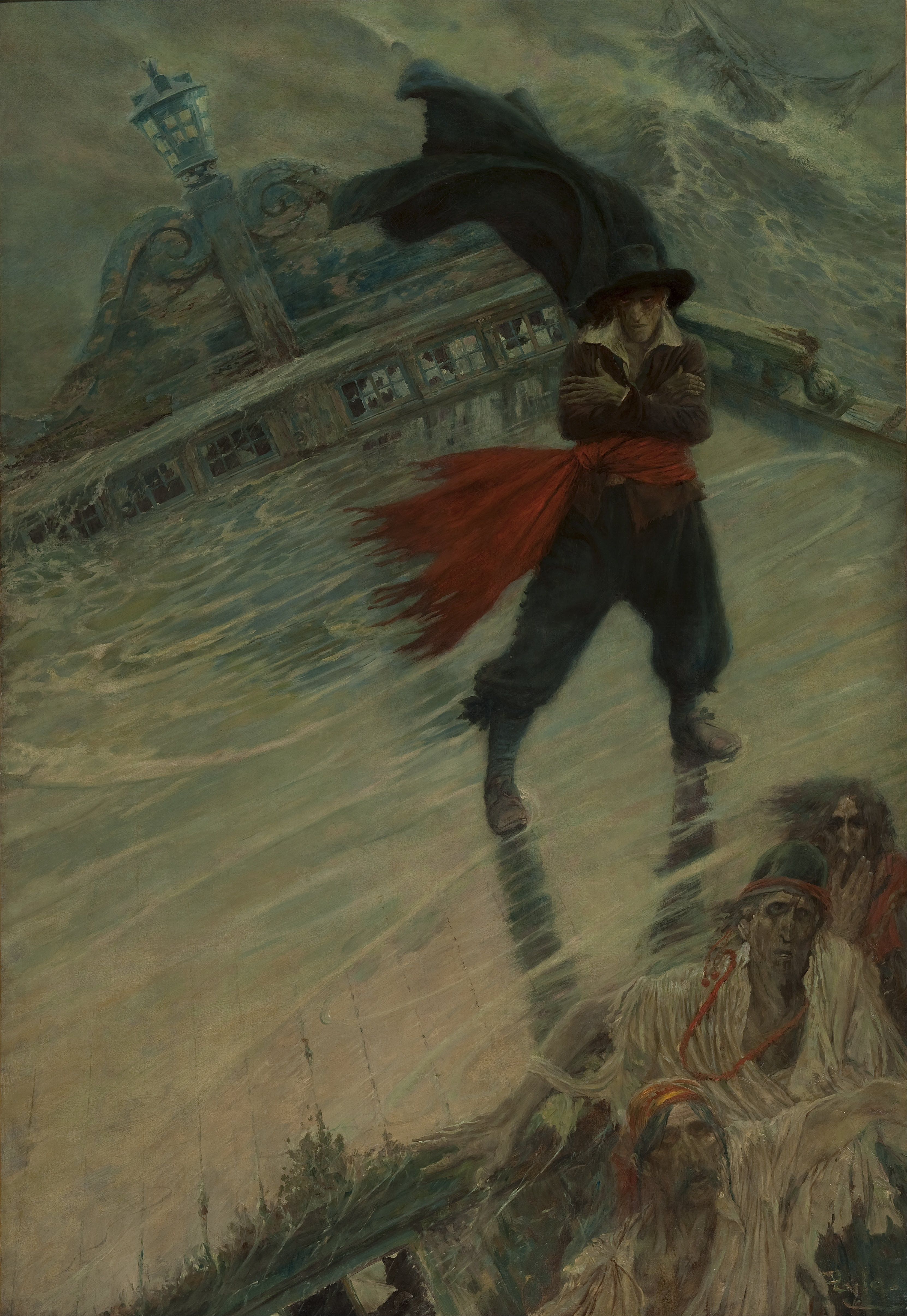
In keeping both with my post on Ghosts & Monsters for Halloween: Cinematic Nautical Romances & Swashbuckling Adventure and with my urge to procrastinate by writing easy blog posts rather than finishing more complex ones, not to mention the Annotated Captain Blood, here are a few books, short stories, and a poem suitable to sea roving adventure on All Hallow’s Eve. I’ve included nothing I haven’t read, which means there are some likely future additions.
Fantasy pirate and horror pirate are not my favorite genres although I’ve read plenty, usually in the weeks leading up to Halloween, a holiday we celebrate well thanks to a daughter born on the day, and to the women in my life in general, all of whom could be described as fey. I’ve had friends and readers suggest to me that I write fantasy pirate novels — “That’s where the money is,” they say — but so far I’m unwilling to give up my firm belief that the true pirate swashbuckler will one day regain its rightful place. But enough digression. Onward to Halloween pirates and other ghostly ghastly seafarers and sea victims in fiction!
The Phantom Ship by Frederick Marryat, 1839
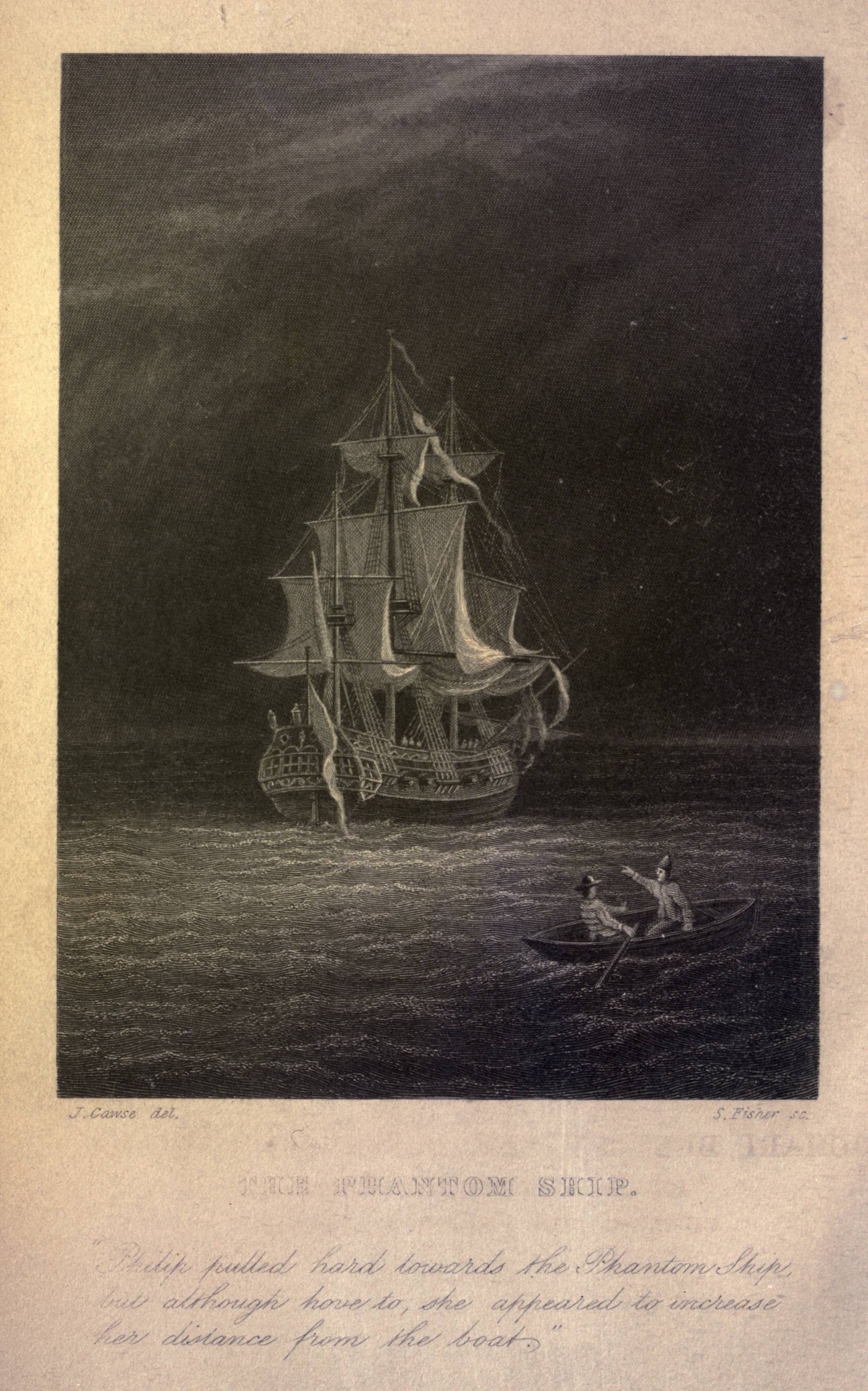
The Flying Dutchman, the sins of Vanderdecken the father visited upon the son, along with with true love, buried treasure, an odyssey of redemption, a cackling supernatural messenger incarnate and evil, plus ghosts, Arabian magic, and even, briefly, a werewolf tale! All written by a former post captain in the Royal Navy. No impossible ship-handling here! (Other than the spectral ship, of course.) A grand fun read. Ignore the reviews early and modern, including one believed to have been written by Poe — critics, especially successful writers engaging in literary criticism, are often insufferably jealous narcissists practicing unintended comedy.
The Rime of the Ancient Mariner by Samuel Taylor Coleridge, 1798
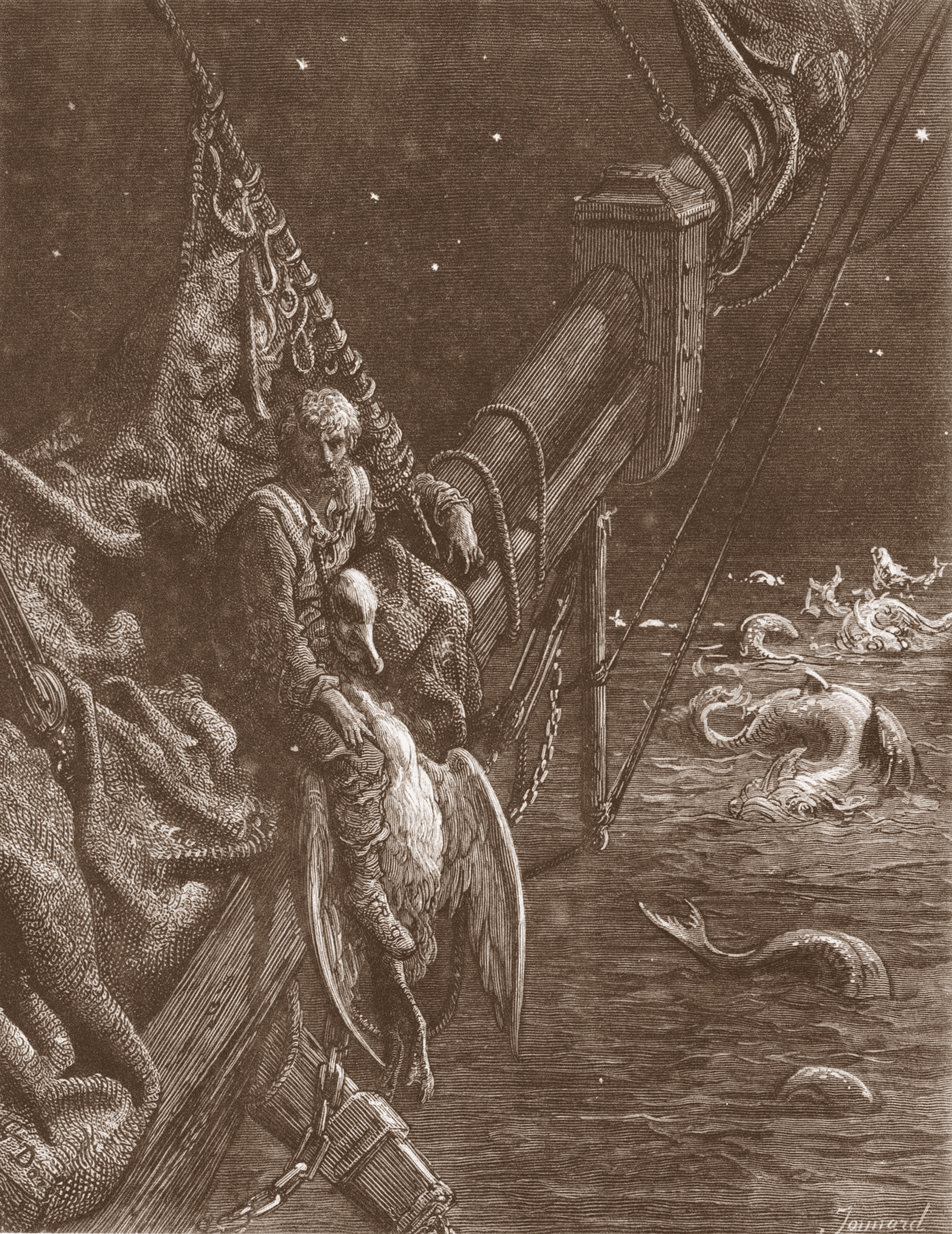
“Water, water, every where, // Nor any drop to drink[!]” A cursed sea voyage, an albatross that brought fair winds murdered and hung ’round the killer’s neck — the ancient mariner tells his dark tale to a wedding guest. The poem was inspired in part by the killing of an albatross by a pompous officer named Hatley during the disastrous 1719 – 1722 South Sea privateer voyage commanded by George Shelvocke: shipwreck and marooning, mutiny, self-rescue, quasi-piracy, even that horror of horrors, a lawsuit afterward! A trifle as compared to the voyage of the Ancient Mariner.
The Ghost Pirates by William Hope Hodgson, 1909
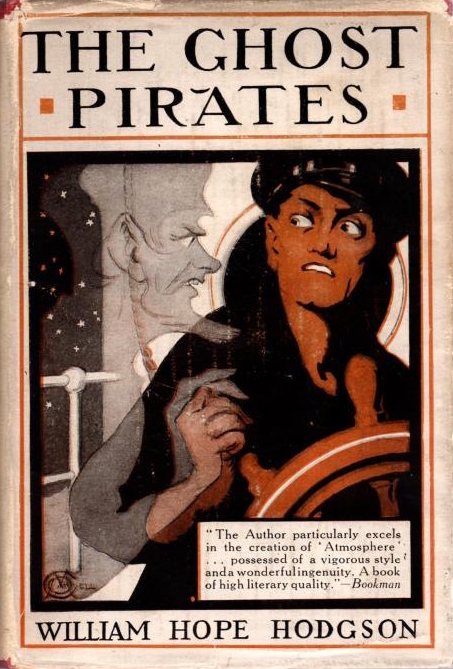
A classic, and surely the greatest of the ghosts at sea genre. The taut writing suits the mood: evil creatures — demons? zombies? ghosts? beings from another realm? — slowly, methodically, terrifyingly taking over an age of sail merchantman and killing its crew. Few novels bring a sense of deadly dread to life so well. To climb aloft is no escape…
“The Ghost-Ship” by Richard Middleton, 1912

I first read this story in The Jolly Roger: Pirate Stories for Boys (Milton Bradley Company, 1928), a collection of pirate fact and fiction whose plate of pirate flags, copied exactly from that in The Blackwall Frigates by Basil Lubbock (1922), was recommended by screenwriter Casey Robinson as the source for the flag used in Captain Blood starring Errol Flynn. “The Ghost-Pirate” was originally published in a collection of the author’s short stories in 1912. Alas, there is only one pirate ghost tale, but to my great pleasure the collection includes two stories not on writing but on being a writer. Middleton’s amused, wordly-wise, self-deprecating take on writers, writing, and publishing closely mirrors my own. Nothing has changed in more than a century but the tools. As for “The Ghost Ship,” it’s a jovial domestic tale of a ghost pirate ship commanded by Bartholomew Roberts cast ashore during a storm into small town known for its own ghosts, and the subtle mayhem that ensues.
On Stranger Tides by Tim Powers, 1987
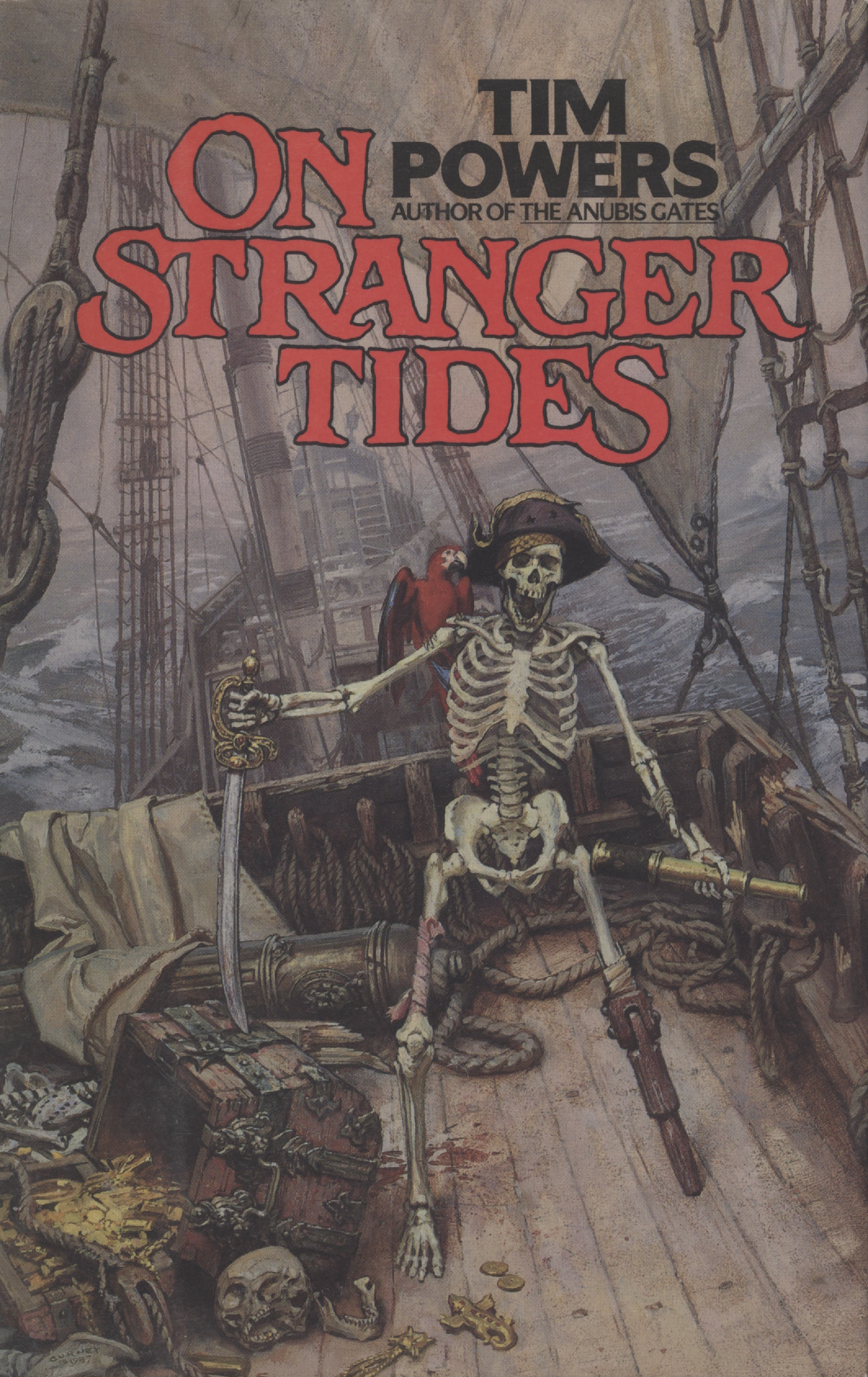
Without doubt the best of the fantasy pirate genre, no contest. Pirates, voodoo, zombies, murder, treachery, romance, the fountain of youth, great cover art, and a fantastic climax.
Inspired perhaps by imagining if the magical nonsense ascribed to Blackbeard by pseudonymous pirate chronicler Charles Johnson were real, Powers’s novel has influenced, indeed inspired, much of both Disney’s The Pirates of the Caribbean film franchise (including the plot, obviously, of the 4th installment, On Stranger Tides) and also the Monkey Island video games (and perhaps The Adventures of Amina al-Sirafi by Shannon Chakraborty too). And who knows, maybe Powers, who helped inspire the Disney films, was inspired by the Disney ride as well.
Never mind the anachronisms and especially the inaccuracies in sea fighting, naval uniforms, and so on in the novel. Until I wrote The Sea Rover’s Practice (a bit of self promotion here), there was no book or other source on detailed tactics of sea rovers of the late 17th and early 18th centuries, and most of what was written on the subject was inaccurate or, in the case of many novels, culled and cribbed from accounts of sea fights during the Napoleonic Wars, much of which doesn’t apply directly to a century prior, or was copied from historically-incorrect novelists, even from some who had been tallship sailors — tactics and language changed in ways major and minor from the late 17th century to the 19th. I wrote SRP because I couldn’t find a book on the subject and it took me several years of in-depth research, far more time than any novelist has on their hands to research a story. And, to make the devil’s argument, vodou is a legitimate Creole religion but its magic isn’t real in the manner described in the novel, so does it really matter if the pirate tactics in it are inaccurate too? It’s the story that matters, or so I write even as endeavor to be as historically as possible in my own fiction.
The Mystery of the Sea by Bram Stoker, 1902
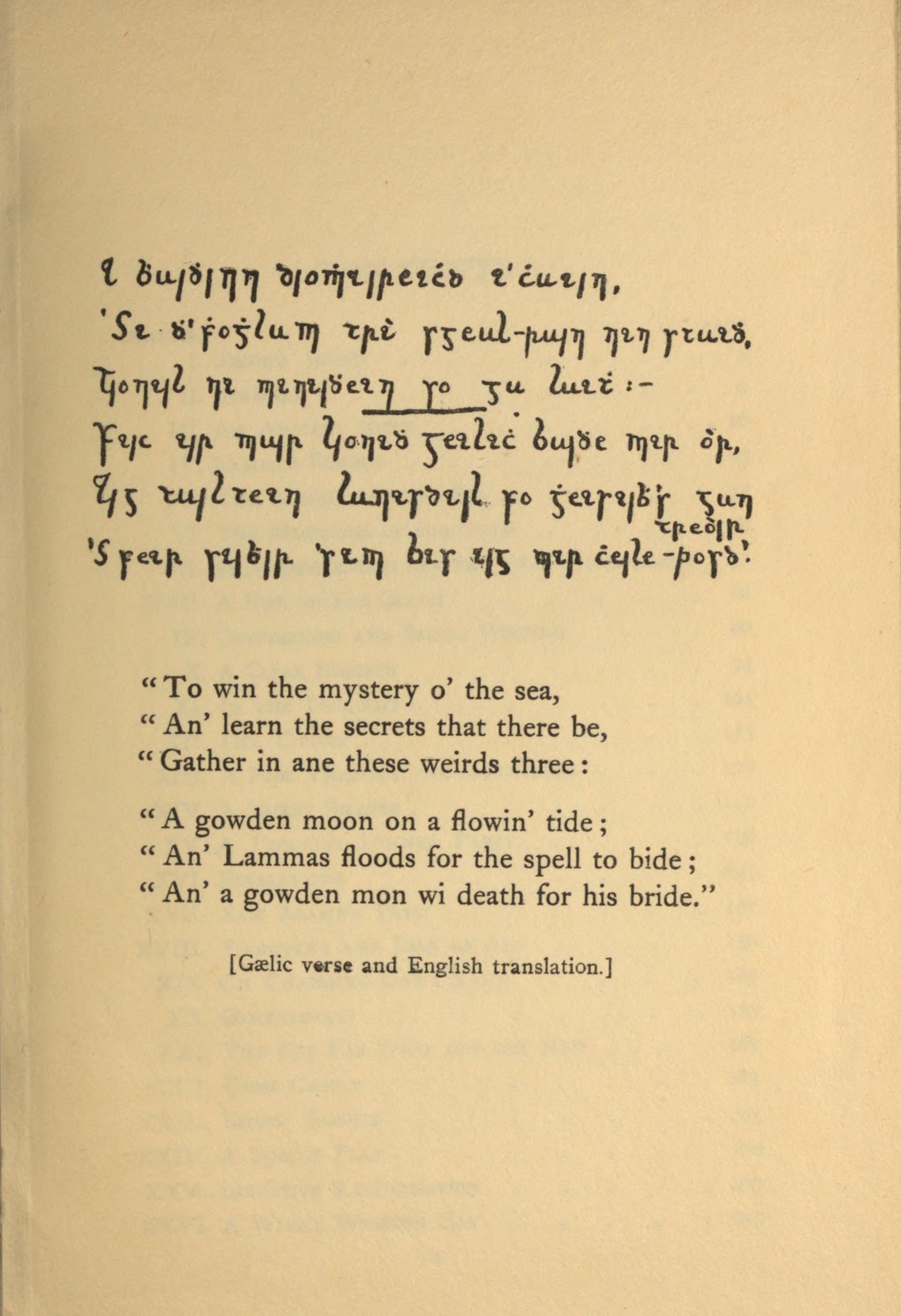
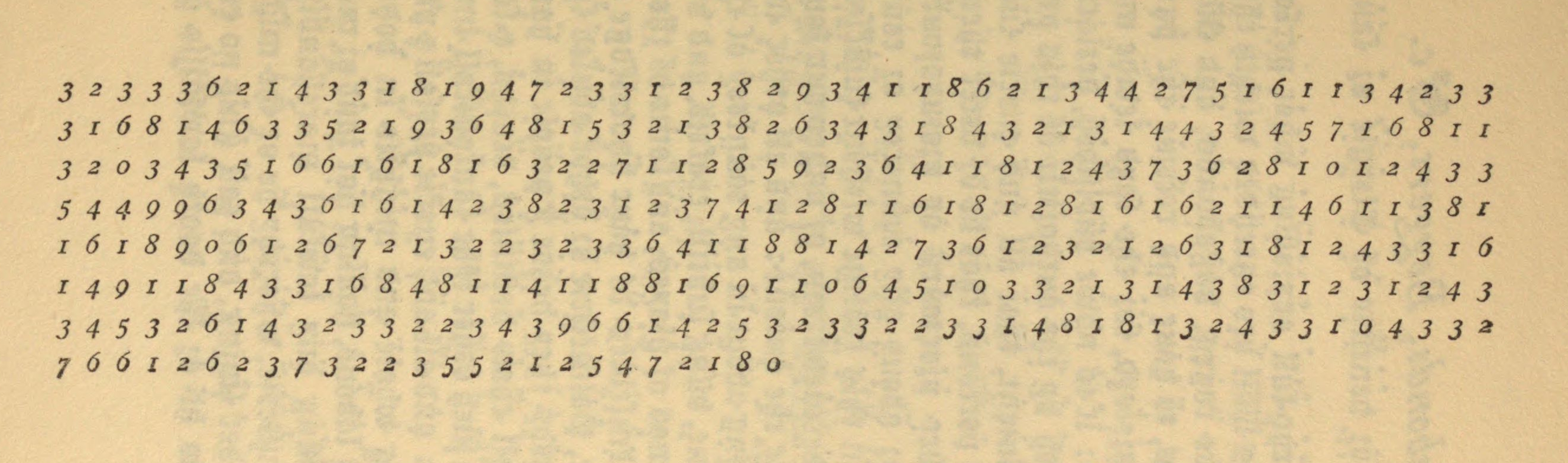
Stoker didn’t just write about vampires! The Mystery of the Sea is classic Gothic by the sea: a Papal treasure lost with the sinking of the Spanish Armada, ghosts trudging by the sea, a fey old woman, the second sight, a cipher, a rugged Scottish coast, romance with a rich independent patriotic American woman, classic gallantry including aquatic rescue, and, naturally, bad guys too, for what would be a treasure hunt without them?
The Haunted Island by Peter Lunn, 1946
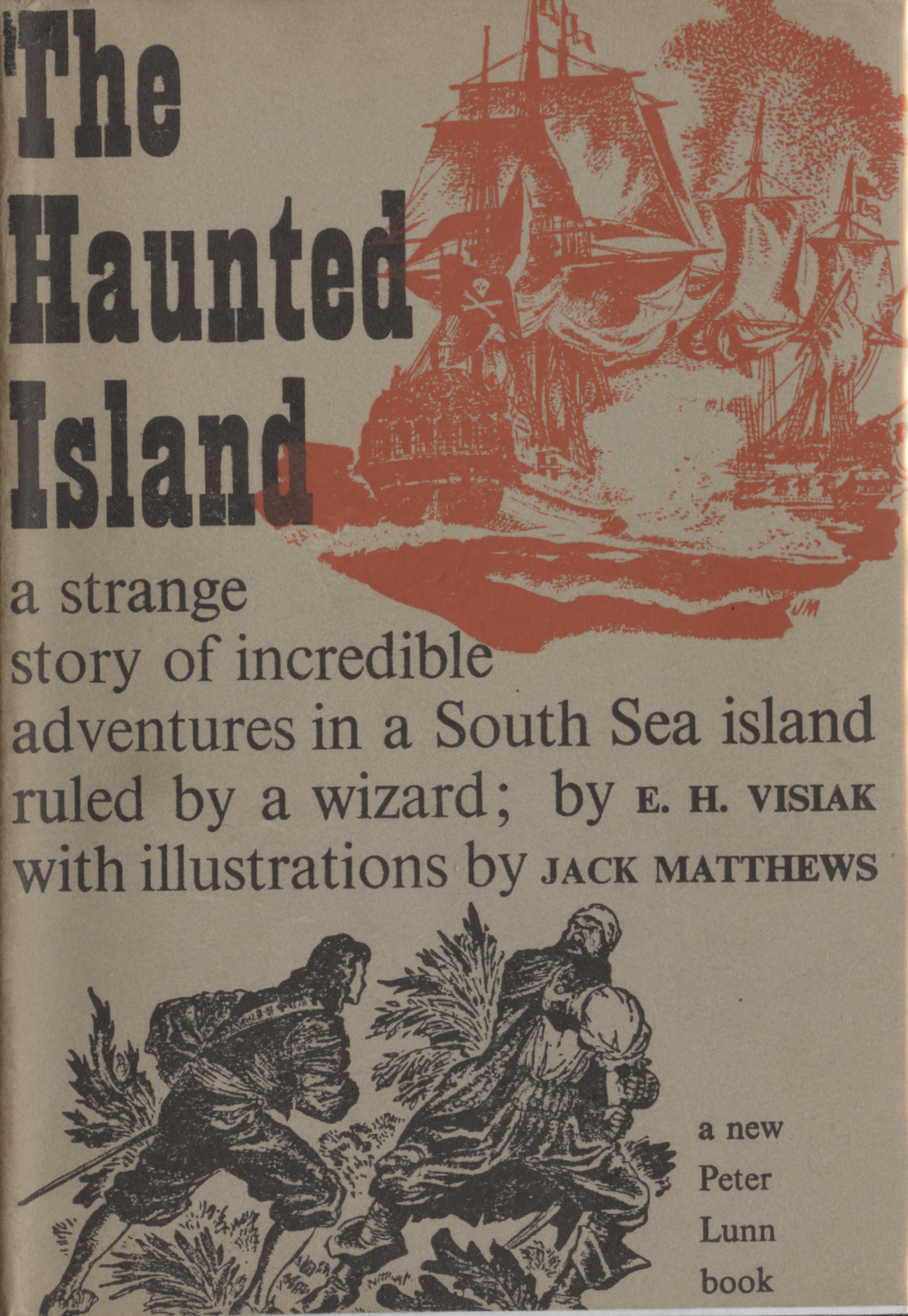
Pirates and magic! No, Disney’s Pirates of the Caribbean, you’re not the first to combine the twain. Or is it magic after all? Read and find out! The author had clearly done his homework, or at least had read Exquemelin and a few other core buccaneer authors, for the general details are accurate enough for light fiction. And the illustrations by Jack Matthews are exemplary, far more accurate than most buccaneer depictions even today. They’re not Pyle or Wyeth, but they serve well to correctly bring the period to life. As usual, the novel is composed of pirate truths and tropes derived from popular pirate histories and much better pirate novels such as Treasure Island. If it pales in comparison to the works of Stevenson and Sabatini, no matter — it’s still a quick fun read.
Pirate’s Doom by E. R. G. R. Evans, 1930
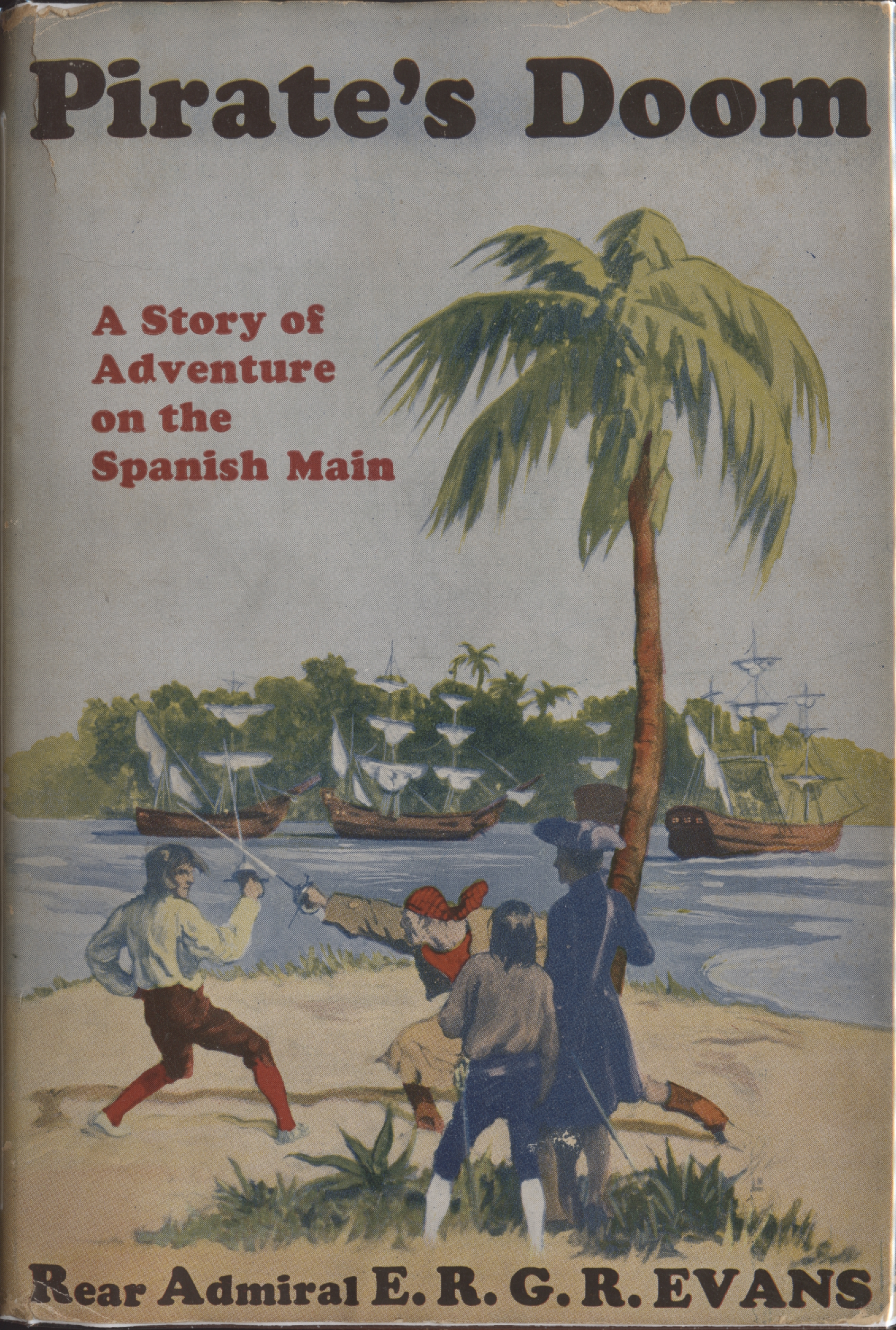
An adventure mostly set in reality but a few apparently supernatural elements: a pirate captain drawn in part from the evil messenger Shriften in The Phantom Ship and who can appear and disappear, so it seems, at will; another who seems proof against wounds; and a ghost ship. The author, who wrote quite a few maritime adventures for boys, gained early fame as a destroyer captain during close action in WWI. Like many novels of this sort from this era, it seems cobbled together from more famous works. Treasure Island it’s not, but it’s still a fun, easy read. It does have the occasional bigotry common to the era, but thankfully few of them. In keeping with famous buccaneer, explorer, naturalist, privateer, and naval officer William Dampier, along with some of his contemporaries, the author finds a pirate crew of “ferocious-faced negroes, dark-skinned Italians, and low-visaged seamen, who…were Turks” to be a “motley band of buccaneers” clearly inferior to the stout English pirates among whom the hero finds himself. With my olive skin I suppose I’d be in the motley crew too, but then so would Captain Peter Blood and his creator, the “dark-skinned” Italian-Englishman Rafael Sabatini (not to mention bestselling swashbuckling novel authors Frank Yerby and Alexander Dumas, both of whom were Black), thus I’d be in excellent company.
Notably, yet not usual for the period in which the novel was written and its intended audience, there are unfortunately no women in the novel. Even Treasure Island has Jim’s mother. The author’s dedication says it all: “To the sea-loving boys of // the Empire, and all those // who would go adventuring”//. Perhaps women would just have been in the way, but that’s not been my experience in a life with some notable adventure. In fairness, this isn’t the only novel on this page that has no women in it.
Postscript: did the screenwriters of The Sea Hawk (Howard Koch and Seton I. Miller, 1940) and The Spanish Main (Aeneas MacKenzie, original idea and treatment by the star, Paul Henreid, 1945) read this book? It’s quite the coincidence that Admiral Evans writes in a single sentence of three ships: the Barracuda, the Albatross, and the Sea Hawk! The Barracuda is the pirate ship featured in The Spanish Main (and also the nom de guerre of the hero), and the Albatross is the privateer featured in The Sea Hawk… Or maybe Evans was simply prescient or maybe it’s another commonly uncommon coincidence. Maybe.
The Pirate by Sir Walter Scott, 1822
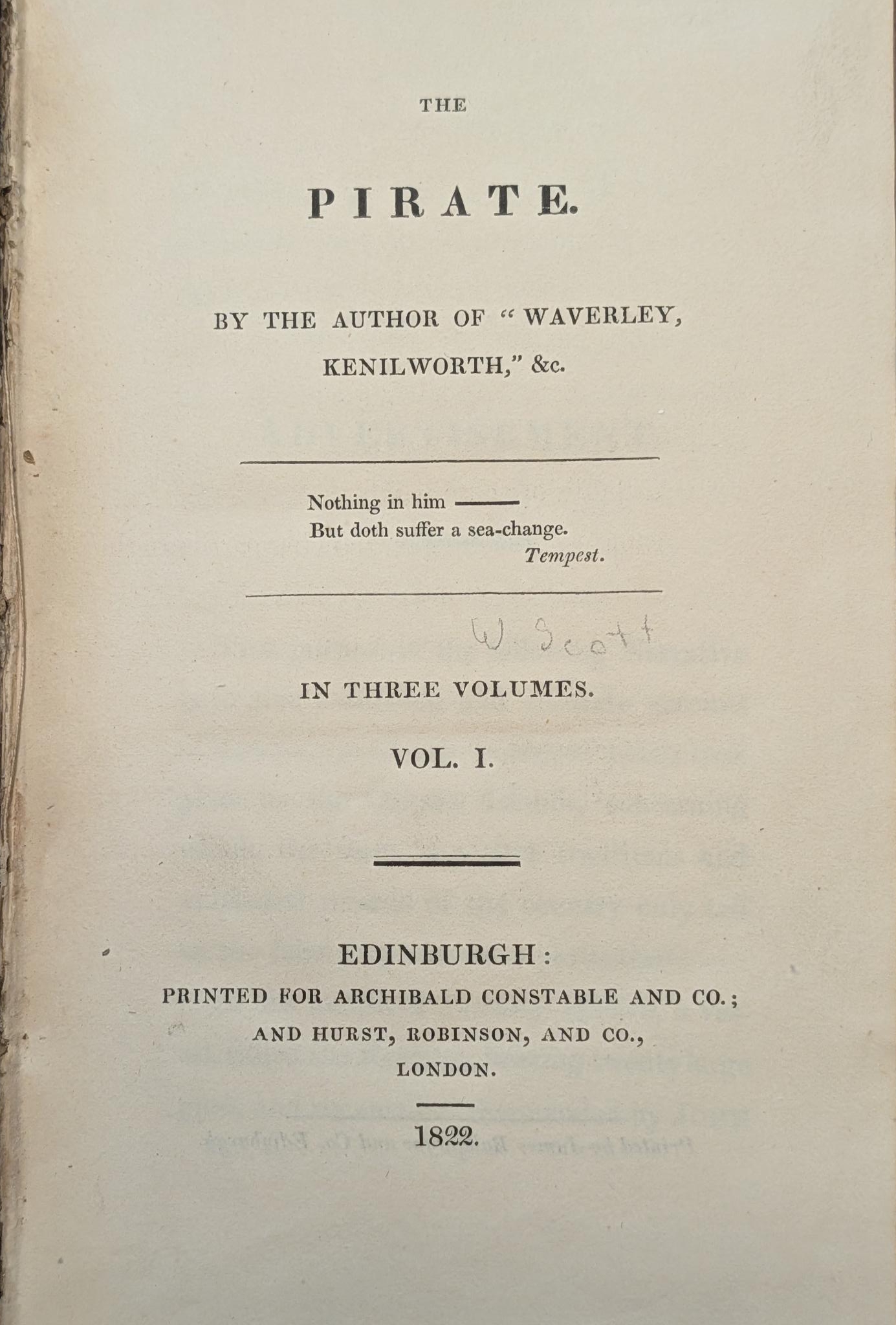
One of Scott’s romantic Waverly novels, the tale has no ghosts but those from the past and has only Gothic elements rather than the whole, but it still has enough remote island moodiness to qualify for this list. No less than Anais Nin as a teenager wanted to read this adventure of old sins, young love, remote windswept locale, and, of course, attack by pirates. Inspired by Scottish pirate John Gow (born circa 1698, hanged 1725), it takes place circa 1689. Never mind the anachronism: it’s fiction after all. Best read by the fireside during an evening storm with a sea-peaty Scotch whiskey in-hand, preferably one from the Scottish islands. Extra points if read in this manner by the seaside in winter (double extra if on a Scottish isle in winter). So famous was Scott that his name is not only not on the title page above, but is nowhere to be found in the book. “By the author of…” suffices.
And, Last But By No Means Least…
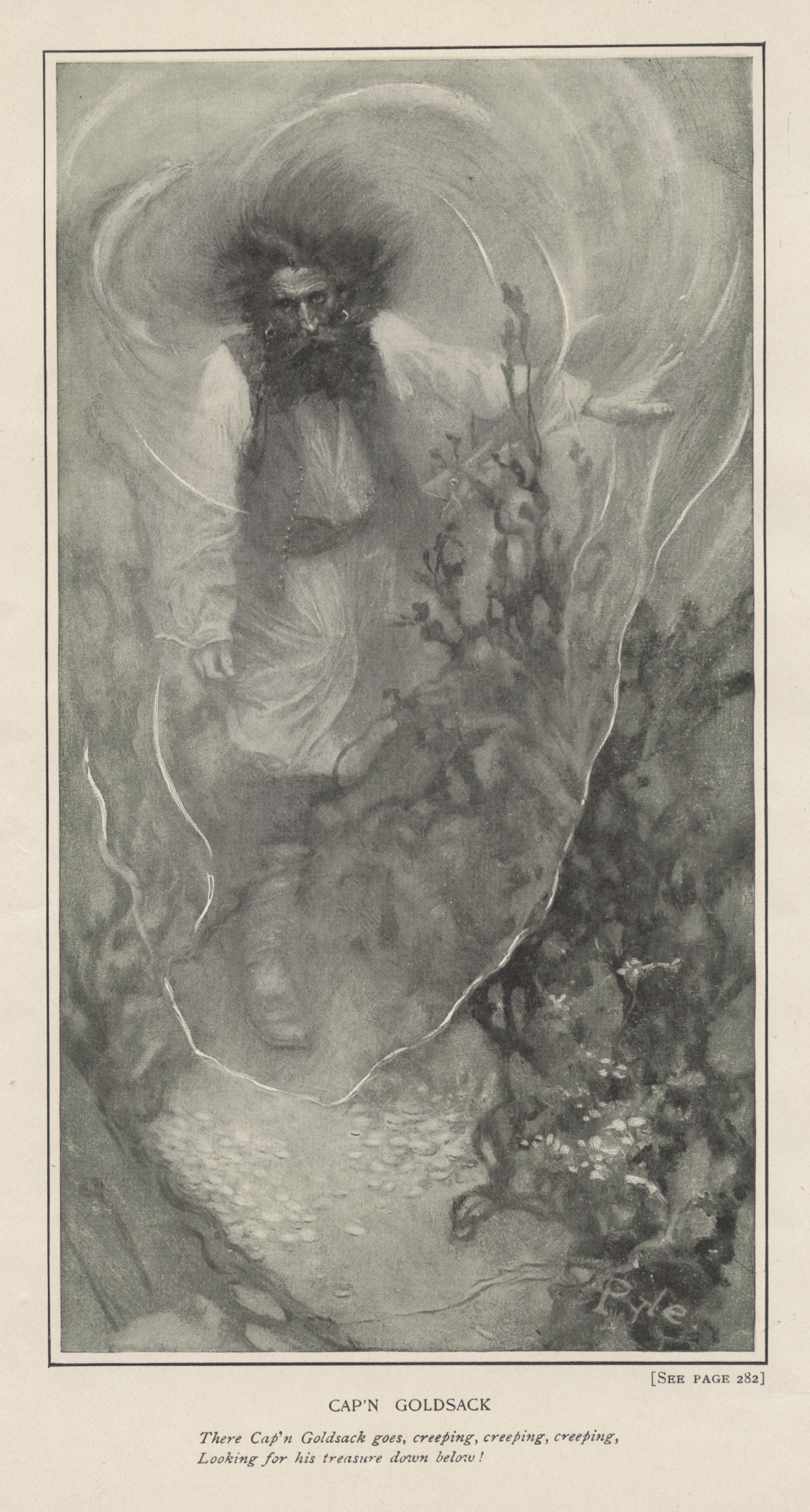
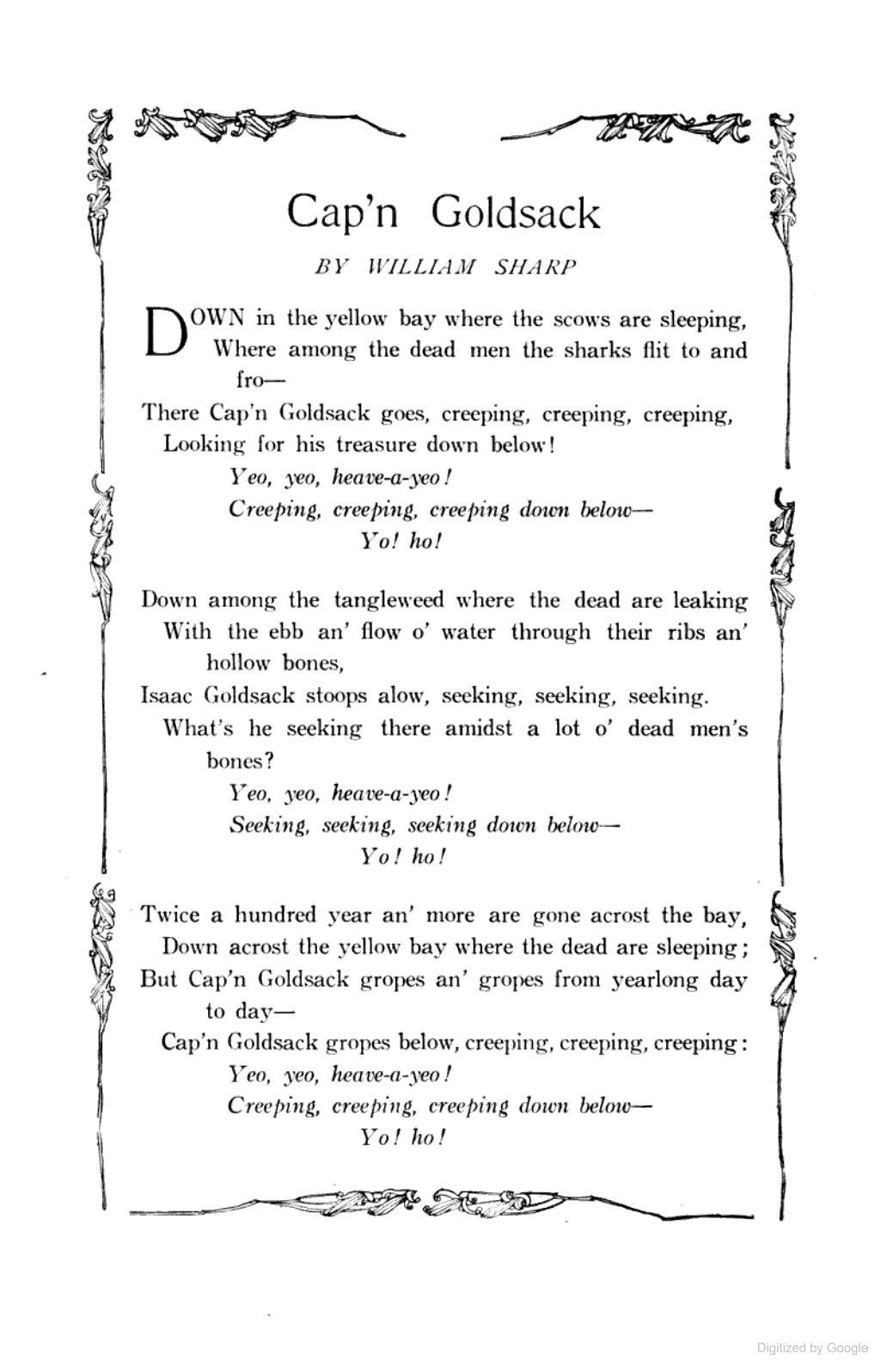
“Cap’n Goldsack” by William Sharp, Illustration by Howard Pyle, 1902
Copyright Benerson Little 2026. First published October 19, 2026. Last updated October 26, 2026.

The Eyes Have It! Or Do They? Where to Look When Crossing Swords
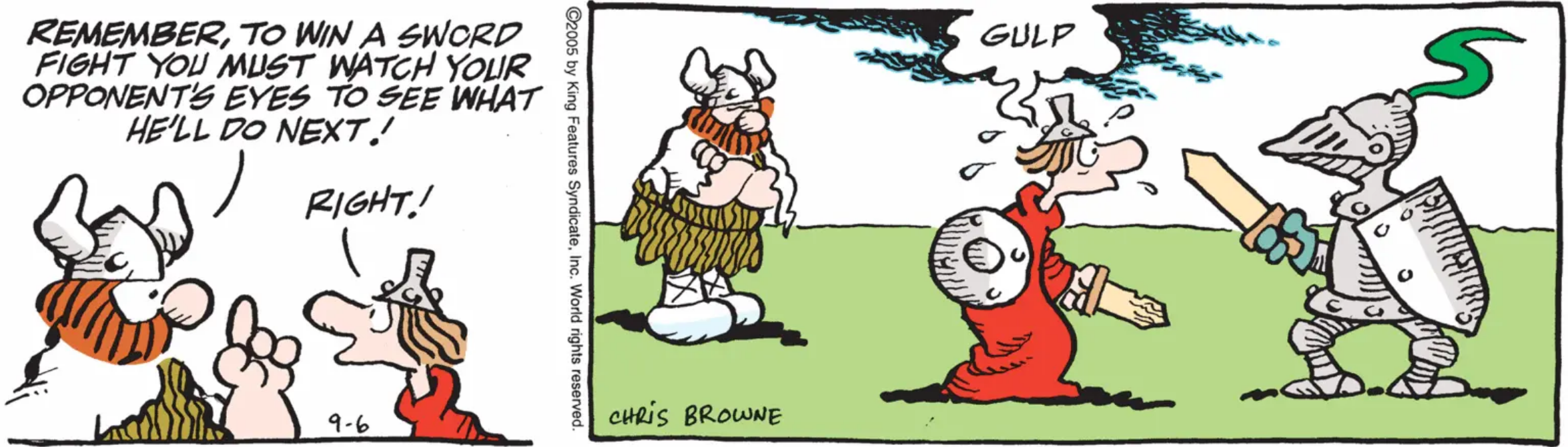
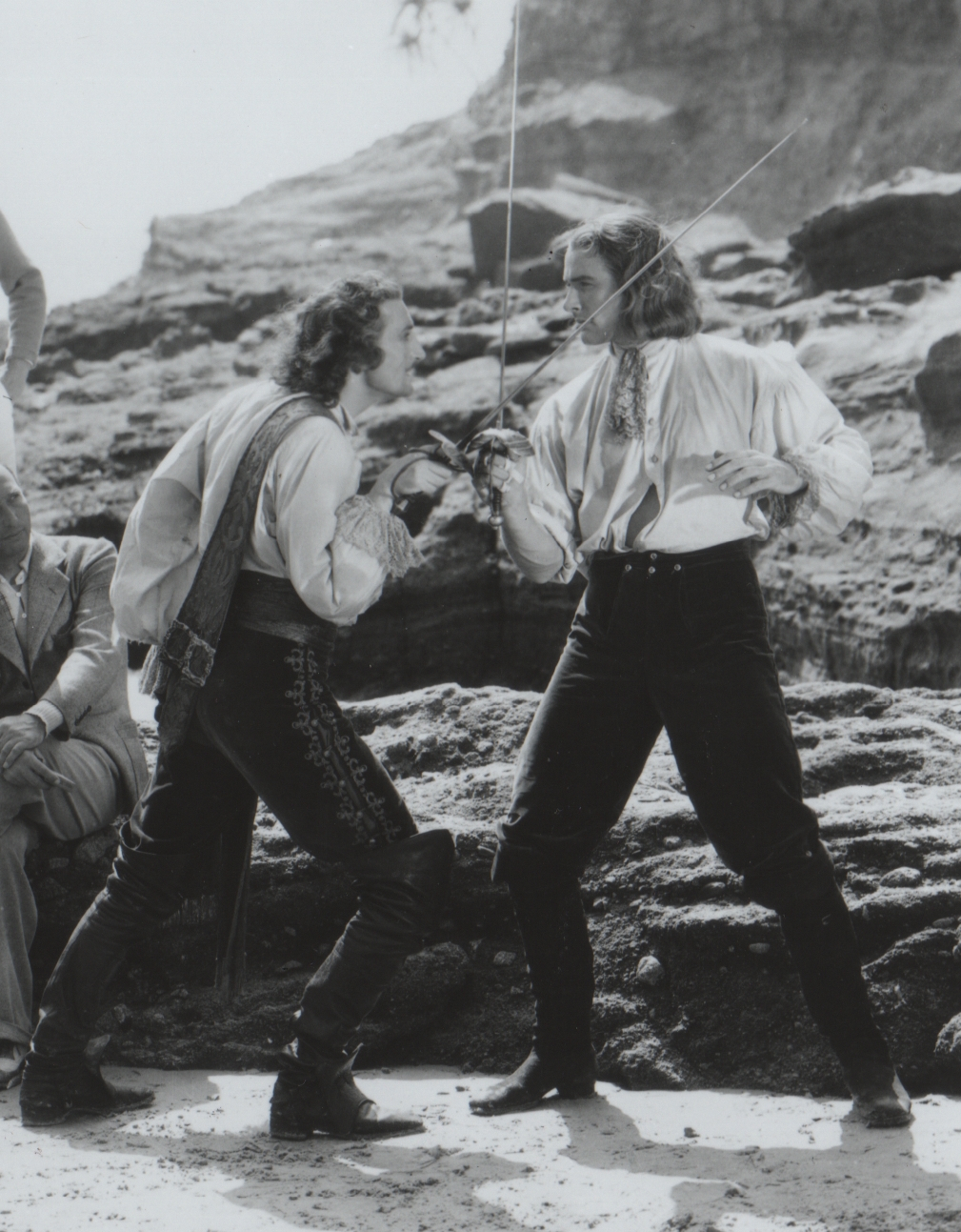
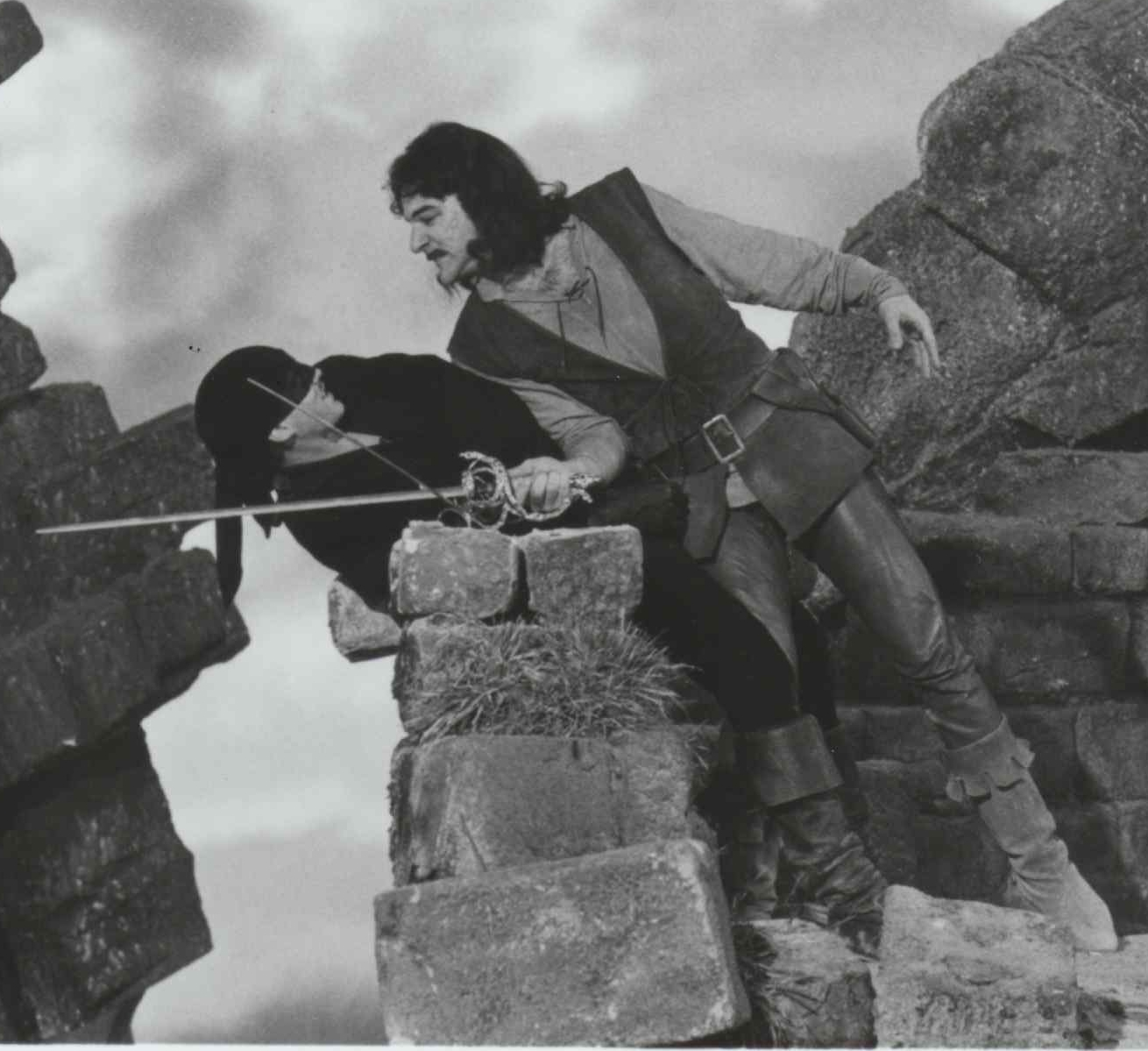
The scene is a familiar one: a fencing master admonishes a student to keep their eyes on those of the adversary when crossing swords, for “the eyes are the mirror of the soul” or “the eyes never lie” or “the eyes give away the adversary’s intention.”
Or some such superficial scripted pithiness.
But is this really where you should look when crossing swords? Or is this advice just a creation of fiction and film, a common trope that sounds great but would get you hit in a bout or killed with sharps?
After all, anyone who’s ever been deceived in love or even by a common salesperson knows that the eyes can lie, that the eyes can conceal intent, the eyes can hide the true soul, even if at times they can indeed do the opposite.
To answer the question, we’ll take a look at the advice of some fencing masters and duelists over centuries. The reader may then pick and choose. First, a few notes and comments.
Fencing Masks
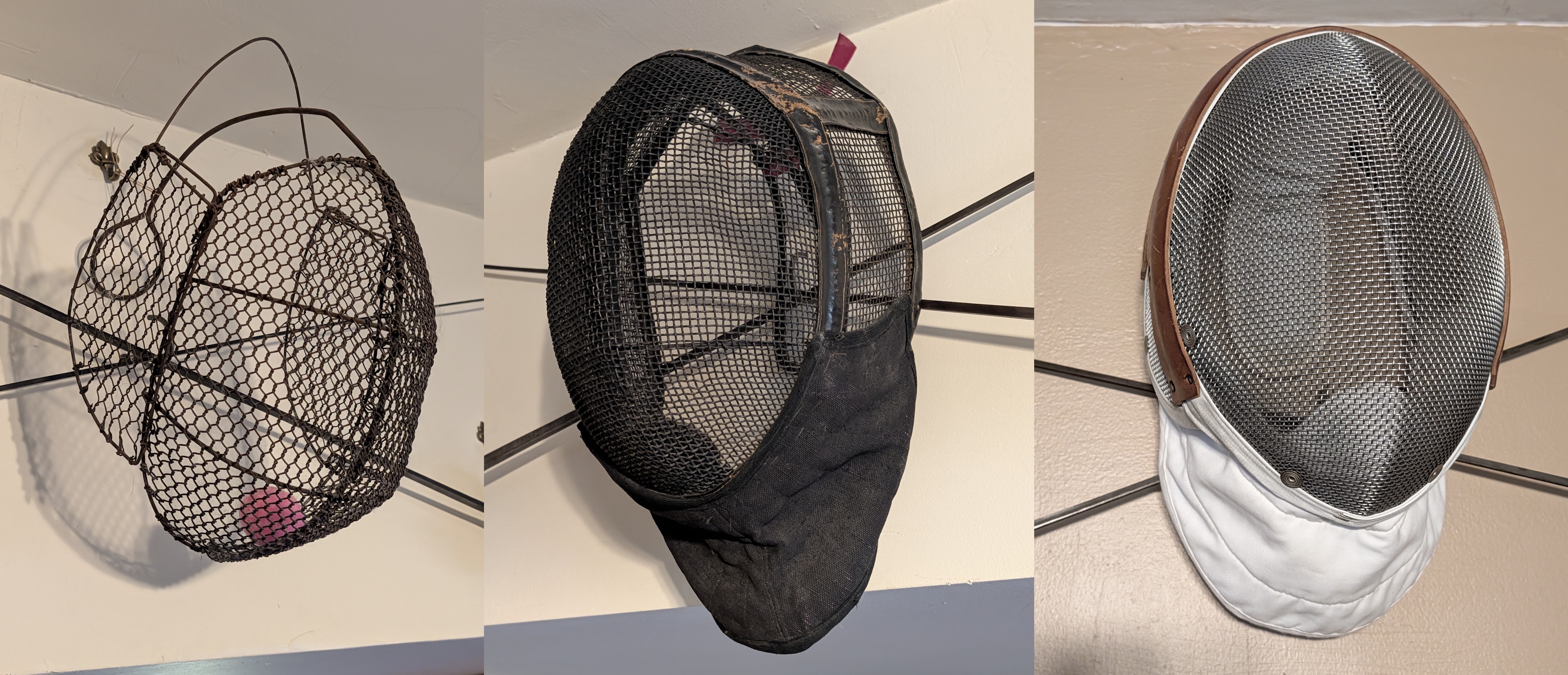
Notably, our question is complicated by the fact that fencers for the past century and a half (a small number used them two centuries ago) have trained and competed while wearing fencing masks. The adversary’s eyes could still be easily seen through early masks with their large mesh, but less so when the mesh was made closer and stronger in the late 19th century. Even so, it is possible to see the adversary’s eyes to a limited degree through the mesh of modern masks if, like a soldier in the jungle focusing not on the immediate flora but beyond it, you focus not on the mesh, but just beyond it. Still, masks present a problem in answering the question, even more so in the late 19th and early 20th centuries when duelists trained with masks but fought without them.
Briefly in the very late last century masks with a clear Lexan plastic polycarbonate section in front of the eyes were tried but soon abandoned for reasons of safety — there was no guarantee a blade might not find its way between mesh and polycarbonate or even through the polycarbonate itself. The primary inspiration behind the clear masks was not so that fencers could “sound the depths of an adversary’s soul” or even “evaluate an adversary’s state of mind,” but so that the video audience could see the fencers’ eyes. In the late 90s the International Olympic Committee considered dropping fencing from the Games, and since then the FIE (fencing’s international body) has bent over backward to make fencing audience-friendly at the expense of swordplay’s soul. (Fact: sophisticated fencing will never be audience-friendly.)
Other Martial Arts: Boxing & Escrima
I’ve boxed and practiced escrima and although I’m no expert in either, the experience was instructive. Historically, some boxers have focused on the adversary’s eyes and used peripheral vision to watch the hands, while others, including many today, focus on the neck or collarbone or upper torso (or just “forward”) and use peripheral vision to pick up hand movement. Focus on one hand and you’re likely to get hit with the other. Likewise do eskrimadors tend to focus not on the eyes but on the chest, and use peripheral vision to watch weapons and weapon hands — and they do bear watching, for a mistake can easily result in broken fingers and more.
Weapons in Both Hands
The question is also complicated by whether the adversary is armed with a single sword or has another weapon in the off-hand — watch one hand or weapon too closely and you’re liable to get hit with the other, as in boxing and escrima. However, in the case of early modern and modern Western swordplay and its common stance of lead foot matching lead hand, an off-hand weapon, typically used for defense, is usually held farther back and is shorter than the lead, making the focus on the primary hand less of a liability than it would be in boxing or any of the “hands and feet” martial arts. Peripheral vision picks up the offhand weapon.
Practical Experience
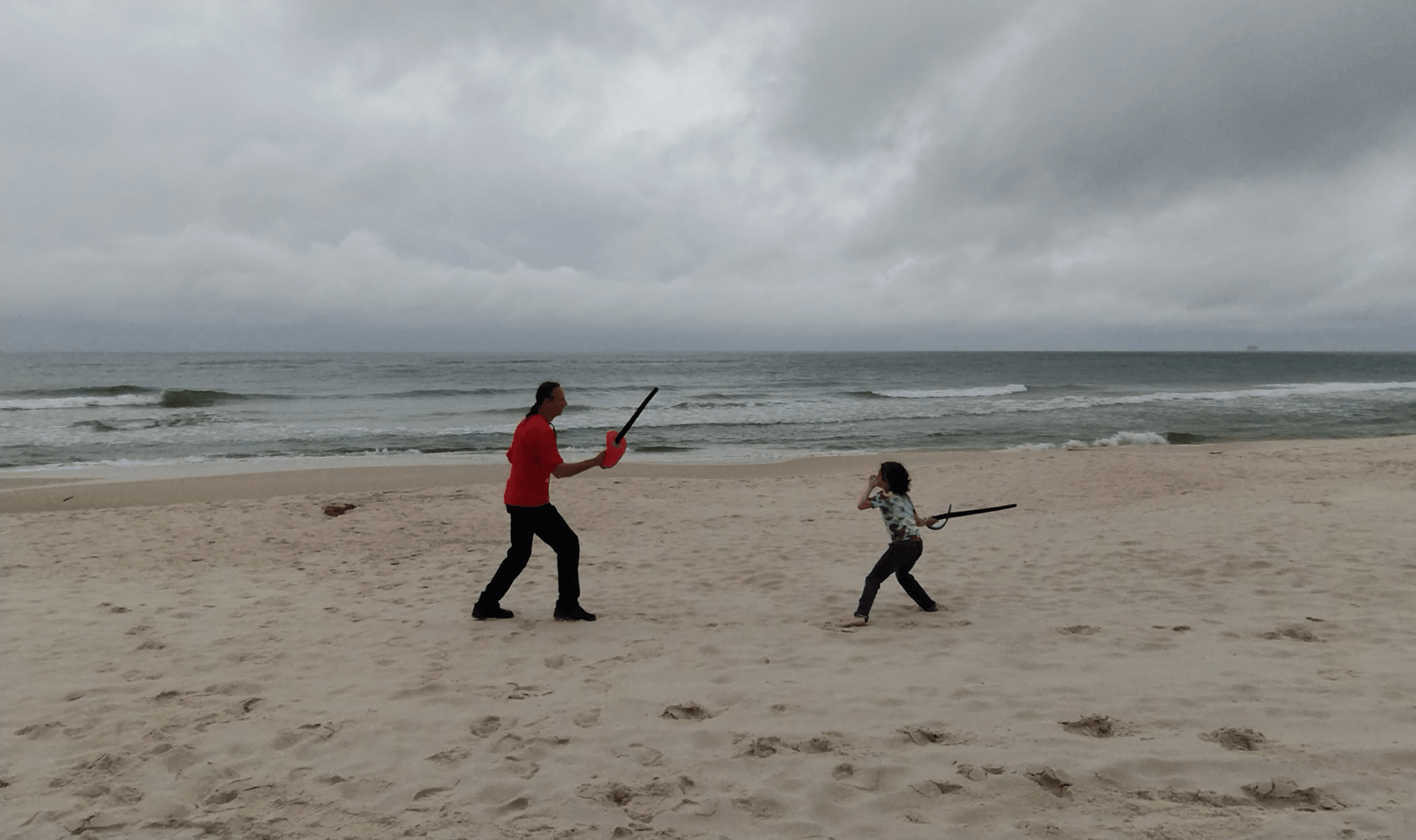
I can attest after a conservative estimate of four hundred hours or more fencing vigorously with my two youngest children — furious fencers both — with foam swords and without masks, that the utility of watching the eyes rather than the weapon is far over-hyped. As Donald McBane noted, an occasional glance may be useful, but watching the eyes takes your focus off the threat and you get hit. Only once with each child did I get away with cheap shots like glancing over the shoulder and hitting when they looked away, or feinting at the face to make them blink, then finishing low. These worked only when they were very young, although admittedly I explained immediately afterward what I’d done so they wouldn’t be surprised again.
I never had the opportunity to take tempo on either child because I saw hesitation in their eyes, and on several occasions I was hit when I found myself caught up in the emotion — elation, fury, joy, focus — in their eyes. The most useful information I gained from looking into their eyes was that they were serious about running me through. Figuratively, of course, or mostly so. We were fencing for fun, which is the only way to fence. (And no, only now are my wife and I slowly introducing them to modern fencing — we don’t want to spoil the joy of swordplay nor burn them out as is all too common these days as children much too young are garbed, armed, and thrust onto the strip with too little preparation. Ours can already handle sword and dagger, all sorts of terrain, and multiple adversaries! In other words, no modern helicopter parent or helicopter parent-pleasing coach has ruined, or will ruin, swordplay for them.)
Likewise fencing with my wife with padded sabers by Go-Now of Poland, without masks (which requires a bit of care because the swords are not soft “bonkers” sometimes used in therapy or just for a bit of safe violent fun), I was unable to use what I saw in her eyes to much effect, and too much time spent on her intense eyes meant I got hit because I wasn’t watching her sword.
A Caveat
Remember, the advice below is general advice. Your eyes will shift when fencing, in particularly onto targets as you attempt that final thrust.
A Brief Selection of Fencing Masters on the Subject
Note: the great majority of fencing masters don’t even bother to discuss the subject! And most of those who do were teaching fencers how to fight with real swords. The loss of a single touch in a sport fencing bout because the eyes stray might not matter much — but in a fight with sharps it could be fatal.
With all this in mind, here we go:
Ridolfo Capo Ferro, 1610: in rapier play, watch the adversary’s hand.
Francesco Antonio Marcelli, 1686: in single rapier play, watch the eyes or watch for movement.
Sir Wm. Hope, 1694: with the smallsword and backsword, keep your eyes on the adversary’s or sword hand, not on the point or middle of the blade. Do not look at the eyes for they are deceptive.
Donald McBane, 1728: with the smallsword, shearing sword, broadsword, and backsword, watch the wrist and point. Occasionally check the eyes to check the adversary’s temper, but only seldom lest you be deceived.
John Godfrey, 1747: with the smallsword and backsword, watch the weapon hand or point.
Joseph Roland, 1809: with the smallsword, focus on the adversary’s sword, not on the eyes as is “generally supposed.”
Clovis Deladrier, 1948: in epee fencing, watch the guard.
My own masters, Dr. Francis Zold and Dr. Eugene Hamori (1977 onward): in foil, saber, and epee, focus on the guard and point (doubly so in epee, for the combination of guard and point positions are vital). Use your peripheral vision to track distance from the adversary’s lead shoulder, and to note the adversary’s footwork.
The best advice to my mind is the combined advice of Donald McBane and of my own fencing masters.
As a side note, remember that not only can the eyes be deceptive, but so can footwork, blade-work, tempo, distance, body language, and more. The hand, in a very simple example, when subtly drawn back can entice the opponent, who confuses watching the hand or guard with judging distance by it, into range.
Remember, fencing, whether as sport or duel, is a finished skill of violent or pretend-violent competition that permits honorable deception, that is, within the accepted customs and rules.*
Everything in swordplay can be used to deceive.
Copyright Benerson Little 2026. First published 24 September 2026.
* Gamesmanship is nothing more than cheating within the rules, to quote former member of the US epee team in 1955 and 1956 Olympic Games epee team member alternate and FIE rules committee member Roger Jones, and its practitioners should be shunned. Cheating is entirely dishonorable and its practitioners should be banned from the sport.
Arr! Arrg? Yar? In Honor of Talk [Authentically] Like a Pirate Day!
Talk Like a Pirate Day! [Authentically Even, By the Powers!]
I apologize up front for this hasty homage and celebration of Talk Like a Pirate Day, for it is composed largely of text of posts of mostly authentic pirate speech I’ve made on Facebook on TLAP Day over the past decade or so. The quotes are fun and instructive.
Before I begin, I want to render honors to those who inspired this day created by “Ol’ Chumbucket and Cap’n Slappy” aka John Baur and Mark Summers in 2002: Captain John Smith (whose sea fight description was transcribed aka plagiarized into several 17th century seafaring texts), Mark Twain (yes indeed did Tom, Huck et al know how to talk like pirates!), Robert Louis Stevenson, J. M. Barrie, Jeffrey Farnol, Wallace Beery, and Robert Newton.
Several authors over the past quarter century, myself included, have identified Robert Newton as the most significant origin of caricatured “pirate speech” aka “talk like a Hollywood pirate.”
Newton starred first in Disney’s Treasure Island as Long John Silver, followed by two more pirate films, reprising his role in one of them as Long John Silver, and then again in a TV series. The earliest non-fiction author I recall identifying Newton as the origin of our idea of pirate speech is maritime historian David Cordingly in 1997.
However, the real credit should probably go to George MacDonald Fraser in his comic novel The Pyrates, 1983/84, in which he clearly identifies the origin of Hollywood pirate speech as Robert Newton and his iconic West Country accent.
“Talking like a pirate” has been popularly recognized at least since the early to mid 19th century, Tom Sawyer being a well-known early example. Hollywood quickly recognized and accepted pirate tropes and created many, including pirate speech. Comedy was a prime venue for pirate talk, as in a 1963 episode of The Red Skelton Hour.

Hollywood Favorites
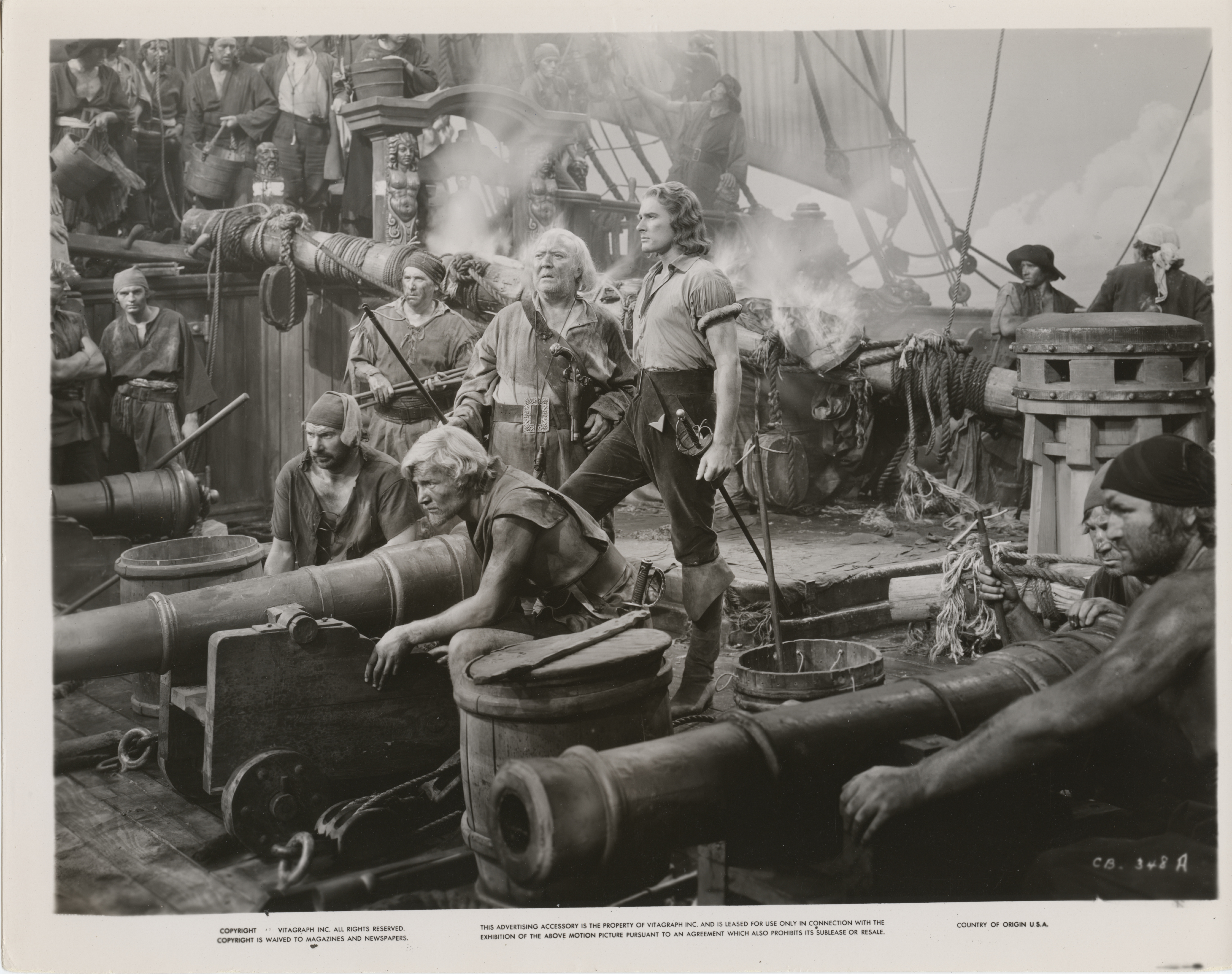
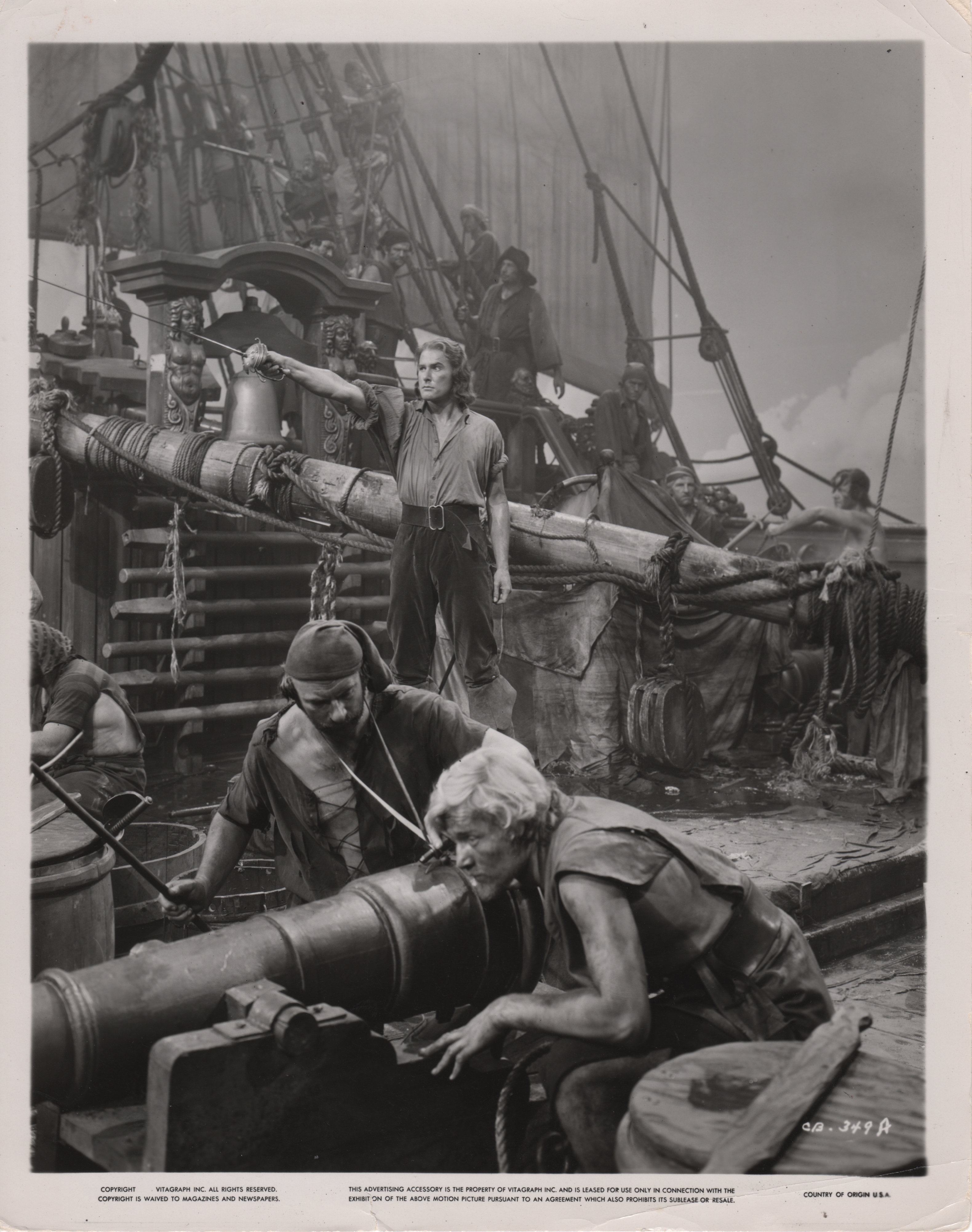
“On, now, Jeremy!” cried Blood. “Straight into them before they recover their wits. Stand by, there! Prepare to board! Hayton … the grapnels! And pass the word to the gunner in the prow to fire as fast as he can load. … Musketeers to the prow!”
—the fictional Captain Peter Blood in Captain Blood: His Odyssey by Rafael Sabatini (1922), during the finale against the French fleet at Port Royal, Jamaica, set in the year 1689.
“All right, my hearties, follow me!”
—Errol Flynn as the fictional Captain Peter Blood in Captain Blood (Warner Bros., 1935, Casey Robinson screenwriter) during the finale against the French fleet at Port Royal, Jamaica, from the gun’l, his ship sinking, just before he swings Hollywood-style from ship to ship, leading his men in a boarding action. The line is not in the published script, but apparently was written or adlibbed during filming. The original line was “Over we go, lads!” Flynn also uses much of Sabatini’s language above prior to boarding.
Real Pirate Speeches & Exhortations in Battle
“Yes, follow me and doe not lye behind, for if I doe amise* You will all fair the worse for itt.”
—Captain Richard Sawkins, English buccaneer captain, landing himself first and leading the attack against the “stokadoes” on the río Puebla Nueva (in the modern district of Remedios, Panama) in 1680, as quoted by buccaneer “E. P.,” doubtless Edward Povey. Sawkins “went up corragiously with some brisk men with him, butt their was provided Mollattas and hunters with their launces which came to oppose him. He fierd his Pistole and shott downe one Musteese, the rest fiering and lodeing as fast as they could, but the Spaniards coming in upon them so fast that kill’d capt. Sawkins and 3 men more.” The buccaneers were forced to take to their heels.
* Probably amiss: to go amiss, to fail.
“Have a good courage. We must either defend ourselves like good soldiers, or lose our lives with all the riches we have gotten. Do as I shall do, who am your Captain. At other times we have fought with fewer men than we have in our company at present, and yet we have overcome greater numbers than there possibly can be in this town. The more they are, the more glory we shall attribute unto our fortune, and the greater riches we shall increase unto it.”
—Captain François L’Ollonois, aka Jean David Nau, prior to the attack on Gibraltar on Lake Maracaibo in 1666, as quoted by Alexandre Exquemelin, buccaneer-surgeon and buccaneer chronicler who likely sailed under him, from the 1684 English edition (Crooke) of The Buccaneers of America. The speech, while it might be authentic, might also be embellished, recreated and revised from poor memory, or even apocryphal, added after the fact for editorial emphasis. L’Ollonois, a bloody-minded buccaneer and murderer, was killed by Native Americans on the Darien coast in 1669, burned, and his ashes reportedly scattered to the wind.
“You are too experienced to not understand the peril we are running, and too brave to fear it. It is necessary here to be cautious of all yet to risk all, to defend and attack at the same time. Valor, deception, fear, and even despair must all be put to use on this occasion; where, if we fall into the hands of our enemies, nothing awaits us but all sorts of infamies, from the most cruel of torments to, finally, the end of life. We must therefore escape their barbarity; and to escape, we must fight.”
—Captain Laurens de Graff, Dutch buccaneer in the service of French flibustiers, prior to his fight against the Capitana and Almirante of the Armada de Barlovento in 1685, each ship twice the size of de Graff’s Neptune and throwing twice its weight in iron, as quoted (and perhaps embellished, and clearly edited) by Alexandre Exquemelin in the French edition of The Buccaneers of America. De Graff was later wounded in the action, but ordered his men to carry him back on deck when he noticed his ship’s guns slacking their fire. The Spanish men-of-war took enough of a beating that they fled the scene overnight. (My translation.)
Sea Battle
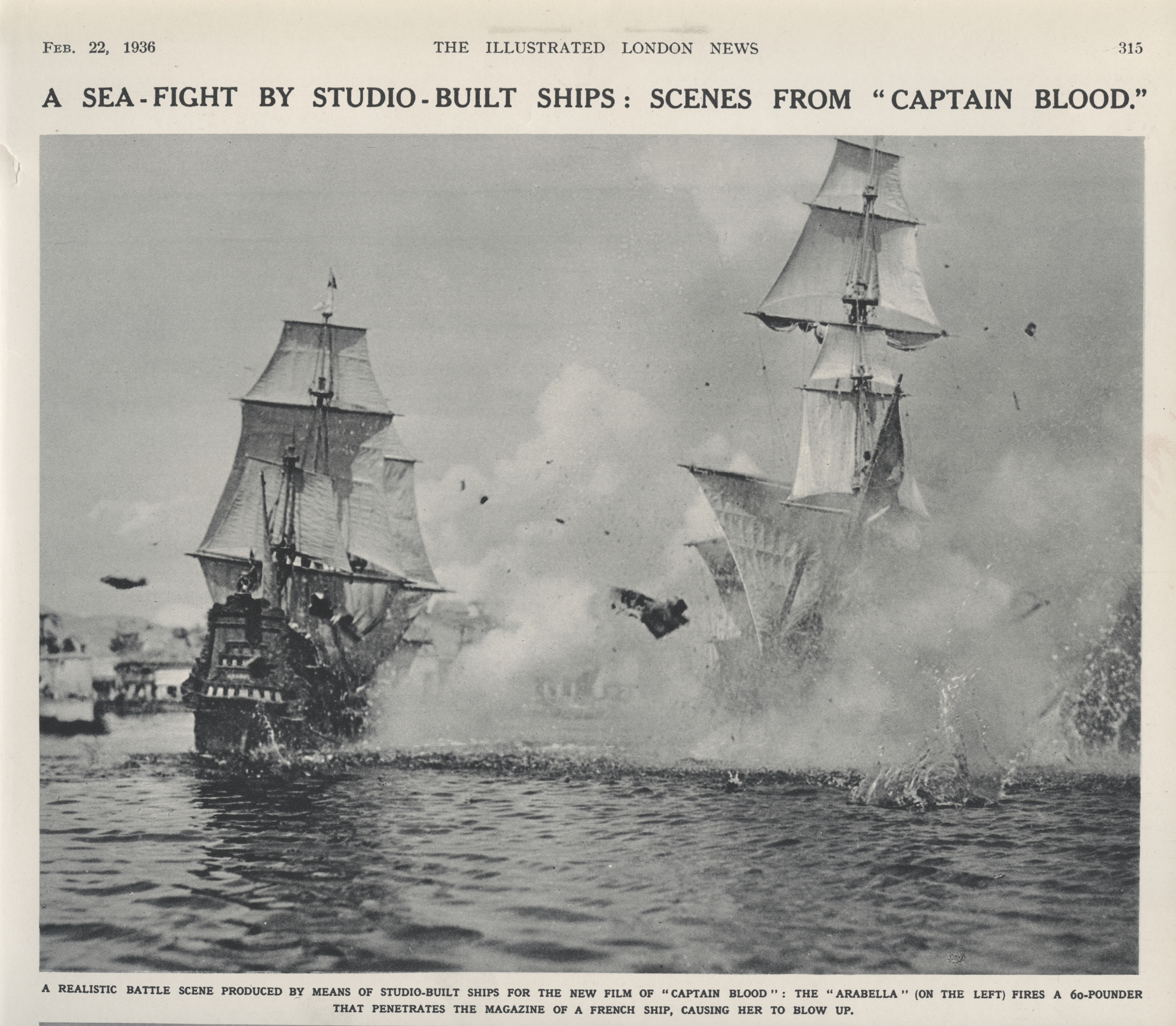
“Come chearly my Hearts! It is a Prize worth fighting for… Hold fast Gunner, do not Fire till we hail them with our speaking Trumpet; Port edge towards him; so, now we are fairly along side of him, and within Musket shot: Come, my brave Men, run out your Guns, and give him a Broadside, a Volley of small Arms, and a Huzza. Well done, my Hearts! He returns our Compliment, by firing his Broadside upon us. What chear, my Hearts, is all well betwixt Decks? Yea, yea, only he has rak’d us through and through; no Force, it is his Turn next; but give not Fire again, till We are within Pistol shot: Port edge towards him, he plies his Small shot. Come, Boys, Load and fire our small Arms briskly at him… Starboard a little; Give fire, Gunner! (That was well done!) This Broadside hath made their Deck thin, but the small Shot at first did gaul us. Clap in some Case-shot in the Guns you are now a loading; Brace too the Fore-top-saiI, that we may not shoot a head; He lies broad off to the Southward, to bring his other Broadside to bear upon us. (Starboard hard!) Get to Larboard Fore-tack; trim your Topsails, run out your Larboard Guns. He fires his Starboard Broadside upon us. He pours in his small Shot. Starboard give not fire until he fall off, that the Prize may receive our full Broad-side. Steady: Port a little; give fire Gunner! His Fore-mast is by the board. This last Broad-side hath done great Execution. Cheerly my Mates, the day will be ours!”
—Sturmy’s Mariner’s Magazine, 1669, with a slight update from Kelly’s The Modern Navigator’s Compleat Tutor, 1733. Exclamations added. This text, with occasional minor variation, is found in several various period books on seamanship, including a book on ships, seamanship, and sea fights by Captain John Smith of Pocohontas fame (or infamy).
“[H]owever nothing daunted at the disadvantage of Fight, we made a resolution rather than drown in the Sea, or beg Quarter of the Spaniard, who we used to Conquer, to run the extreamest hazard of Fire and Sword, and after a sharp Contest, still birding with our Fusees as many as durst peep over Deck, we boarded one of them, and carried her; so with her we took the second; and the third had certainly run the same fate, had not she scoured away in time…”
—Buccaneer John Cox
“Shee fierd a Harkquebus att us, att which wee presented them with a whole Volley; she fier severall small gunns at us, and wounded 3 men. one of them after-wards died. wee laid her aboard and tooke her. She had about 30 hands in her, fitted out for an Armadillo to come downe to the Isle of Plate, to see what a posture we lay in…”
“A Barkque wee gave chase to butt could nott fetch her upp. she seeing all our cannoes getts into Pennamau and makes alarme. their was by Relacion putt on board the shipp and Barkques which came out to fight us 300 Soldados and Armed men. wee had about 3 howers dispute and tooke them all. wee killed and wounded many men. And Brave vallient capt. Peter Harriss was shott in his cannoe through both his leggs, bordeing of a greate shipp. their was nott any gott cleare only on [one] small Barkque that rann into Pennamau againe. itt being all done and Quiatt, the Spanish Gen’ll being kill’d wee tooke his Chief captaine, one capt. Berralto, who being an Antient Seaman in those seas we caused him to be our Pylott, he being the commdr. of that shipp that carried away the Riches from Pennamau to Limma about 12 years since, that same time when Sr. Henry Morgan tooke Pennamau. this capt. Berralto was much burnt, and his peopple most of them kill’d and blowne upp, for as thay fought us thay had scatter’d loose powder on their decks, which tooke a fier by some accident or other, that wee seeing itt borded them and tooke them. these 7 sayle of shipps we tooke att Pennamau was not above half unloded. their lading was flower, linnen and woolen cloath, one greate shipp half laden with Iron. wee desierd of capt. Berralto which wear the best saylors. he told us on his word the Trinnity was the best in the South Seas, soe wee pitched on her for Admirall, putting capt. Harriss abord that was wounded. the Doctors cutting of one legg itt fester’d so that itt pleased god he died, so wee lost that Valliant brave Soldiar. then wee putt in capt. Rich’d Sawlkings into the Shipp Trinity and made him Our Admirall.”
“[A]bout the middle of August one night, as the greate shipp had us in a towe, we saw a saile in the darke. wee lett goe their towe, and made what saile we could to her, comes in half a hower up with her, and ha’ls her. Shee fierd a Harkquebus att us, att which wee presented them with a whole Volley; she fier severall small gunns at us, and wounded 3 men. one of them after-wards died. wee laid her aboard and tooke her. She had about 30 hands in her, fitted out for an Armadillo to come downe to the Isle of Plate, to see what a posture wee lay in; their was on Borde 2 very Honorable gentlemen, which came out for ther Pleasure to see us, wee being term’d amounge them a strainge sort of Peopple and cal’d by the name of Laddron [Ladrones, that is, thieves, a common Spanish term for pirates—Povey is making a joke.].”
“[W]ee had two men of war cannoes gon to windward for goates and had found, by relacion, 150 fatt ones, butt sleepeing alnight by a fier att the Sea Side and in the morning went to fetch their goates, lookeing out to se if the Sea weir cleare of shipps Spyed within 3 leagues of the Island 3 greate saile of Shipps, Admirall, Vise Adm’ll and Rear Adm’ll; seeing thiss, made what hast they could to their cannoes and soe on borde shipp, leaveing all their goates behind them bound. as soone as thay came near the Shipp thay warned us with 3 Motions, that wee understoode their was 3 saile. wee gott all our peopple that weir on shore off and what other things wee could, gott our anchor on bord, had nott time to gett the Other butt lett him slipp, hoysted in Our launch and canno’s. by thiss time thay weir came within sight of us; so near that wee could se a weapon florrished on the quarter deck of the Adm’ll. wee understoode wee had left one of our Strikears on shore that had gott under a tree to Sleepe, sent a cannoe for him but could not finde him, soe came of to the Shipp and left him their. [This was Will, the Moskito striker. His marooning may have helped to inspire Robinson Crusoe.] these 3 shipps Clings the wind and stands After us. the reare Adm’ll which was the least had 12 gunns, their Vise Adm’ll 16 and their Adm’ll 24. Our new capt., being Jno. Watkins, would have gon aborde the Adm’ll if the Party had beene willing; wee could wronge them by sayling att our Pleasures, bye or large, soe that wee played with them a day and a night. then wee concluded twas our time to goe downe and take Arrica, the Place that wee made an attempt att before.”
—Buccaneer Edward Povey. His unedited personal journal is one of the most authentic sources of “pirate language” in English.
Pirate Swordplay Speech
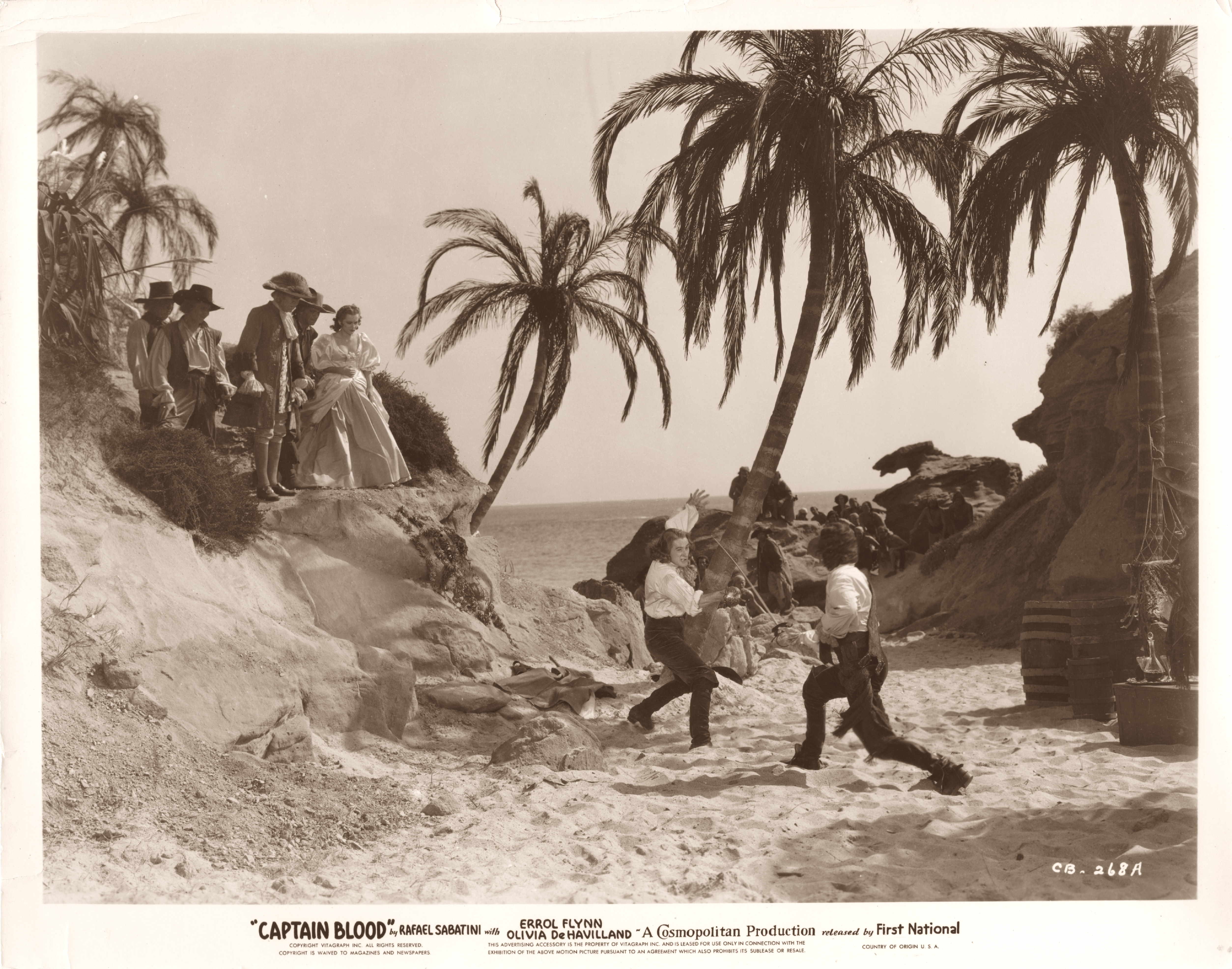
“Voilà! With this I shall avenge the insult you have given me,” said Capt. Laurens de Graff as he drew his sword.
Or, in the original French: “Voilà,” dit Laurent mettant l’épée à la main, “ce qui me venger de l’injure que tu mas faite.”
—Alexandre Exquemelin in his French edition quoting Laurens de Graff
“On Thursday afternoon Admiral Lorenzo [Laurens de Graff], seeing how we suffered [from thirst and hunger], told the General [Nicolas Van Horn] that they should cast us ashore as I wanted them to do. The General grew angry and told me he would put us to the sword. At these words the Admiral drew his cutlass with such agility that before the General had put himself on guard Lorenzo had cut him in the arm and ear. They [the pirates] stopped them and I heard the admiral call his soldiers and send him [Van Horn] to his ship which was the almiranta [Van Horn’s St. Nicolas], and from this day we saw him no more.”
—Fray Avila describing the sack of Veracruz in 1683, excerpted from The Golden Age of Piracy by Benerson Little. The duel took place in 1683 on the Isla de Sacrificios near Veracruz, between Dutch buccaneer captains Laurens de Graff and Nicolas Van Horn. The duel, fought with cutlasses, lasted but a moment, with de Graff the easy victor: Van Horn was a poseur, while de Graff was an adventurer well-skilled in arms. It is the only documented duel between buccaneer or pirate captains during the Golden Age of Piracy. Of course, de Graff’s words may be apocryphal. The Spanish eyewitness to the duel doesn’t mention them and Alexandre Exquemelin, who quotes de Graff, wasn’t present at the duel. My translation.
There are but few descriptive accounts of swordplay among sea rovers during the so-called Golden Age of Piracy, and none that give a good sense of the language, so here’s the next best thing. The first below is a newspaper account, which may be embellished or even made up, the second is an excerpt from Lieutenant Robert Maynard’s account of the action. In the hand-to-hand — or more accurately, sword and pistol — action, the two sides were of roughly equal numbers: the English naval seamen killed all the pirates while losing none of their own, although they had numerous wounded. So much for the idea that the early 18th century black flag pirates were great warriors! That’s what happens when you spend all of your time robbing merchant seamen who can’t fight back…
“Maynard and Teach themselves two begun the Fight with their Swords, Maynard making a thrust, the point of his Sword went against Teach’s Cartridge Box, and bended it to the Hilt, Teach broke the Guard of it, and wounded Maynard’s Fingers but did not disable him, whereupon he Jumpt back, threw away his Sword, and fired his Pistol, which wounded Teach, [Abraham] Demelt struck in between the with his Sword, and cut Teach’s Face pretty much; in the Interim both Companies engaged in Maynard’s Sloop, one of Maynard’s Men being a Highlander, engaged Teach with his broad sword, who gave Teach a cut on the Neck, Teach saying, well don Lad, the Highlander reply’d, if it be not well done, I’ll do it better, with that he gave him a second stroke, which cut off his Head, laying it flat on his Shoulder…”
—The Boston News-Letter, February 23, 1719 (Old Style)
“Immediately thereupon, he enter’d me with ‘o Men; but 12 stout Men I left there, fought like Heroes, Sword in Hand, and they kill’d every one of them that enter’d, without the loss of one Man on their [the Royal navy] Side, but they were miserably cut and mangled… We kill’d 12, besides Blackbeard, who fell with five Shot in him, and 20 dismal Cuts in several Parts of his Body…”
—Lieutenant Robert Maynard’s account of the hand-to-hand combat
A Drinking [Former] Pirate, Or Buccaneer and Privateer, If You Prefer
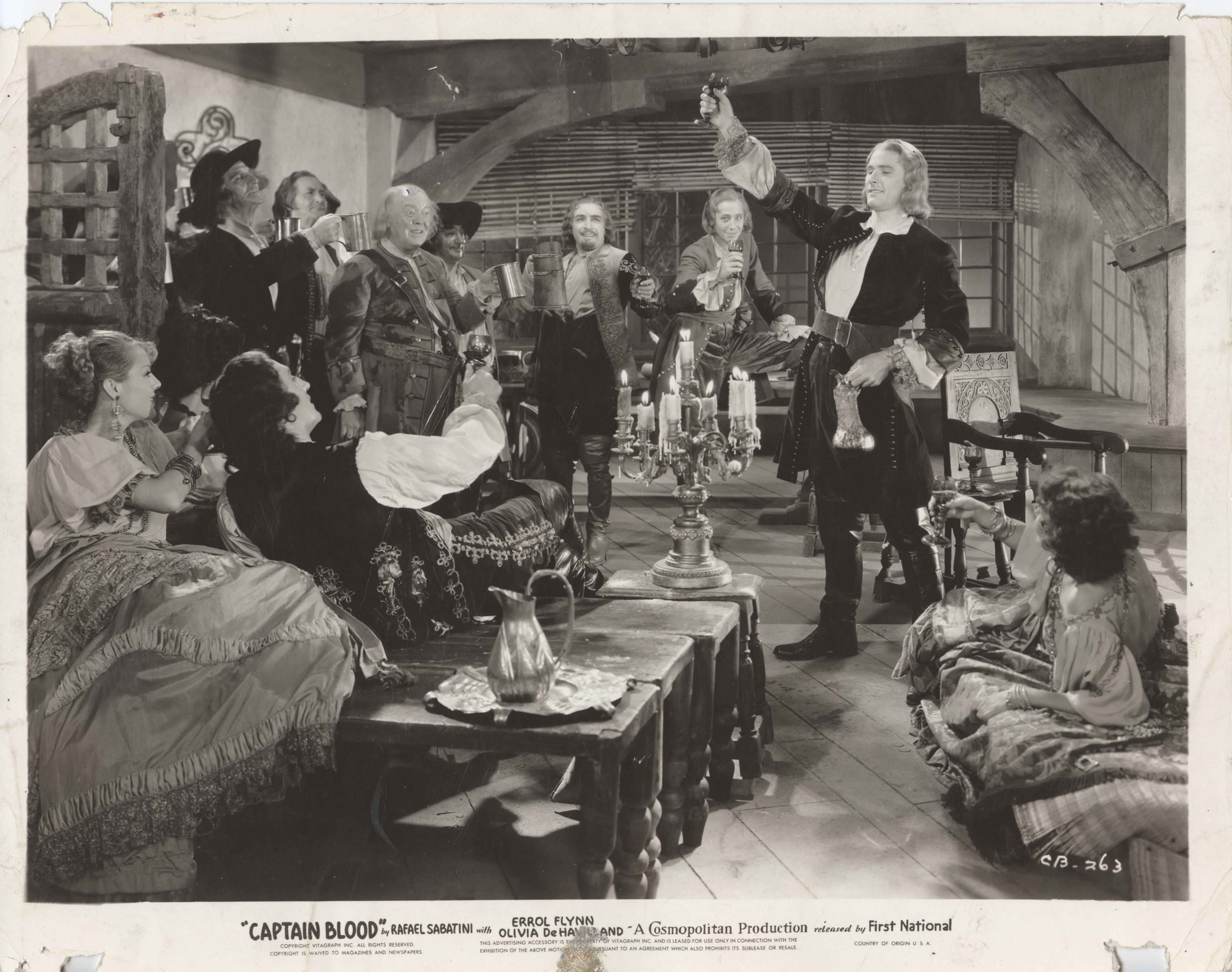
“In his drink Sir Henry [Morgan] reflects on the Government, swears, damns, and curses most extravagantly…”
—Calendar of State Papers, Colonial, America and West Indies.
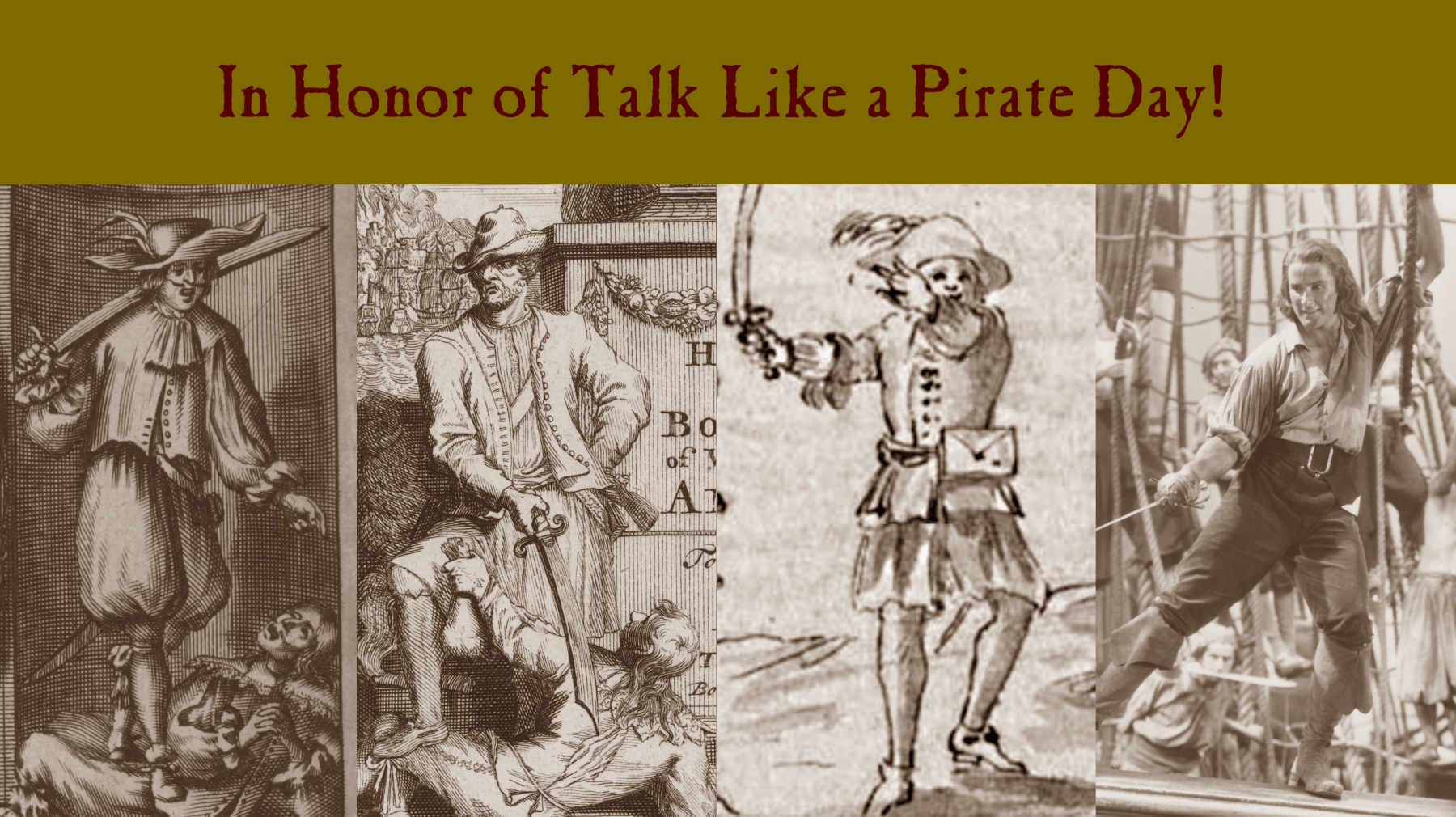
The probably French buccaneer on the far left in the illustration at the head of the page is a detail from De Americaensche Zee-Roovers by A. O. Exquemelin, 1678, in the Library of Congress; the probably Dutch buccaneer at left center is a detail from Historie der Boecaniers, of Vrybuyters van America by Alexandre Exquemelin, 1700; the French buccaneer at right center is an eyewitness illustration, that is, what one truly looked like, a detail from a chart of Petit Goave drafted in 1688 by Paul Cornuau, Archives Nationale d’Outre-Mer; and on the far right is Errol Flynn in a detail from a publicity still for Captain Blood, Warner Bros. 1935.
Copyright Benerson Little 2026. First posted 18 September 2026.

