
Home » Posts tagged 'flibustiers'
Tag Archives: flibustiers

The Duel on the Beach, Part V: In Reality

If you’ve read any or all of parts I though IV of this series (In Fiction, In Film, in Rafael Sabatini’s novel The Black Swan, and of the duel between Flynn and Rathbone in Captain Blood, you might be wondering if novelists and Hollywood have depicted buccaneer and pirate duels, a common trope of the genre, accurately. Like much that is popular buccaneer and pirate image, the answer is “yes and no,” or more precisely, “sort of sometimes, but mostly no.” If anything, the duels imagined on page and screen have caught some of the spirit of historical buccaneer and pirate duels, rather than actual practice.
One thing we’re sure of is that the real duels probably did not look like those engaged in by the swordsmen in the plate above!
N. B. Besides the links above, more information about dueling, swordplay, and swords among sea rovers and mariners of the era in general can be found in Buccaneer Cutlasses: What We Know; in chapter 17 of The Buccaneer’s Realm; and in chapter 8 of The Golden Age of Piracy, which has more detail and analysis than is found in this post.
We know that buccaneers and pirates fought duels occasionally, although detailed accounts of individual duels, with an exception or two, do not exist. Further, we know even less about the tactics and techniques of individual duels. In fact, only rarely do we even know what weapons were used in specific duels. Often the description is as spare as, “Here it was that our quartermaster, James Chappel, and myself fought a duel together on shore,” as buccaneer-surgeon Basil Ringrose wrote.
And why were duels fought among buccaneers and pirates? For the same reason they’ve always been fought: usually out of some misguided form of honor, although doubtless there were occasionally good reasons to fight. The gamut of human emotion easily gave rise to duels: jealousy, envy, avarice, lust, deep-seated insecurity, narcissism, pride and its exaggeration hubris, competition, and more. Specifically, pirates might fight over injured pride, insult, gambling, or a woman’s attention. Personal conflict, rum, and the confines of a vessel at sea doubtless fueled many of these deadly challenge fights.
(Numerous books and studies investigate the social origins of the European mania for dueling, and some include analysis of the actual practice of dueling. Among my favorites are V. G. Kiernan, The Duel in European History; François Billacois, The Duel: Its Rise and Fall in Early Modern France; and, probably my most favorite, Pascal Briost et al, Croiser Le Fer: Violence et Culture de l’Epée dans la France Moderne.)

According the Francis Rogers in a journal entry dated 1705 in regard to the Jamaica colonists, “Sword, or sword and pistol, is the common challenge to decide their affronts; except among the ordinary or sea-faring there the fuzee [flintlock musket] or cutlass is the weapon.”
It was not just buccaneers who were inclined to fight duels: the practice was commonplace. Quoting Francis Rogers again on the subject of Jamaican colonists, “They seldom want courage, being too forward in duelling on very slight occasions, standing much on their honour and scorning little base litigious actions.” Likewise the French and French colonists, and the Dutch as well. And Spaniards, including Spanish pirates? Likewise surely, given Iberian honor.
Among the late 17th century buccaneers and boucaniers (cattle and swine hunters who often sailed with buccaneers, some even becoming full-time buccaneers), the fusil boucanier aka “buccaneer gun” — a very long-barrelled, heavy caliber, typically (but not always) club-butted musket used to hunt cattle, swine, and Spaniards — was the primary dueling arm, at least among French buccaneers (the English and Dutch may have used it or another), and not the cutlass or other sword.
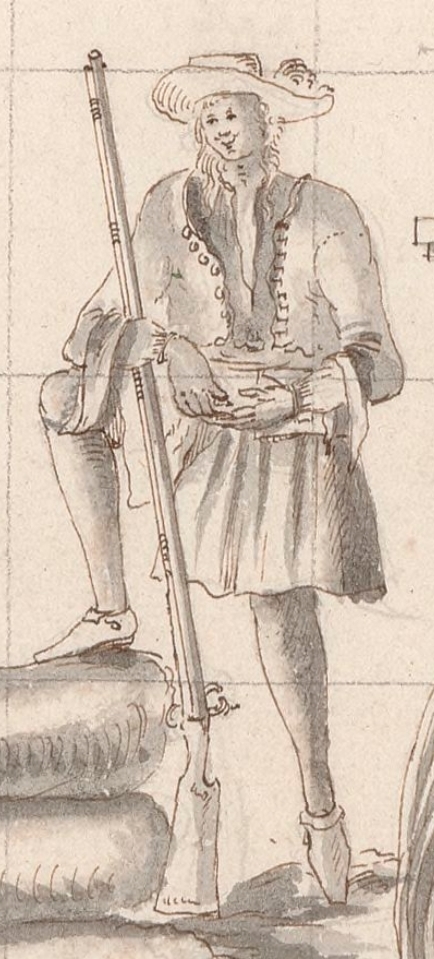
According to buccaneer-surgeon-author Alexandre Exquemelin, these musket duelists drew lots to see who would fire first, then stood at a predetermined distance apart. One hundred yards was a likely distance, in that it required reasonable skill to hit a man-sized target at this range. First the winner of the draw fired, then, if still standing, the loser. A surgeon examined any dead body to make sure there had been no back shooting. Such duels could only be fought ashore.
Cutlass duels were likely as well, but unfortunately we lack the descriptions of many duels, and in the case of affrays, especially when liquor was involved, the pistol or musket might be the weapon grabbed first. At sea, Captain Bartholomew Sharp once took a pistol shot at one of his buccaneer crew, Richard Hendricks, barely missing killing him. All involved were drunk. Ashore, Captain John Coxon took a shot at Captain Peter Harris, possibly with a musket. A duel, perhaps, or an angry affray. In any case, the shot fired in anger was due to personal animosities and competition among leaders. Captain Robert Searles, who sacked St. Augustine in 1668 and, drunk and otherwise engaged, permitted the treasure ship Trinidad to escape with much of the city’s treasure during the sack of Panama in 1670, was killed by another buccaneer while cutting logwood at Laguna de Términos, Mexico, although the circumstances are unclear: a duel, an affray–or murder?
No matter the weapon used, duels were usually fought ashore, for two primary reasons: there was more space in which to fight than in the close confines of a vessel, and the time required for a ship to anchor or even for the adversaries simply to be rowed ashore gave time for hot heads to cool. This is not to suggest that duels might never have been fought aboard ship, but if they were they were rare among buccaneers and the evidence for them is largely non-existent but for one source that states that some duels were fought aboard ship among buccaneers, a Dutch practice perhaps.
The source that suggests this is Zeer Aanmerkelijke Reysen Gedaan door Jan Erasmus Reining by Dr. David van der Sterre. Published in 1691, the book is a biography of Captain Jan Erasmus Reyning, one of many colorful buccaneers of the era. Van der Sterre said he met him at Curaçao and wrote a book based on the tales Reyning told. However, the book is of a common style of the era, that of the heavily-embellished biography and it is difficult to tell what is true and what is imagined.
According to the book, duels were common, including between captains and members of the crew due to the aggressive independent nature of buccaneers and their sense of each being primus inter pares or first among equals. One captain reportedly threw two cutlasses onto the deck of his vessel, challenging an impudent crewman. They then fought “like lions” until the crewman fell overboard, at which point the captain followed, hoping to cut him down in the sea.
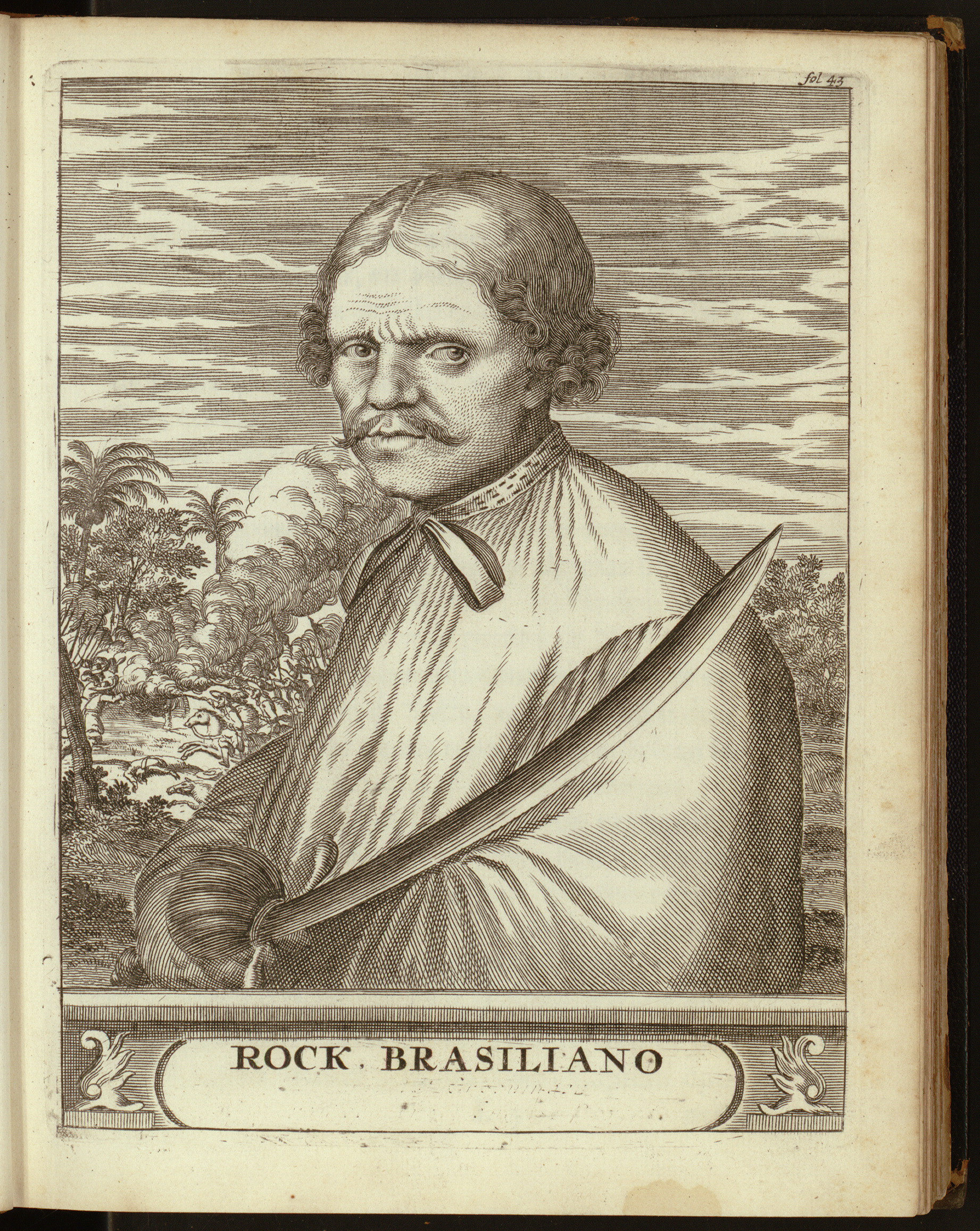
Van der Sterre also describes a duel, again aboard ship, between the infamous, probably borderline psychotic, Captain Roc Brasiliano, aka Captain Rocky aka Gerrit Gerritsen, and Reyning, the latter in command of a buccaneer vessel sailing in consort with Brasiliano in 1668. Reportedly, Captain Rocky struck Reyning’s close friend Jelles de Lecat, later better-known as Captain Yellows and who was serving as Rocky’s quartermaster, for which Reyning challenged him.
The two fought on deck with “houwers” (hewers, hackers — slang for cutlasses; the term sabel or saber, a general term for cutting sword, is also used), with several wounds received each, Reyning having the upper hand in the end. Van der Sterre writes that Rocky ordered his surgeon not to attend to Reyning’s wounds. In response, Reyning threatened to throw the surgeon’s instruments and medicines overboard; Rocky and the surgeon relented. Later, ashore at the Cayman Islands, Captain Rocky acquired a Spanish rapier and challenged Reyning again, who replied that he had a brace of pistols ready. The two vessels soon parted company and the adversaries did not fight again.
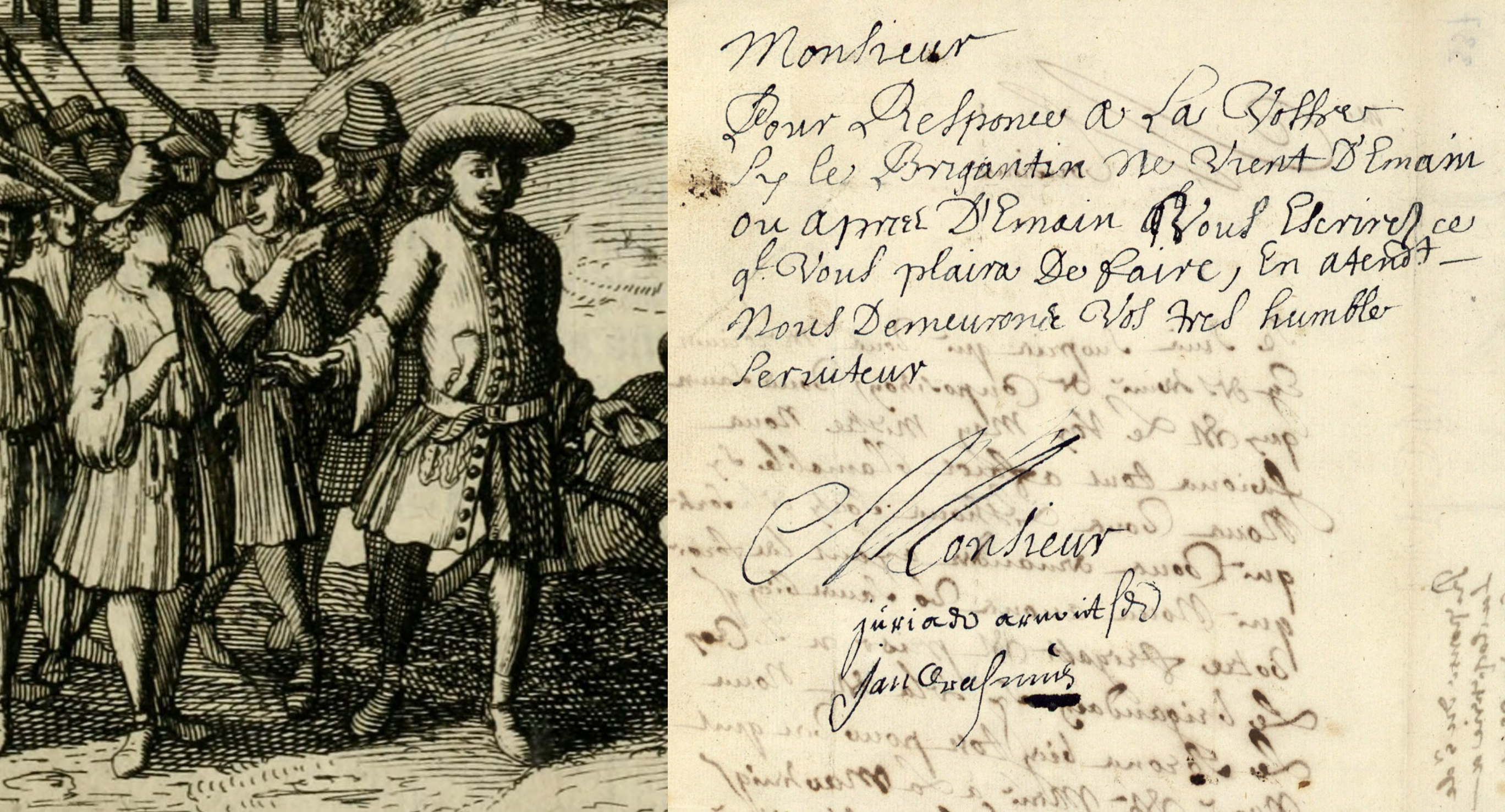
I’ve gone into detailed analysis of this duel in The Golden Age of Piracy. Suffice it here to note that the vessel was small, and that any duel fought in such conditions would force the adversaries to fight close, likely resulting in severe cutting wounds. But the duelists’ wounds, although requiring the ministrations of a surgeon (Rocky had three cuts, Reyning two), were not incapacitating. I suspect the duel, if it occurred, took place ashore or was grossly embellished, or both. Its description is highly detailed, a rarity in accounts of duels of the era. The exceptions are notable: Donald McBane’s personal accounts of his duels for example.
Could the duel have happened as described? Sure. And the fact that each man was wounded multiple times rings true, and one exchange — one man cut in the knee while the other was cut in the head, a classic, if bungled, attack at the knee which the adversary attempts to “slip” and cut at the head — is entirely likely. In fact, the bungling is quite realistic, for sword fights were rarely clean-cut (apologies for the pun!). But light cuts to the head, not to mention all the wounds received here, practically demand longer distance, ashore in other words. In all of my attempts at practical reconstruction of such duels in confined areas, as on a small vessel, both I and my adversary came to close distance, with stout blows (and black bruises) given from our hickory-bladed cutlasses, which, if made with real weapons, would have been severe. Of course, it’s also possible that neither duelist really wanted to seriously hurt the other, much less get hurt, and played it cautiously, hoping simply to draw enough blood to end the fight — which in this case was ended when Rocky took a cut to the forehead and, possibly, could no longer see, a common end to duels with cutting blades.
Further, the duel is corroborated nowhere else, including in Exquemelin’s detailed account of Roc Brasiliano’s life, although Van der Sterre considers this a deliberate slight against his hero. More so, Reyning’s biography is written with a novelist’s eye for detail — with an eye to popular consumption, that is, making it rather suspect. And all other accounts of duels among buccaneers, and even of seafaring men in general of the era, indicate that they were fought ashore. It’s also not unknown for old seafaring adventurers to exaggerate or even invent “sea stories,” taking great pleasure in misleading the gullible.
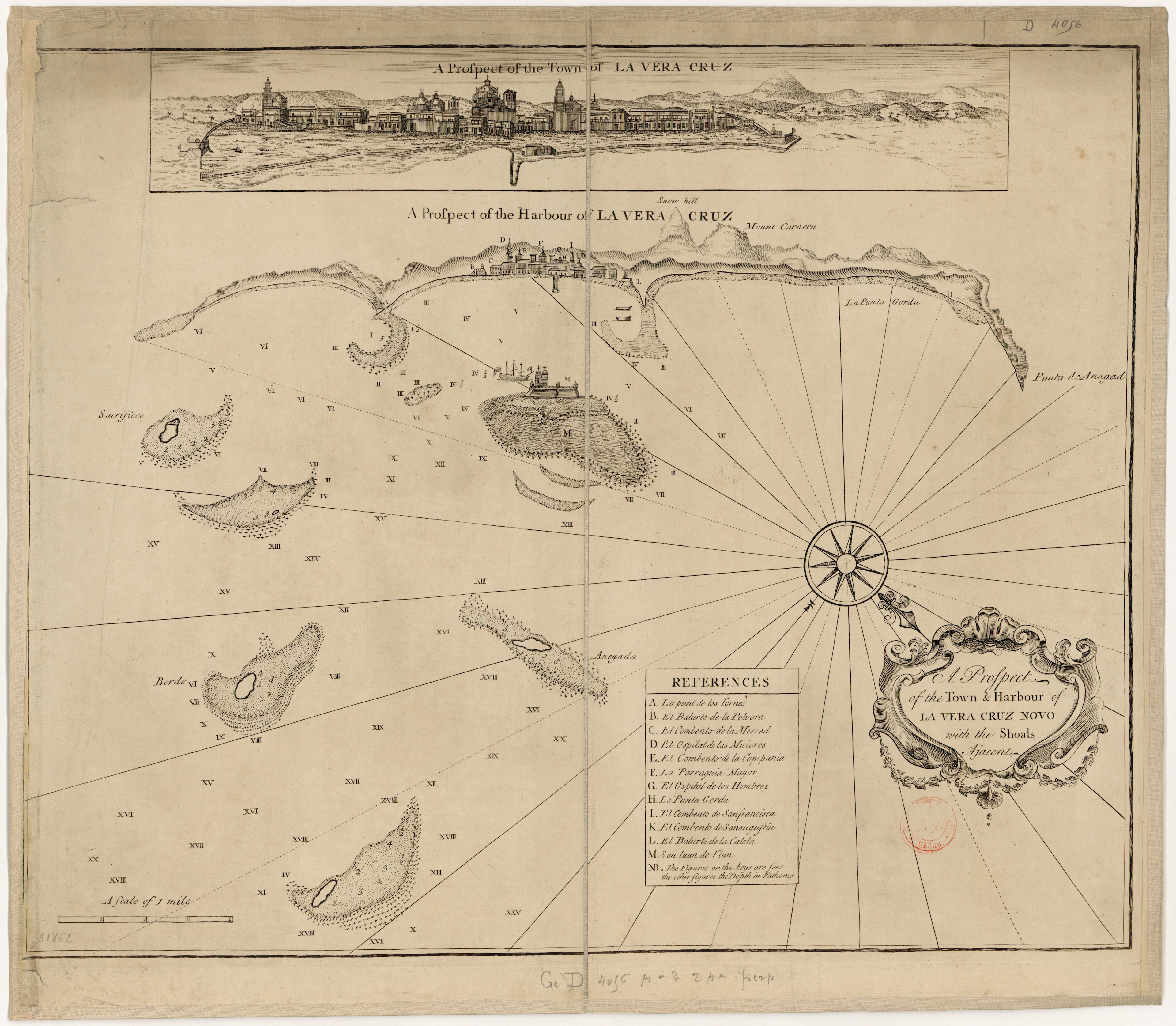
Without doubt the most famous duel among buccaneers, really a quick affray, is that between the famous Dutch buccaneer in French service Laurens de Graff and the dilettante Dutch buccaneer in French service Nicolas Van Horn. The two men despised each other. In particular, de Graff considered Van Horn a pompous fool who had by lack of patience recently lost them the treasure of the Honduras urca. The two captains, along with French gentleman-buccaneer Michel, sieur de Grammont, were co-commanders of the brutal 1683 sack of Veracruz. As the buccaneers loaded their ships with plunder and slaves on Isla Sacrificios, where they had moved from the city for security, de Graff and Van Horn’s contempt for each other came to a head.
Historical sources are uncertain on the real reason or reasons for the duel. There was the urca incident. According to Exquemelin, on the morning of the duel an English buccaneer reported that Van Horn had called de Graff a coward. Van Horn was reportedly angry that de Graff had prevented him from decapitating a dozen prisoners in retaliation for Spanish soldiers firing at French buccaneers who were fetching cornmeal to feed prisoners. Some say there was an argument over what to do next, after the sack of the city: Van Horn wanted to attack the treasure fleet in the offing, but de Graff wanted to depart with what they had, rather than risk losing it. An English governor later wrote that they fought over the division of spoils. And some Spaniards wrote later that the men fought over who could choose how the spoils were divided.
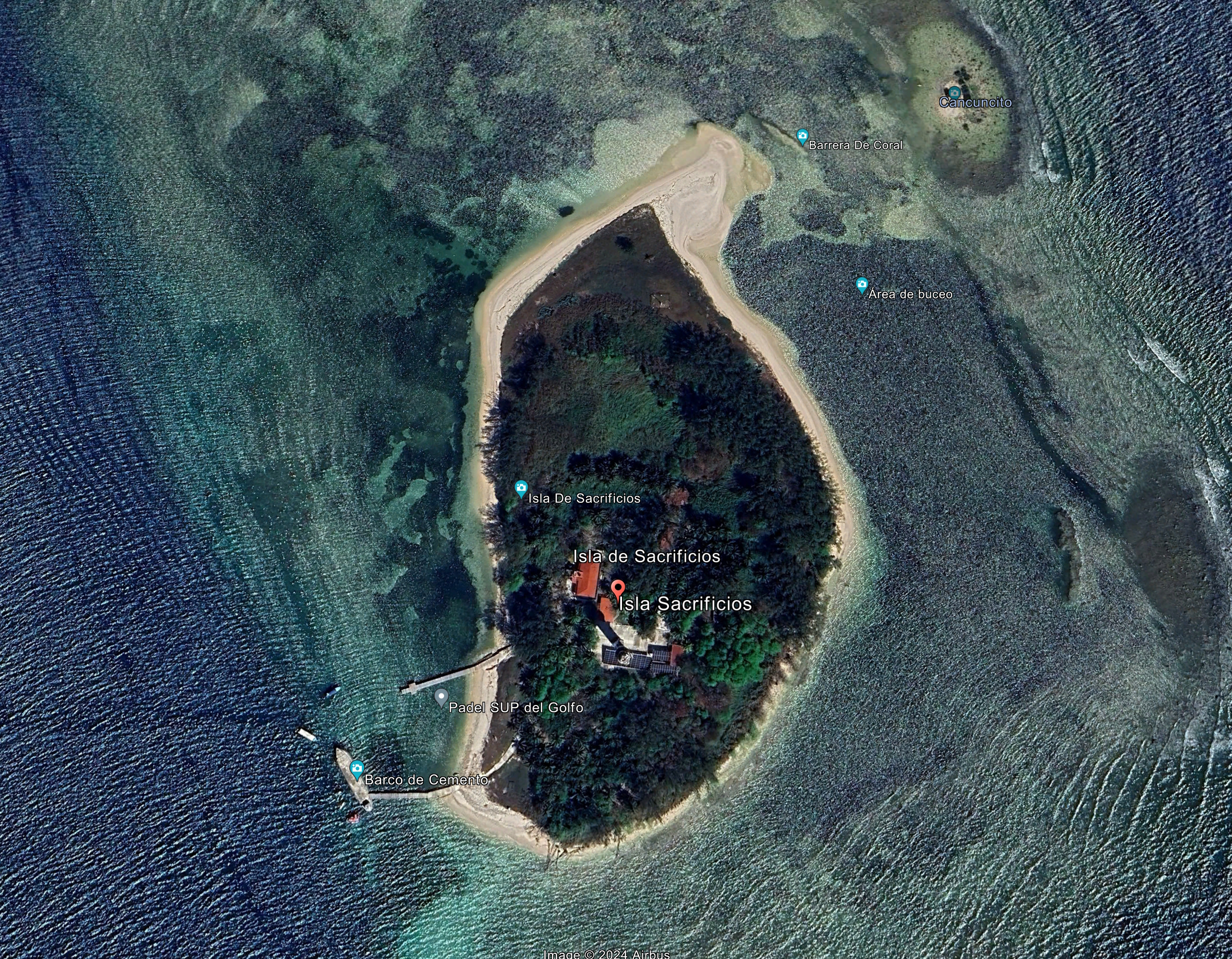
But no matter. Alexandre Exquemelin claims de Graff drew his sword, faced Van Horn, and said, “Voilà! With this I shall avenge the insult you have given me.” If so, Van Horn was damned slow in heeding the warning and drawing his own cutlass and coming on guard.
The fight was a quick one.
According to Fray Avila describing the sack of Veracruz in 1683, “On Thursday afternoon Admiral Lorenzo [Laurens de Graff], seeing how we suffered [from thirst and hunger], told the General [Nicolas Van Horn] that they should cast us ashore as I wanted them to do. The General grew angry and told me he would put us to the sword. At these words the Admiral drew his cutlass with such agility that before the General had put himself on guard Lorenzo had cut him in the arm and ear. They [the pirates] stopped them and I heard the admiral call his soldiers and send him [Van Horn] to his ship which was the almiranta [Van Horn’s St. Nicolas, soon to become de Grammont’s Hardi], and from this day we saw him no more.”
Call de Graff’s cutlass stroke Dutch buccaneer iado if you like. We can speculate on how de Graff made his cut or cuts: a single cut upward from the scabbard striking wrist and forehead; a single blow from high to low after drawing (“lugging out” was the term in English for drawing a sword); or two cuts, perhaps the first from low to high cutting the wrist, and the second from high to low cutting the forehead. Or any of several other possibilities. Van Horn died some days afterward, possibly of gangrene, or possibly of a pestilence that swept through his crew. His death was formally laid at the feet of de Graff, who, when he was considered for a commission as a French officer a few years later, had to petition for and receive a royal pardon for killing Van Horn.

Not quite Flynn versus Rathbone aka Peter Blood versus Levasseur, but nonetheless a duel between pirate captains on a sandy shore in the 1680s — about as close historically as we can get to that most famous of film duels!
Although cutlasses were probably the norm for duels among buccaneers when muskets were not used, and likely enough among buccaneer captains, smallswords may have been used on occasion although we have no record of this. A small but fair number of buccaneers, French in particular, were gentlemen who would have been trained in the use of the smallsword, would have preferred it for formal combat, and may have carried it even in battle.

The sieur de Grammont noted above had fought at least one duel long before becoming a buccaneer: he ran his sister’s suitor thrice through. Also among these French gentlemen-buccaneers were famous buccaneer-author Raveneau de Lussan; the sieur de Chauvelin who served under de Grammont aboard one of his consorts, a half-galley and who was killed in Florida in the aftermath of an aborted attempt on St. Augustine; and the sieur d’Hulot, a veteran of two campaigns against Algiers and the Algerine corsairs, and who would later command the regular French forces on Saint-Domingue. Alas, we have no record of any duels among these smallsword-wielding gentlemen, much less of any smallsword duels on the beach.

An interesting adoption of an army dueling practice was reportedly undertaken by Red Sea pirates circa 1693-94. According the deposition of pirate Samuel Perkins in 1698, fourteen pirates, variously from the crews of captains Thomas Tew, Josiah Raynor, William Mason, and Edward Coats, divided into two factions of seven each on St. Mary’s island some five years prior, “to fight for what they had (thinking they had not made a voyage sufficient for so many) and that one of the said Sevens were all killed, and five of the other, so that the two which survived enjoyed the whole Booty.”
What weapons were used is unknown, but cutlasses are likely. And the amount of booty? If this took place in the year 1693, Tew’s crew shared 1,200 pounds (the equivalent of 6,000 pieces-of-eight) per man, an extraordinary sum, making it unlikely any crew would fight to increase this — unless they had lost their shares gaming. Such losses might make desperate men even more desperate, willing enough to fight in a group duel in which most were likely to be killed. A year prior, the crew of Edward Coats shared 500 pounds per man, still a large booty and three or more times what would be considered a profitable voyage among the Caribbean buccaneers.

It was not uncommon for army regiments, particularly during winter quarters or in garrison, to settle conflicts this way, each choosing their best swordsmen to fight those of the other. Sometimes all fought at the same time, sometimes only one from each side would fight, the victor staying up to fight the next until defeated, then another would take his place.
Famous Scottish soldier, swordsman, duelist, fencing master, and prize fighter Donald McBane describes one such compound duel, its occasion being McBane’s theft of fourteen prostitutes from a Dutch regiment — the Scotsman had a profitable side gig of gambling and prostitution. The “next Day came Twenty-four Swords Men and Demanded the Lasses again, or else give them Satisfaction, we made up Twenty-four Men and Drank together; then we Fought two and two, there was Eleven of the Dutch Killed and Seven of our Men, our Bargain was, that if they beat us, we were to give them the Lasses and Pay them a Tribute, and on the contrary, they were to Pay us Tribute: We fought a Second Time, I being of the Royal it fell to me to Fight first, the first Time I was soon done, but the Second Time before I put I my Sword, I Fought Eight of them so it ended, and they promised to Pay their Tribute, we buried our Dead and parted…” But the Dutch didn’t pay, and shot four of the six men sent for the tribute two or three days afterward.
Early eighteenth-century pirates of the Black Flag reportedly fought duels with pistols ashore, to be followed by cutlasses if necessary, at least according to pirate chronicler and liar-when-convenient Charles Johnson (a pseudonym). The articles of Bartholomew Roberts and his crew reportedly provided that “The Quarter-Master of the Ship, when the Parties will not come to any Reconciliation, accompanies them on Shore with what Assistance he thinks proper, and turns the Disputants Back to Back, at so many Paces Distance: At the Word of Command, they turn and fire immediately, (or else the Piece is knocked out of their Hands:) If both miss they come to their Cutlashes, and then he is declared Victor who draws the first Blood.” Note that this quotation is from a secondary source, albeit a period one, not an primary source; no original examples of pirate articles from the 1714 – 1726 Black Flag era exist.
There were other methods of dueling with pistols during this era, and it is possible that pirates may have used some of them as well. For example, Donald McBane describes a form of pistol duel in which a cloak is held up in each duelist’s left hand so that neither man can see the other, then on cue pistols are fired through the cloak.
One wonders at the description of pistol dueling — generally considered in the popular historical fiction mind to have been a deadly form of honor combat — engaged in first among the Black Sail pirates of Roberts’s crew, to be followed by cutlasses merely to first blood. This is in fact unsurprising: 19th century sources note that pistol duels were far less dangerous than sword duels, and this in an era in which pistols were more accurate than in the late 17th and early 18th centuries. One commentator wrote that only one in six pistol duelists were wounded, and only one in fourteen killed. In sword duels, one or both duelists were nearly always wounded or killed, although another commentator noted that pistol wounds were usually far more dangerous than sword wounds. Pistol dueling grew in popularity as a means of showing one’s “bottom” aka courage, yet it was less dangerous by far than sword duels (unless one got shot), at least until the development of the epee de combat and light Italian dueling sabre in the late 19th century, much of whose swordplay and design were intended to minimize the risk of fatal wounds in an era in which dueling remained popular yet the law had begun to severely punish dueling’s most severe results.
Notably, in spite of their romance and implied associated courage, all forms of dueling were less dangerous than the battlefield of sea or shore.
Charles Johnson describes an early 18th century challenge and its aftermath among pirates. Assuming he is telling the truth, the bosun of Captain Evans, a pirate, challenged his captain to a duel with sword and pistol “on the next shore they came to.” Unsurprisingly — challenges are easy, following up on them much more difficult — the bosun declined to fight, for which Captain Evans caned him. The bosun in turn shot him through the head and leaped overboard to swim ashore but was taken up by the pirates. For this murder the pirate crew resolved to torture the bosun, but the gunner, inflamed with passion, shot him through the body instead. The bosun, not killed, begged a week for repentance. He “should repent and be damned to him,” said another pirate, who then shot the bosun dead.
Thus ends our brief foray into the reality of piratical duels on the beach. As I close this latest blog post, here’s something to note: duels in film and fiction must be exaggerated in order to keep the viewer or reader’s attention. Not so with reality: even a simple, short duel is exciting for the simple reason that real bloodshed is likely.
N. B. The captions at the foot of the first image above read “Outside parry with the forte” & “The thrust made against those who raise their sword when parrying.” The latter thrust would be typically made if the adversary delays the riposte, or as a “high-low” feint attack. Many period masters would disagree with the extension of the un-armed hand, preferring to keep it by the head, ready to parry or oppose.
Copyright Benerson Little 2024. First published August 20, 2024. Last updated September 23, 2025.

Pirate Ships, Pirate Prey, & Pirate Hunters: Eyewitness Illustrations & Accompanying Stories

Modern histories of so-called Golden Age pirates — those circa 1655 to 1730 — are often filled with images of pirate ships, many of which are implied to be accurate representations. In fact, there are few eyewitness images of actual buccaneer and pirate ships of this era — perhaps no more than five!
Most period images of buccaneer and pirate ships, not mention of pirate prey and pirate hunters, were drawn not by eyewitnesses in the Caribbean or in other places pirates roved but in England and Europe by the professional illustrators of various editions of books on buccaneers and pirates. These artists never saw the vessels they drew, probably had little if any input from eyewitnesses who had seen them, and were often clearly inept when it came to accurate representation (Hollywood also has always often had this problem and still does).
Even when the illustrator had a good description, the result often hit far from the mark, as we’ll see below. There were no professional artists such as the Willem van de Velde father and son, or Pierre Puget, or any of a number of maritime painters of the era to paint the Caribbean and its people, landscapes, and vessels. This is history’s loss.
Modern scholarly reconstructions in the form of illustration or model — Whydah, Queen Anne’s Revenge, &c — are based on limited eyewitness accounts and scarce records of the actual ships, with reference to hopefully similar ships found in period maritime paintings, drawings, and construction records. At best they are intelligently conjectural. But conjectural they are, even if they are the best we might ever do.
Nonetheless, there exist eyewitness illustrations of at least five Golden Age sea roving vessels we can for the most part put names, captains, and adventures to. In other words, they are illustrations of real buccaneer or pirate vessels made by illustrators and painters who actually saw them or were provided a high degree of detail by eyewitnesses. Additionally, there is an illustration of two others that is almost certainly based on eyewitness descriptions taken firsthand by the illustrator.
The first two are Spanish-built pirate/privateer half-galleys, one for certain, the other almost certain. The third and fourth are of a captured Spanish merchantman soon to be converted by flibustiers to piracy, and its captor. The fifth is a pirate which had recently plundered on the Guinea coast. The sixth and seventh are pirates, one English, one French, one of whom was destroyed by a pair of English men-of-war.
Further, we have illustrations of the two most famous Spanish pirate hunting ships — even if unsuccessful more often than successful — along with an excellent, highly detailed, quite accurate drawing of the HMS Drake, a sixth rate used for pirate hunting in the 1680s Caribbean, and the HMS Bonetta, which was dispatched against a pirate but did not engage it — plus a reasonable image each of the pirate hunters HMS Drake and HMS Falcon. At another time we’ll look at a painting of what may be the most famous of all pirate prey of the era; I’ve more research to do before I commit my argument to print.
We’ll take a look at all nine, with accompanying swashbuckling history in depth. As with the eyewitness images of buccaneers and boucaniers I found in the French National Library, I found several, but not all, of these eyewitness images of vessels likewise largely unnoted and unnoticed.
A Spanish Half-Galley (Galeota) Commanded by Cuban-Italian Corsario Mateo Guarín, 1685

Commissioned by the governor of Cuba, Fernández de Córdoba, in 1683 to make reprisals against English and French pirates and smugglers. In January 1684, Guarín led a raid on Siguatey (Cigateo, aka Eleuthera) and New Providence in the Bahamas.
Mateo Guarín (sometimes Marín) was an Italian privateer — a corsario — from Venetia (the surrounding region of Venice, Italy) in Spanish service. In Italian his name was Matteo Guarino. It was not unusual to find Italian adventurers in Spanish service in the Caribbean; another will be discussed in another post soon.
An English account of the raid: “At the beginning of January about two hundred of their choicest men were fitted out from Havana, well armed, in two barco-luengos, the one of forty, the other of thirty oars. They went to a-small uninhabited island called St. Andrews, where they took an English sloop which was there for cutting timber. They made the three men in her their pilots, and came to the back of Providence on 18th January and waited through the night. At daybreak they landed 120 of their men at the town, while fifty assailed the shipping—six vessels—in the harbour. The people in the town being surprised fled from it to the woods, those in the ships also deserted them and fled on board a New England vessel of ten guns. This and one more ship stood out to sea; the rest were all pillaged and three men murdered.
“The Spaniards killed no one in the town, but kept it till four o’clock in the afternoon, in which time they took away all the wrought and unwrought plate that they could find, a quantity of English dry-goods, and such provisions as they wanted, and loaded their booty, valued by the English at 14.000l., in a pink that they took in the harbour. While the Spaniards were in possession of the town, fourteen Englishmen got together and drove all the Spaniards before them. They would have driven them from the town and retaken the plunder if they had had powder and ball enough, and if the inhabitants had known of a rallying point, and had found but fifty firearms they might have saved all. All might also have been saved by the ship of ten guns if she had but stayed. But three men were killed, but many were carried off prisoners by the Spaniards, as suspected of being pirates.” There was a much more brutal raid against New Providence later in 1684; it is unknown if Guarín participated.
In 1684 Guarín was surprised by that famous Dutch flibustier-in-French-service, Laurens de Graff, at the large Isle of Pines (Isla de Pinos, today Isla de Juventud) off the southern coast of Cuba, but escaped the more heavily-armed and -manned buccaneer.
De Graff was the greatest of buccaneers in the 1680s. In fact, certain aspects of Rafael Sabatini’s famous character Captain Blood are based on him. Caribbean Spaniards had great enmity toward the Dutch buccaneer not only because he was so successful, but because he had deserted Spanish service as a gunner of the Armada de Barlovento and later co-led the brutal sacks of Veracruz and Campeche. De Graff had long ranged and raided along the Cuban coast, and gathered intelligence there as well, in particular from a source named [Juan?] Montiel who provided detailed information on ship movements from Havana, doubtless in return for trade goods or money.
This desperate desire for vengeance against buccaneers and against de Graff in particular ranged across the Spanish Main, but would usually turn out poorly for all the Spanish pirate hunters sent against de Graff, including Capitán Guarín who made the bold personal decision to become de Graff’s principal nemesis.
In October 1684 Guarín attacked the HMS Bonneta (Bonito in colonial records; see the section on Bannister below for an image and more information) of no more than four guns along the south coast of Cuba as it was sailing to Santiago de Trinidad, Cuba to demand the return of captured English seamen from a sloop belonging to Derick Cornelison. The small English man-of-war (see also Bannister below) had sent a boat ashore for water, per treaty. Guarín captured the boat and its eight-man crew, stole the English jack it had flown for protection, and hoisted it aboard a pirate-hunting piragua.
In Captain Stanley’s words: “I at once got up sail, but had no sooner done so than I saw the galley and a periago coming under sail and oars, the galley flying the Spanish flag with a red ensign and the periago the King’s jack, which he had taken in my boat. I fired at the galley when she came within range, and she at me, and we were engaged from nine to eleven, when they got into the creek where there was not water for me to follow them.” The English captain slipped away before more galleys and piraguas might arrive: there were two of the former and seven of the latter in Santiago de Trinidad. Afterward he provided protection to nearby English turtling sloops nearby, and soon afterward rescued four English turtling sloops from the French flibustier Captain Bréha who was robbing them of provisions.
In early 1685, commanding a half-galley, known in Spanish as a galeota, Guarín raided Nipe on the island of Hispaniola, not far from the flibustier haven of Petit Goave. The corsario and his crew flew the white flag of France for deception, but also apparently fought under it — a violation of the laws of war, in addition to any charges of piracy. Guarín and his crew carried away forty slaves, soon declared in Baracoa and Puerto Principe, Cuba, as good plunder worth approximately 8,800 pesos de ocho reals (pieces-of-eight). The corsarios probably carried away little other plunder, given the small agricultural nature of the settlement.
An official French account notes that two demi-galères (half-galleys, galeotas) attacked Nipe for a second time later that year, but that their original intended target was the plantation belonging to Governor de Pouançay via an extortion attempt at ransom. The attackers changed their minds when their threat was rebuffed. The second attack on Nipe failed due to the town becoming alarmed before the raid began. It is unknown whether this second attack was led by Guarín.
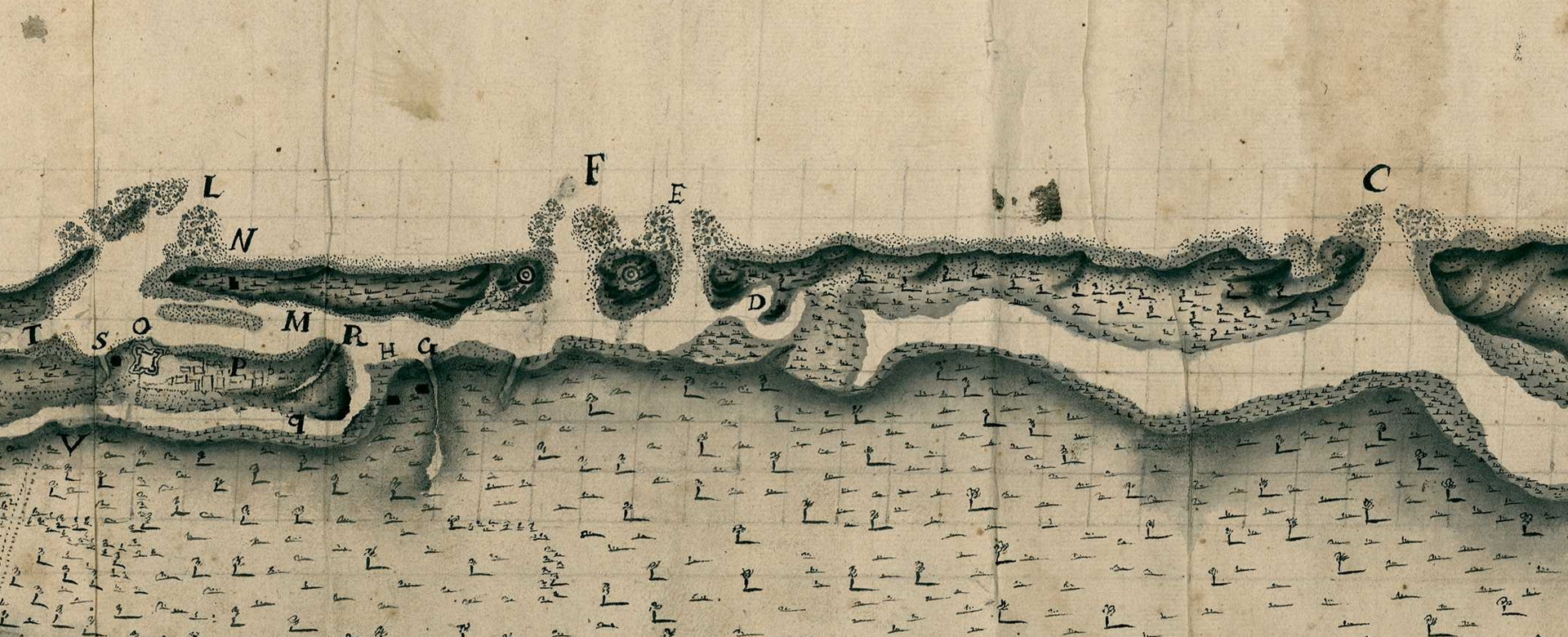
By good fortune, French engineer Pierre de Cornuau had been sent to French Hispaniola to survey and draw charts of French ports. His chart of Nipe, drawn the same year as Guarín’s raid, shows the Spanish half-galley (see the image above). It is quite typical of the form (more on this below), and Cornuau, who probably did not see the half-galley himself, certainly had it described to him by eyewitnesses.

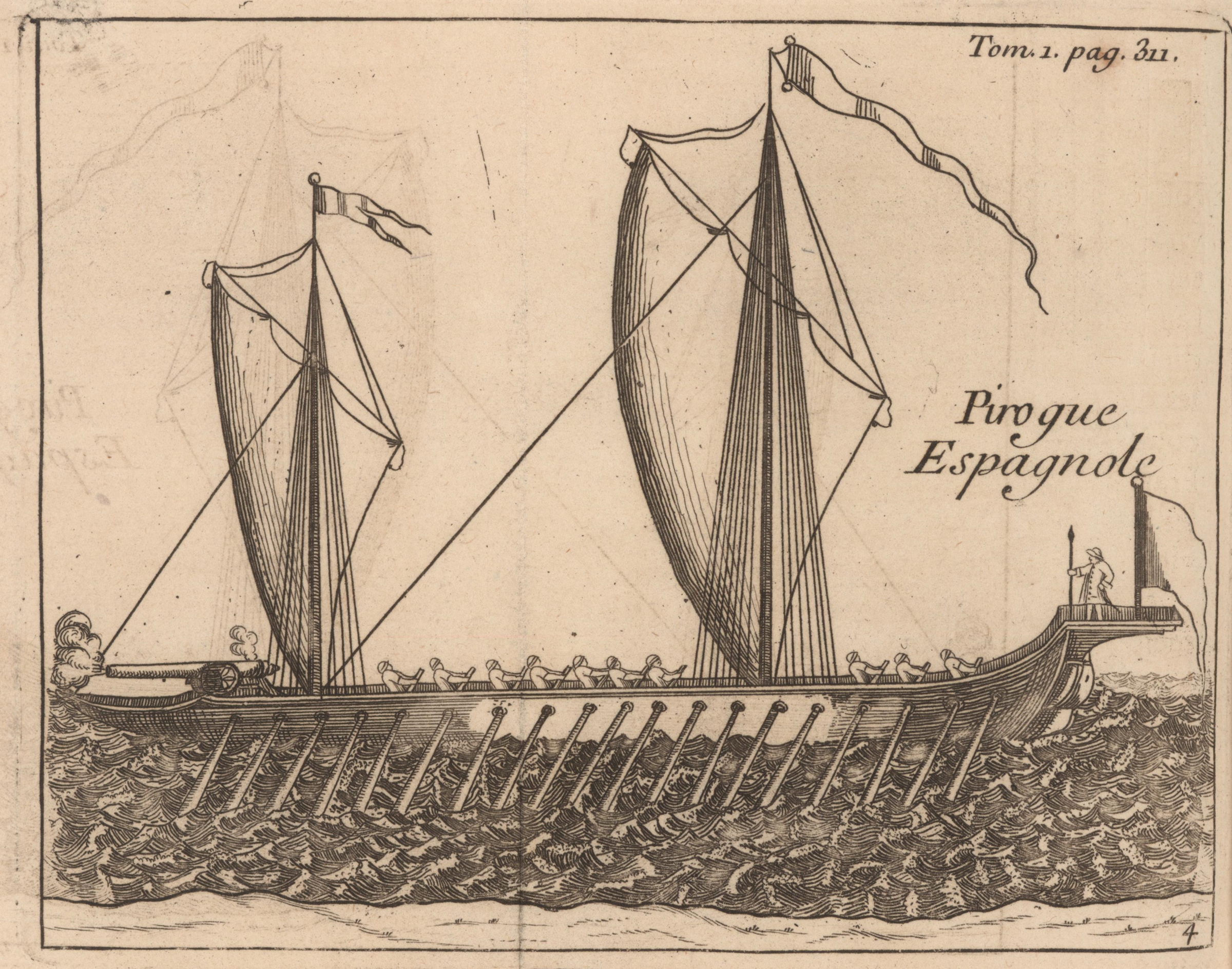
As will be seen in the next section, Cornuau’s simple drawing is a very accurate rendering of these vessels as used by the Spanish in the Caribbean. It has a single carriage gun (cannon) mounted at the bow, a pair of gallows for sweeps (oars) amidships, two masts and two furled lateen sails, and a flagstaff at the stern for the ensign. Missing in the drawing, but probably mounted on the actual vessel, are a handful of swivel guns (small cannon mounted on yokes), probably of the chamber-loaded sort known as patereroes in English. “The galleys are what are called half-galleys in the straits, and carry eighty to a hundred and twenty men; the periagos carry from fifty to seventy,” wrote Lieutenant-Governor Hender Molesworth. One account of Guarín’s half-galley arms it with “sixty-five men, one “Cushee-piece” and six patararoes,” another with eight patararoes (breech-loading swivel cannon mounted on the rails).
Soon afterward, in company with corsario Alexandro Thomás de Léon, Guarín captured the small flibustier frigate Coronet, commanded by Jean Baptiste. Interrogated at Trinidad, Cuba, the French captain gave up exceptional detail regarding the plantation of Laurens de Graff on Saint-Domingue, and also on that of Michel, sieur de Grammont, another of the greatest buccaneers of the 1680s. He also learned that at his plantation de Graff had a mulatta wife or mistress he had “seized” from Veracruz, named Olaya de Escurre, with whom he had a son. (De Graff had only two lawfully married wives as far as we know: he divorced Petronilla de Guzman of the Canary Islands to marry the wealthy widow Anne Dieu-le-Veut on Saint-Domingue after he became a French officer.) It is possible that de Escurre was his mistress from his years when he lived in Veracruz in the service of the Armada de Barlovento as a gunner, or that he in fact enslaved her, or otherwise carried her away as human plunder, during the sack of Veracruz.
Guarín, commanding two piraguas, or quite probably galeotas (piragua and pirogue are often used mistakenly for half-galley/galeota), built for the purpose in Havana, possibly including the one shown above, captured the guardhouse then sacked the plantation, taking numerous slaves as plunder and liberating a number of formerly free mulatta women who had been carried away as slaves from Veracruz. Among the prisoners was the young son of de Graff and de Escurre, whose capture the governor of Cuba hoped might force de Graff into negotiations and thereby reduce raids on Spanish ships and towns. De Graff was not present when his plantation was raided.
In February 1686, commanding two piraguas (according to Spanish records) or two “galleys” (according to English records, thus we will assume one was the half-galley shown above), Guarín attacked two English smugglers: the Swallow pink (a flute) of 22 guns commanded by Edward Goffe, and the Ann sloop of 6 guns commanded by [William?] Peartree, off the Tayabacoa River, Cuba, near Trinidad. (Spanish records Hispanicize the names as “Gafi y Peltre.”) The English captains claimed to be seeking to wood and water, as was permitted by treaty, a common, usually false, claim made by smugglers. Rebuffed at Trinidad, they sailed SE ten leagues to the small cays off the Tayabacoa.
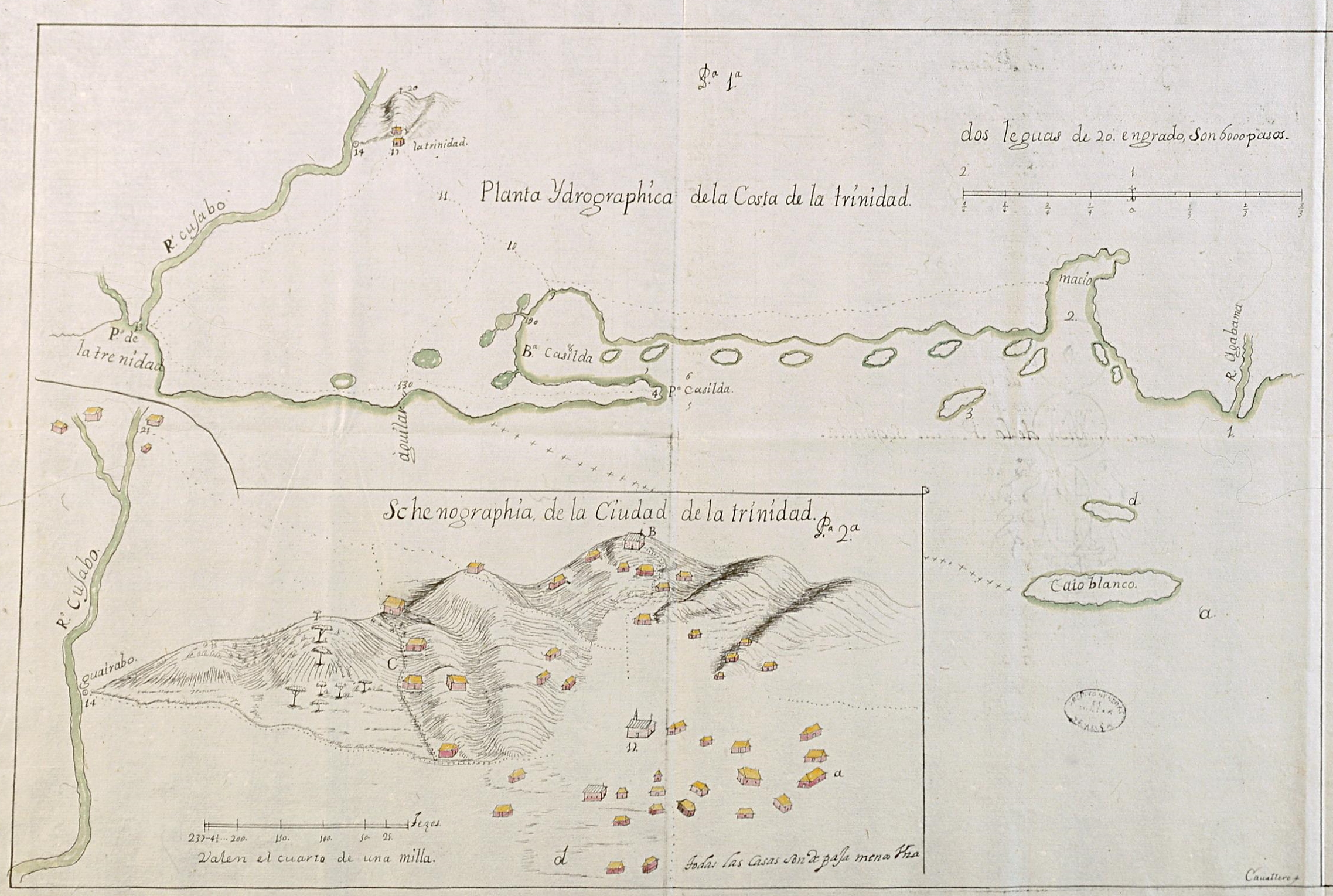
The Spaniards soon arrived and attacked; the battle was brutal and bloody. According to Goffe, “the Governor of Trinidad sent two galleys out, one of forty and one of eighty-five men, the latter of which, as the master confesses, was present at the sack of New Providence. Both galleys came up to my ship’s side, and without hailing poured in a volley, which killed two men and wounded five or six, and then making fast to my ship’s side tried to board her. Having the sloop’s crew on board we defended ourselves, and after about half an hour’s engagement, there were about sixty Spanish pirates killed and thirty-eight wounded. The smaller galley managed to clear herself, but the larger we captured and brought into Jamaica.”
Guarín’s account is similar, but with ugly accusations of murder. He states that he lost 24 men killed in the battle, with 50 more abused and murdered after the battle, including his lieutenant hanged by the English victors, and 30 more of his men put ashore. He himself was severely wounded, and, along with his surgeon, carpenter (a Maltese), and a mulatto from Havana named Juan Cristián, was carried into Jamaica.
Guarín and his comrades were tried for piracy; he and Juan Cristián were sentenced to hang. Although Guarín’s commission was sufficient to protect him from prosecution for piracy for his attack on the Swallow and the Ann, it could not protect him from prosecution for his attack on New Providence and for seizing the boat and eight crewmen of the HMS Bonetta. Even so, by good fortune both men were reprieved when the Spanish Assiento (slave trade) representative in Jamaica, Don Santiago del Castillo, contacted the Spanish ambassador in London, Don Pedro de Ronquillo, who petitioned King James II to release the convicted pirates.
In fact, Lieutenant-Governor Molesworth had already reprieved him pending the recommendation of King James II: “The Spanish captain referred to in my last has been found guilty of piracy, for robbing a sloop from Nevis and stealing Capt. Stanley’s boat. For reasons relating to our Spanish trade, and understanding that he had treated those under his power well and had apologised to Captain Stanley, soon after committing the fact, for not knowing his to be a King’s ship, I have granted his reprieve. I am since glad that I did so, for I find that the Spanish Governors will be very much concerned for him, and particularly those who have obliged me most by granting restitution of prisoners. Lately I have received a letter from the Governor of Santiago, in Cuba, demanding him in the same manner as I have demanded prisoners, and making such excuses for him that I conceive, if he had been executed, it would have passed current among Spanish Governors that he had suffered only for carrying out the Spanish King’s Commission. This would have raised a great clamour against us and would have endangered all our traders who are or may in future fall into their power. I have therefore reprieved him till the King’s pleasure be known.”
By October, 1686, Guarín and his comrades were free men again but his adventures afterward were tame by comparison. With a new vessel provided by investors, possibly another half-galley, he transported the governor of Florida to St. Augustine, patrolled the Cuban coast, and, on July 4, 1688 was dispatched unsuccessfully aboard his piragua or half-galley along with an urca (a Spanish fluyt) to seek a pirate frigate, brigantine, and canoe at Santa Lucía, Cuba, believed at the time to have been commanded by the notorious Dutch flibustier-in-French-service Jan Willems aka Captain Yanky (also Yankey).
Guarín soon found himself imprisoned again, but this time not by his English or French enemies, but by his compatriot cubanos in Havana. His vessel was seized after he was accused by some local hidalgos of having sold slaves captured at the Bahamas and Saint-Domingue that actually had belonged to them before being plundered by English and French buccaneers. One scholar suggests this was a false accusation to protect the governor against accusations of engaging in contraband.
According to Spanish law, as a Capitán de Mar y de Guerra, a title accorded him by his privateering commission (patente de corso), he should have been immune to such accusations. Even so, Guarín spent a year and a half in jail, and the last we hear of him is that his case was pending at the Council of the Indies. There is no record of this bold corsario taking to sea again.
For more information on this and other Cuban corsarios, see El Corso en Cuba Siglo XVII by César García del Pino (Havana: Editorial de Ciencias Sociales, 2001), and La Defensa de la Isla de Cuba en la Segunda Mitad del Siglo XVII by Francisco Castillo Meléndez (Seville: Diputación Provincial, Sevilla, 1986). The English eyewitness account and associated correspondence can be found in the Calendar of State Papers Colonial, America and West Indies, 1685-1688.
A Captured Spanish Half-Galley Commanded by Nicolás Brigaut in 1686

By the mid-1680s most major Spanish ports had at least one galeota used for intercepting smugglers, pirate hunting, and raids of reprisal, and also as an advice (dispatch) vessel. Of shallow draft, with the ability to maneuver under both sail and oar, the vessels were ideal for their purpose. They could attack from and escape over shallow waters, attack in calms at the bow or stern of smugglers and pirates and thereby avoid their broadsides, and could travel close inshore and up-river for raids on French and English settlements.
Most had two masts with a single lateen sail on each, approximately thirty oars or sweeps, a long thrusting prow or beakhead, one or two carriage guns in the bow, and often four or more patereroes (swivel cannon) on the rails at the bow and stern. Sweeps were stowed on gallows amidships when not in use. Recognizing their utility, both the French and English began using them, either constructing them themselves or using captured Spanish ones. In English the vessel was typically referred to as a half-galley, in French as a demi-galère or sometimes, confusingly, a pirogue, and in Spanish as a galeota or occasionally, again confusingly, a piragua.



Michel, sieur de Grammont, the “general” of the buccaneers at the sack of Campeche (Laurens de Graff was the buccaneer “admiral”), brought away a half-galley with him after the town and surrounding region were attacked at length and then abandoned in 1685. In April of the following year Grammont’ set about to attack St. Augustine, Florida via the southern passage at Matanzas.
With Grammont’s flotilla was the half-galley captured at Campeche, armed with two carriage guns (remember, at sea a cannon is called a gun, back then and even today) at the bow and now commanded by Capitaine Nicolás Brigaut. His job was to collect intelligence, secure provisions, capture Native American interpreters, and prevent a warning from getting to St. Augustine while doing so. He easily captured a few soldiers from the watchtower—they rowed out to find out who he was and thereby discovered to their dismay who he was. The buccaneers tortured at least two of them for information regarding the defenses of St. Augustine.

It wasn’t long before word got to St. Augustine in spite of Brigaut’s precautions, and a small force commanded by José Begambre was sent against Brigaut and his marooned flibustiers. According to one account, the pirate captain sent two boatloads of men ashore, and according to another they fought from the half-galley. In any case, after a four hour battle the small Spanish force withdrew with casualties.
First point to Brigaut and his men! But plans seldom work as well in reality as in theory. Fortune turned against the pirates in the form of accident or ignorance of the local waters, and the half-galley wrecked on Matanzas Bar.
Worse, two more forces under the commands of Capitán Antonio de Argüelles, who had successfully ambushed attacking pirates in 1683, and Sargento Mayor (in other words, “Major”) Pedro de Aranda y Avellaneda, the former with nine soldiers and the latter with forty, arrived the following morning. The pirates had come ashore and, according to one account, made simple trenches from which to defend against a counterattack. After a second firefight, the Spanish again withdrew with casualties. The pirates had lost the element of surprise and feared more reinforcements. Brigaut sent several men in a ship’s boat to warn Grammont with instructions to pick the stranded pirates up at Mosquito Bar, the location today of New Smyrna Beach. The pirates headed south during the night.
Five leagues shy of their destination the gallant Brigaut and his gallant crew — or so we suppose they were gallant, at least in battle — were set upon by fifty or sixty Native Americans intent upon freeing the pirates’ prisoners. Again Brigaut’s flibusters put their attackers to flight. Unfortunately, one of Brigaut’s prisoners, Juan López, escaped and brought word to St. Augustine. Almost immediately gallant Capitán Francisco de Fuentes and fifty gallant men — again, we suppose they were gallant — headed south in two pirogues to attack Brigaut and his men at Mosquito Bar. Meanwhile, news spread fast in St. Augustine that as many as seven pirate ships had been seen, and that Grammont and his sloop were preparing to make a landing to the north now that the southern approach had been thwarted. Clearly the attack was not yet defeated.
And at Mosquito Bar the substance was of life and death, of raw survival, and, unfortunately for the buccaneers, luck was on the side of the Spanish by means of the timely accident that Brigaut’s men were separated into two parties. Luck, or Fortune if you will, often has poor timing, almost as if on purpose. The Spaniards slaughtered the nineteen pirates in the smaller group, then attacked the larger and massacred all but three, their desperate courage notwithstanding. Those they spared were not, by the way, any of the four remaining Spanish prisoners held by the pirates, which strongly suggests either that nearly everyone was slaughtered in an orgy of violent fear and rage that refused to distinguish between friend and foe, or that the Spanish believed the prisoners had deserted to the pirates, which Spaniards sometimes did, and so they put them to the sword as well.
Only here, in this description of slaughter, does our Hollywood image of Hollywood actors acting in Hollywood style — our cultural interpretation, in other words — begin to fail us as we — rather, if we — imagine soldiers and pirates sweating profusely in the combination of heat, humidity, rage, and fear, their hands and faces blackened with spent gunpowder, their burning eyes squinting from salt and the sea glare; as we imagine the sand sticking to the blood of those killing and of those dying or dead, most of whom probably called upon God both to kill and to save; as we imagine the flies swarming over and upon the dark purple that now stained, however briefly, the windswept battlefield dotted with the living and the dead among the coastal scrub.
We don’t know for sure if the Spaniards simply refused to grant quarter and slaughtered the pirates and prisoners in battle, or massacred them immediately after they surrendered, and it’s even possible that the pirates killed their prisoners themselves. Pirates liked to hold hostages, and French pirates sometimes decapitated their terror-stricken hostages — well, most were probably terror-stricken, but there may have been a few stubbornly courageous hold-outs who were merely afraid but not terror-stricken — when their demands weren’t met. Of course, hostage- and head-taking is something we find deplorable today, at least in “the real world,” but we generally condone in film and on television, at least if the hostage takers are the good guys and they don’t decapitate except in a fair fight. Terrorists and drug cartels behead the innocent — but surely our beloved swashbucklers don’t.

Even so, the pirates probably shouted something on the order of “Matamos los rehenes!” in Spanish at their attackers, which means “We are going to kill the hostages!” although the Spanish is actually in the present indicative tense, not the future simple, which is a more common usage in Spanish than in English when threatening future action. Just so you know.
A fair number of pirates could speak Spanish as a second language because it was useful for interrogating and torturing and tactical pretending and such. And some pirates were Spanish, siding with the English buccaneers and French flibustiers and against their own for profit, and probably a few for revenge — conversos and “crypto-Jews,” for example, although the Spanish interrogations of Spanish-born pirates I’ve seen are silent on the issue. Still, it’s likely some were.
At any rate, “Matadlos, no nos importa!” the Spaniards probably shouted back at the pirates, which means, more or less, “Go ahead and kill them, we don’t care!” although the phrase was more likely something on the order of “Go ahead and kill them you murdering French dogs, you pirates, thieves, and cutthroats, you sons of whores and cuckolds, you mostly Lutheran [which is what Spaniards called all Protestants] therefore un-Christian except in name French cowards who torture the innocent and rape virgins and bugger each other, and bugger your ugly French-pox’d mothers too!” Or likely something along these lines. Such language is common among soldiers and sailors of all eras.
As for the battle itself, likely the truth lies betwixt, as often it does: most of the pirates probably died in battle, and the rest, given that there was some quarter given, were summarily put to the sword in a violent assault right after they surrendered, which seems a reasonable if uncivilized thing to do to the pirates who had sacked Veracruz and Campeche, raping and murdering and torturing as they did. There is speculation that the Spaniards may have given no quarter due to the mistaken belief, carried by escaped prisoner Juan López to St. Augustine, that the Spanish renegade Alonso de Avesilla, who had guided the pirates during the 1683 attack on the city, was in command of the half-galley.
However, Avesilla (possibly the same Spanish corsario known as Augustino Alvares who commanded a barco luengo in 1683) reportedly had died at the flibustier home port Petit Goave two years before; his name may have been given out by the pirates as a joke. The three spared pirates were the white French captain Brigaut and a black pirate named Diego, a “native” of St. Christopher’s (therefore his real name might have been James or Jacques), until they could be interrogated, and a boy on account of his age. Diego, by the way, given that he was spared with Brigaut, may even have been Brigaut’s quartermaster, that is, his second-in-command, making him the highest ranking black — of full African origin, in other words — pirate officer of the so-called “golden age” discovered to date.

Brigaut confessed and was put to death — “Confess and be hanged!” has a long history in literature as well as in murderous hypocrisy of both the religious and political sort — at St. Augustine alongside Diego the Black Pirate who probably thought that piracy was a far better way of life than slavery (assuming he had been a slave), or at least until it came time to be hanged or garroted. Long before this Grammont had abandoned his attack on St. Augustine.
The official French account of the incident at Matanzas, sent from Governor de Cussy of Tortuga and Saint-Domingue to his superior in France, the Marquis de Seigneley, only barely resembled reality. Brigaut wasn’t a pirate, he was merely seeking provisions. The law permitted this seeking of provisions, water, and shelter in extremis. In fact, Brigaut wasn’t even mentioned by name, although his commander, the sieur de Grammont, briefly was.
Most of the few lines describing the incident were devoted to the sad story of a young Parisian of good family, the sieur de Chauvelin, who was reportedly given quarter, taken before the governor of St. Augustine, then put to death in spite of his quality as a gentleman. Further, during the battle itself it was twenty, or maybe seventy, pirates — or rather, twenty or seventy innocent French privateers attacked while innocently seeking provisions per international agreement — standing valiantly against three hundred Spaniards, who prevailed only after reinforcements arrived.
Governor de Cussy heard this story from a flibustier captain named du Marc, who had recently escaped from Spanish imprisonment and who probably had the story second hand, or even third or fourth hand. In any event, according to the French version, the beastly Spaniards weren’t hanging pirates who had come to sack St. Augustine, to plunder, murder, and rape. Rather, they were murdering young Parisian gentlemen who were only seeking provisions. Or murdering at least one young Parisian gentleman, and if one, then probably others, naturally. All we really know from du Marc’s version of this story is that a young man named Chauvelin, of adventurous spirit, joined a band of flibustiers and probably died on or near a pretty Florida beach.

So, was the half-galley depicted above the one commanded by Brigaut? Probably, or more than probably, for my research strongly suggests that there were only two half-galleys at French Hispaniola in the late 1680s: Nicolás Brigaut’s, captured at Campeche in 1685 by the sieur de Grammont, then home-ported at Petit Goave, and lost in 1686 at Matanzas, Florida; and one built by the French and apparently home-ported at Cap François, the French capital of Saint-Domingue. The latter was sent in 1686 to look for remnants the pirate Banister’s crew at Samana after a pair of English men-of-war destroyed his ship, the Golden Fleece. A third, Spanish, which I originally believed to have been captured in 1687 at Petit Goave, in fact escaped to Cuba.
Brigaut’s half-galley would have been home-ported at Petit Goave, and the illustration is part of a 1688 chart of Petit Goave. Paul Cornuau, who drew the chart, had been at Hispaniola since at least 1684 and would have been familiar with the vessel. In fact, it is entirely possible that the two flibustiers standing in the foreground might be members of its crew, perhaps even Brigaut and Diego, but unfortunately we’ll never know.
I’ve used numerous sources for this account, more than I’m inclined to list here. However, interested readers can start with “Grammont’s Landing at Little Matanza’s Inlet, 1686,” by Luis R. Arana and Eugenia B. Arana in El Escribano: The St. Augustine Journal of History, 9, no. 3 (1972); “The Testimony of Thomás de la Torre, a Spanish Slave” by Alejandra Dubcovsky in The William and Mary Quarterly, Vol. 70, No. 3 (July 2013); and The Struggle for the Georgia Coast by John E. Worth (Tuscaloosa: University of Alabama Press, 2007).
The 14-gun Saint-Roze & a 6-gun Bark Commanded by Laurens de Graff & Jean Charpin

It is no accident that Laurens de Graff looms large in these histories of eyewitness images of piratical vessels: he was the greatest of buccaneers in the 1680s, a period also in which French engineers were drafting charts of French Caribbean ports and illustrating them with local ships and buccaneers.
In the year 1687 de Graff was still cruising as a buccaneer in French service, but had been offered and accepted a commission as a regular military officer in the service of the French king. However, before he could take up said commission, he must first receive his pardon for the death of Captain Nicolas Van Horn in a duel at Campeche in 1685, his letters of naturalization as a French citizen, and his commission as an officer.
So while he waiting he did what he knew best: he cruised for Spanish plunder. Late in the previous year he lost his famous Neptune, with which he had fought the two greatest ships of the Armada de Barlovento, forcing them to withdraw. While chasing a Spanish bark near Cartagena de Indias, he ran aground on an unknown rock or reef. The crew of the Spanish bark ran their vessel aground and set it afire, but Laurens quickly set out in a canoe, boarded it, put the fire out, and put his crew aboard
This small six-gun bark, which may be seen on the right side of the image above, replaced his grounded and foundered Neptune. In March 1687 Laurens and his one hundred fifty men — imagine them all crammed into the small bark! — raided the coast of Costa Rica and ascended the Matina Valley. In August thirty of his crew abandoned the cruise and returned to Petit Goave, and in October Laurens and the rest of his crew returned, having first captured the Santa Rosa of seventy-six tons (probably toneladas de mercante, roughly equal to ninety de guerra, close to English tonnage) and fourteen guns near Cartagena. The small Assiento ship was en route to Curacao to buy slaves, and therefore had approximately 75,000 pieces-of-eight aboard — and each man’s share would come to roughly 500 pieces-of-eight, quite a profitable cruise in the end!
The Santiago, a frigate of the private pirate-hunting Armada de Vizcaínos (the Armada of Biscay, or informally, Basque Armada, referred to as La Armada de Nuestra Señora del Rosario by its former admiral), commanded by Fermín de Salabarría who had once served as general of the galleons of the Philippines, set out in pursuit but ran aground; the ship was lost on June 26, 1688. The armada had some minor successes, but largely failed at its purpose, apparently preferring trade and smuggling to less profitable pirate hunting.
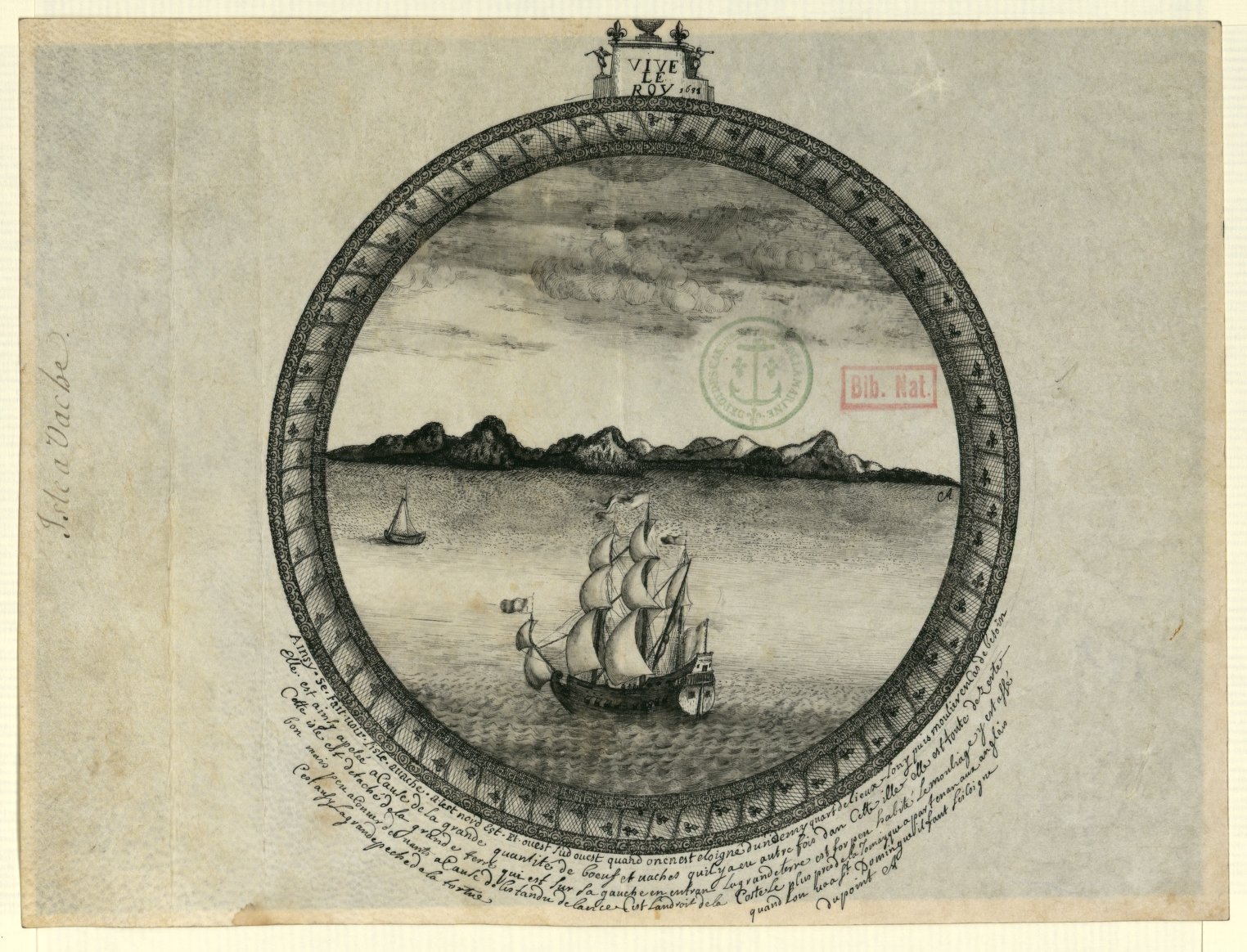
At Petit Goave Laurens received his pardon, naturalization, and commission as an officer, and also orders from Governor de Cussy to occupy Île-à-Vache. Everyone knew war was coming, and preparations had begun in earnest. Unfortunately, in spite of his now official status as a French major responsible for helping defend Saint-Domingue, de Graff had almost immediately set sail again as a buccaneer, with the Saint-Roze as his flagship and the small Spanish bark, the latter almost certainly commanded by his lieutenant Jean Charpin.
Receiving word of this, Governor de Cussy set sail in the French man-of-war Le Marin and intercepted de Graff and Charpin and ordered them to abandon their plans to cruise against the Spanish, and return to Petit Goave. The incident, illustrated by Parthenay, is shown below.

To pacify the restive buccaneers, de Cussy granted land at Cul de Sac to one hundred fifty of them. The remainder sailed with de Graff and Charpin sailed to Île-à-Vache to follow de Cussy’s orders and occupy the often disputed island.
Well, sort of.
Whether instigated by de Graff who would profit from the voyage, or by French buccaneers who had no intention of sitting on their butts occupying an island when they could be cruising against the Spanish, seventy or eighty of them signed articles, with Jean Charpin as their captain and Mathurin Desmarestz as their quartermaster, and set sail aboard the Saint-Roze with de Graff’s blessing — after all, as owner of the ship, he would profit handsomely from a successful cruise.
The articles are notable because they are one of the few original sets that exist; most sets of known articles are described accurately in other sources, for example, in Alexandre Exquemelin’s works. However, although their articles are described in such sources, they are not recorded as written in individual sets of articles. For this reason I’ve included those of the Saint-Roze here, in their original French and in translation. The translation is mine, and any errors in it are therefore mine. I’ve annotated the English translation. (Additional extensive details on buccaneer articles can be found in The Buccaneer’s Realm.)

Copie de la charte-partie faite entre
M. Charpin, commandant la Sainte-Rose, et son équipage qui sont convenus entre eux de lui donner dix lots pour lui, que pour son commandement et pour son navire.
Tous les bâtiments pris en mer ou à l’ancre portant huniers qui ne se donneront point voyage; les bâtiments seront brûlés et les agrès seront pour le bâtiment de guerre.
Item. Tous les bâtiments pris, le capitaine aura le choix; et le non-choix demeurera à l’équipage sans que le capitaine y puisse rien prétendre.
Item. Le capitaine se réserve ses chaudières et son canot de guerre; et les chaudières qui seront prises seront pour l’équipage.
Item. Tous bâtiments pris hors de la portée du canon avec les canots de guerre seront pillage. Tous ballots entamés entre deux ponts ou au fond de cale, pillage.
Item. Or, argent, perle, diamant, musc, ambre, civette et toutes sortes de pierreries, pillage.
Item. Celui qui aura la vue des bâtiments aura 100 pièces de 8 si la prise est de valeur ou double pillage.
Item. Tout homme estropié au service du bâtiment aura 600 pièces de 8 ou 6 nègres a choix s’il s’en prend.
Item. Tout homme convaincu de lâcheté perdra son voyage.
Item. Tout homme faisant faux serment et convaincu de vol perdra son voyage et sera dégradé sur la première caye.
Item. Tout canot de guerre qui sortira en course qui prendra au-dessus de 500 pièces sera pour l’équipage dudit canot.
Item. Tous nègres et autres esclaves qui seront pris par le canot reviendront au pied du mât.
Item. Pour les Espagnols qui ne seront point guéris, étant arrivé en lieu, l’équipage s’oblige de donner une pièce de 8 pour lesdits malades pour le chirurgien par jour l’espace de 3 mois étant arrivé à terre.
Item. M. de La Borderie et M. Jocom se sont obligés de servir l’équipage de tout ce qui leur sera nécessaire pendant le voyage; et l’équipage s’oblige de leur donner 180 pièces de 8 pour leur coffre; et ceux des chirurgiens qui seront pris avec les instruments qui ne seront point garnis d’argent seront pour le chirurgien.
Ladite charte ne pourra se casser ni annuler que nous n’ayons fait voyage tous ensemble.
Fait à l’île à Vache, ancré et affourché le 18 de février 1688.
Ainsi signé : Jean Charpin et Mathurin Desmarestz, quartier-maître de l’équipage.
Copy of the charter-party made between
Mr. Charpin, commander of the Sainte-Rose, and his crew who agreed among themselves to give him ten shares for himself, for his command and for his ship. [Captains were typically given extra shares as “owners” of their vessels; this is how they could get rich. Charpin’s ten shares would include two for his service as captain, as compared to the common buccaneer’s single share. This leaves eight shares for the vessel; such determination was based on the size and state of the vessel, and its armament, as judged by the crew. Such determination often worked out to roughly one share per ten tons or per gun (a general rule of thumb is one gun per ten tons for determining a vessels’s armament), although it was just as often less than this, as it is here.]
All vessels taken at sea or at anchor carrying topsails which will not give themselves a voyage [i.e. be kept as prizes]; the vessels will be burned and the rigging will be [used] for the man-of-war [the Saint-Roze].
Item. All vessels taken, the captain will have a choice; and those he does not choose will remain with the crew without the captain being able to claim anything from it. [Typically this means that the captain could swap his ship for another, if better.]
Item. The captain reserves his cauldrons and his war canoe [canoes and pirogues were often used in the Caribbean instead of common ship’s boats]; and the cauldrons that will be taken will be for the crew. [Cauldrons, whether for cooking or for boiling cane juice were valuable and were common plunder. Here, the captain is probably claiming ownership over the ship’s cookroom cauldrons and the ship’s main boat or canoe.]
Item. Any vessels taken out of cannon range with war canoes [armed canoes or boats] will be plundered. All bales [already] started [opened] between two decks or in the hold, pillage. [There was a distinction between plunder and pillage; the former was shared among the entire crew, owners, and government, the latter was usually shared only among the crew. The article indicates that bales found already open ‘tween decks or in the hold are pillage, not plunder. Of course, it would be hard to prove how many were already “started”…]
Item. Gold, silver, pearl, diamond, musk, amber, civet and all kinds of precious stones, pillage. [This is a significant article, indicating that much valuable plunder will remain in the crew’s hands, not the owner’s or government’s. However, coin/specie is almost certainly excluded by custom from the definitions of gold and silver.]
Item. Whoever has the [first] sighting of the [captured] vessels will have 100 pieces-of-8 if the catch is valuable or double plunder [double share, if it is not valuable].
Item. Any man crippled [maimed] in the service of the vessel [cruise] will have 600 pieces-of-8 or 6 blacks [slaves] according to his choice. [See also the article on surgeon payment below.]
Item. Any man convicted of cowardice will lose his voyage [his shares and other profit will be confiscated and divided among the rest of the crew].
Item. Any man falsely sworn and convicted of theft will lose his voyage [see article above] and be degraded [stripped of the name and quality of a flibustier and marooned without food or clothes, according to a 1697 source] on the first key [the first island encountered].
Item. Any war canoe that goes out cruising that takes [captures] over 500 pieces [-of-eight] [it] will be for [divided among] the crew of said boat.
Item. All blacks and other slaves [Native Americans, mulattos, and mestizos were often taken as slaves] who will be taken by the canoe will return to the foot of the mast [i.e. will be considered as pillage; pillage was typically divided at the foot of the mainmast, as were other division of spoils].
Item. For the Spaniards [wounded Spanish prisoners] who will not [cannot] be cured, having arrived in place [to put them ashore?], the crew undertakes to give a piece of 8 for the said patients for the surgeon per day for the space of 3 months having arrived on land. [This appears to be payment to the ship’s surgeon for having treated wounded Spaniards. It probably also applies to any wounded, as an eyewitness description suggests: a piece-of-eight a day per patient to the surgeon for up to forty days, and the same to each wounded flibuster.]
Item. M. de La Borderie and M. Jocom are obliged to supply the crew with everything they will need during the voyage; and the crew undertakes to give them 180 pieces of 8 for their chest; and those of the [Spanish] surgeons who will be captured with the instruments which will not be lined with silver will be for the [ship’s] surgeon. [This article applies to the two surgeons: they must supply all instruments and medicines for the voyage, for which they are to be paid 180 pieces-of-eight for their surgeon’s chests. Any captured surgeon’s chests belong to the ship’s surgeons unless the instruments &c are of silver, in which case they are pillage.]
Said charter cannot be broken or canceled until we have cruised together.
Done at Ile à Vache, at anchor and in harbor, 18 February 1688.
Thus signed: Jean Charpin and Mathurin Desmarestz, quartermaster of the crew.
Captain Jean Charpin, known among Caribbean Spaniards as Juanillo, was of mixed race, probably white and Native American. A native of Sanlúcar de Barrameda in Spain, his father French, his mother Spanish, he was, like his former captain Laurens de Graff, a renegade who had deserted Spanish service. He had served at de Graff’s side since at least 1683. As a side note, Spanish records indicate that one of the crew of the Saint-Roze was a Genoese married to a Cuban woman at Guanauacoa.
The Saint-Roze set a course for the isle of Roatan in the Gulf of Honduras and careened there. The island was a well-known rendezvous of buccaneers, and soon the crew of the Saint-Roze was increased by the addition of a group of buccaneers — or more correctly, pirates — who according to French and Spanish records had returned overland from the South Sea (here, the Pacific coast of the Spanish Main) via the Coco River on the borders of Nicaragua and Honduras. Without doubt they were part of Pierre Picard’s expedition (as was buccaneer-author Raveneau de Lussan). Some scholars suggest instead that they many have recently left service under Jan Willems aka Yankey after he attacked the bodegas on the Rio Dulce and the Honduras urca at Puerto Caballos.

In any case, the new arrivals were commanded by a Huguenot named Jean Fantin who had previously served under the mutineer captain Pierre Pain aboard the French man-of-war La Trompeuse as quartermaster, and then under the Dutch flibustier-in-French-service (there were a lot of them) Captain Yankey aboard the Hardy. Having careened, the buccaneers set sail and plundered Trujillo and Olancho in Honduras, gaining only small plunder, six thousand pieces-of-eight of which were acquired via the ransom of local officials. From Honduras the buccaneers sailed to Cuba, cruised off Havana to no profit, went ashore to shoot pigs and cattle for provisions, and slipped away from an armadilla sent after them.
From Cuba the buccaneers sailed to New Castle in Pennsylvania (modern Delaware), capturing en route a Dutch merchantman of 120 tons and fourteen guns. They also captured an English sloop trading from Barbados to the Bermudas. After plundering the sloop and taking it as a prize the buccaneers gave the merchant crew the Saint-Roze which was becoming unseaworthy, and was certainly unfit for a voyage to the far side of the world. The merchant seamen sailed the Saint-Roze to Barbados where it was eventually sold for scrap, having been determined to be unfit for sea anymore and unrepairable — buccaneers had a deserved reputation as lazy seamen, often failing to do necessary maintenance and repairs. Charpin’s rovers soon released the merchant captain too, and returned his sloop to him as well.
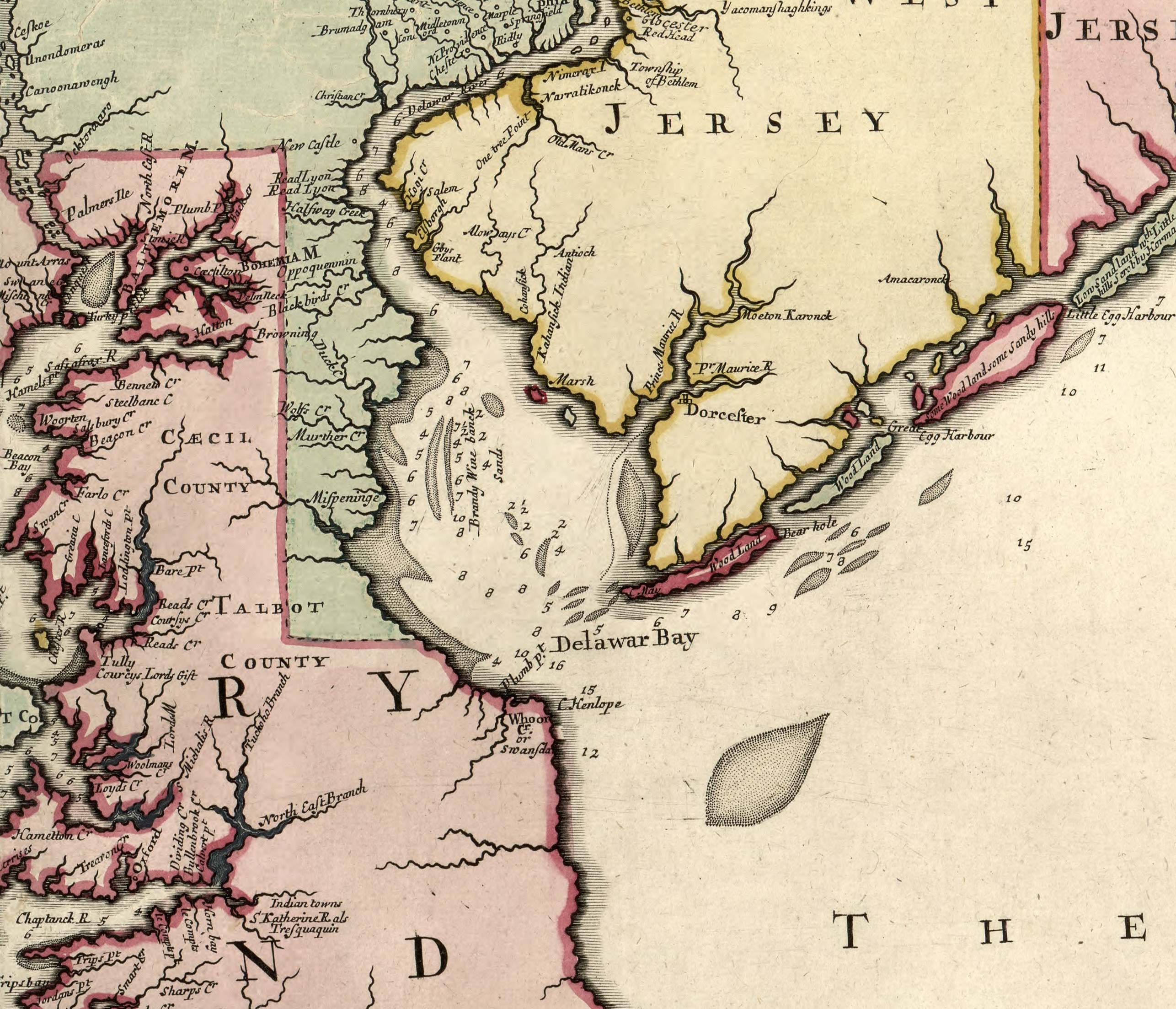
The buccaneers sold the cargo of the Dutch prize, now named the Dauphin, in New Castle, “Pennsylvania” (the region, including New England, was always a haven for pirates) for provisions. The buccaneers sailed to Boa Vista in the Cape Verdes, originally intending to plunder the Guinea Coast. Here they debated their next course: Guinea, the Red Sea, or the South Sea. Conflict set in: Jean Fantin was elected captain and claimed the Dutch prize as his own, contrary to the articles of the Saint-Roze. While there, a flotilla under the command of Jean du Casse arrived, en route to raid Surinam. Charpin appealed to du Casse regarding the Dutch prize, but was rebuffed. Du Casse also turned a blind eye to the buccaneers’ capture of a richly-laden sixteen-gun Spanish merchantman, commanded by Francisco Dias de Padilla, from Havana, other than to attach it as a fireship to his squadron, and persuade, by threat of force, the buccaneers to join his expedition.

After du Casse’s desultory and generally unprofitable raid on Surinam, Charpin returned to Petit Goave in command of the Dauphin and, at least until 1695 and probably until King William’s War ended in 1697, served as a French flibustier corsaire (a buccaneer-privateer), operating largely in the Caribbean although at one point, in concert with Captain Picard and other flibustiers, he cruised far north to raid Rhode Island.
His quartermaster Mathurin Desmarestz (a nomme de guerre, his real name was Isaac Veyret) upon his return took a commission as captain of a French privateer flute, the Machine, of three hundred tons and eight guns out of Martinique. In 1690, in consort with a barque commanded by the sieur de Montauban, he captured a rich Spanish galleon, the Jesús Nazarena y Nuestra Señora del Carmen, nicknamed the Ballestera and commanded by Pedro Fernandez de Valenzuela. Desmarestz and the Ballestera cruised the Caribbean for another year, then, having armed the ship with thirty-two guns and manned it with three hundred men, set sail for the Red Sea, to include encounters with Henry Every… But that’s another story!
But as or more interesting perhaps is the tale of the Spanish prize captured at the Cape Verdes, now commanded by Jean Fantin. The Huguenot captain and his crew returned to Martinique where they were commissioned as corsaires. Joining du Casse’s flotilla again, they sailed to St. Christopher where approximately one hundred ten of the crew assisted du Casse in mounting a six-gun battery ashore to dislodge the English defenders. As they did so, the remaining eight English aboard mutinied, “overcame” the dozen remaining French buccaneers, and set sail for Antigua where they were commissioned as an English privateer and recruited another seventy to eighty buccaneers for their crew.
Why does this matter? Because among these eight mutineer Englishmen were William Kidd and Robert Culliford (also Colliver), both of whom would meet again on the far side of the world, one as a failed pirate hunter, the other as a Red Sea pirate. In fact, both may have been with Fantin in the South Sea under Picard or with Yankey when he raided Honduras, or even were with Charpin aboard the Saint-Roze at Île-à-Vache. Kidd was made captain of the former French privateer, now named the Blessed William — and his crew would soon run away with the ship while Kidd was ashore, and turn pirate. The rest is history.
And to add a curious footnote: the Santa Rosa is almost certainly the same Spanish Assiento slave ship owned by the company of Don Juan Coymans that in January 1686 was intended to carry 600 slaves to Portobello from Jamaica. In December 1684 it had sailed from Jamaica to Portobello with 304 slaves aboard. In March 1686 Lieutenant-Governor Hender Molesworth of Jamaica, having lost the service of the HMS Ruby, ordered the ship impressed and fitted out to hunt the pirate Bannister (see below), in company with the HMS Bonneta. However, the expedition does not appear to have actually sailed; the arrival of the HMS Falcon and HMS Drake precluded any need to impress the Spanish ship.
For more details on Charpin, Fantin, and Veyret, see the Dictionnaire des Flibustiers des Caraïbes by Jacques Gasser (Les Sables d’Olonne, France: Editions Beaupre, 2017). Details on the Coymans Assiento can be found in numerous scholarly studies.
A Pirate Ship Captured at Baradaires, Saint-Domingue in 1687 by Flibustier Jean de Bernanos

In October 1687, upon hearing word that a pirate — described in French as a forbin, that is, a true pirate, not a flibustier — was on the coast, after having plundered the Guinea Coast of Africa and probably attempting to sell a cargo of slaves illicitly — Governor de Cussy dispatched the sieur de Franquesney aboard the man-of-war Le Marin to seize the pirate. No fool when it came to dealing with pirates, Franquesney recruited veteran buccaneer Jean de Bernanos, who recruited fifteen flibustiers to augment the naval seamen in case push came to shove.
At Baradieres the French man-of-war trapped the pirate who, hoping to ingratiate its crew with the warship’s captain and crew, fired a twelve-gun salute, but to no avail. Bernanos and his men boarded and seized the small frigate and its cargo. For his service, Bernanos was awarded the ship, although almost certainly not its cargo which would have been seized by the local government as piratical goods. To date, I have found no records indicating who the captain and crew of the pirate ship were, nor even their nationality.

Little is known of Jean de Bernanos, aka Captain La Sound or Lessone, prior to his becoming a flibustier except that he had formerly been a captain of cavalry, in France as far as we know. One author reports his birth place and year as Metz, France, 1645, while others suggest his birth date and place are unknown. He is found first in written records as having crossed the Isthmus of Panama in 1679 with eighty-five buccaneers under his command and two hundred Native American allies. Forewarned of his coming by the leader of rival tribe, Spanish forces from Panama intercepted Bernanos at Cheapo and forced the buccaneers to retreat.
In 1680 Bernanos and his flibustiers aboard their ninety-ton, six-gun frigate joined John Coxon and company in the sack of Portobello, but declined to join the English buccaneers on their journey across the Isthmus of Darien and into the South Sea, a voyage made famous by the adventures of escapades primarily under the command of the famous rogue Bartholomew Sharp. Bernanos and his buccaneers turned back after the attack on the Spanish gold mines.
Bernanos next appears in command of a five-vessel flotilla: his Schitié of eight guns and eighty men; Grogniet’s Saint-Joseph of six guns and seventy men; Blot’s Guagone (or Quagone) of eight guns and ninety men; Vigneron’s barque Louise of four guns and thirty men; and Petit’s “bateau” Rusé of four guns and forty men. In May 1684 Bernanos’s buccaneers and their Native American allies ascended the Orinoco River and attacked Santo Tome de Guyana, capturing the local fort after a six-hour battle. Little plunder was found. Bernanos and his buccaneers burned the small town and carried away several important prisoners whom they ransomed at Port of Spain, Trinidad, for ten thousand pieces-of-eight and various goods and supplies. One scholar suggests the expedition up the Orinoco was in search of fabled treasure that did not exist.
Bernanos appears to have afterward retired to his plantation on Tortuga until brought back into service against the pirate at Baradieres. King William’s War broke out effectively in 1688, and in 1689 we find Bernanos in command of a twenty-gun, one-hundred fifty-man privateer, quite possibly the captured pirate vessel in the image above.
In May 1690 he attacked a flotilla of English turtle fishing vessels, but all escaped except for one bark, the Calapatch (a calapatch is the top shell of a turtle), who valiantly attacked the privateer, permitting the escape of its companions.
Soon afterward Bernanos captured a considerable Spanish prize but the prize crew mutinied, sold the cargo at the pirate haven of St. Thomas — a Danish colony — where they recruited more men and turned pirate “against all flags” but reportedly perished in the end.
In 1692 Bernanos was commissioned as a major in the French army and was given command of the fortification at Port-de-Paix, Saint-Domingue. Described as a “brave man…, captain of cavalry, who had been a privateer…,” he died defending Port-de-Paix against a combined English and Spanish attack in 1695.
For more information on Bernanos, see the Dictionnaire des Flibustiers des Caraïbes by Jacques Gasser (Les Sables d’Olonne, France: Editions Beaupre, 2017).
The Golden Fleece of Joseph Banister and the Saint-Nicolas aka Le Favori aka La Chavale of Michel Andresson and soon François Rolle, 1686
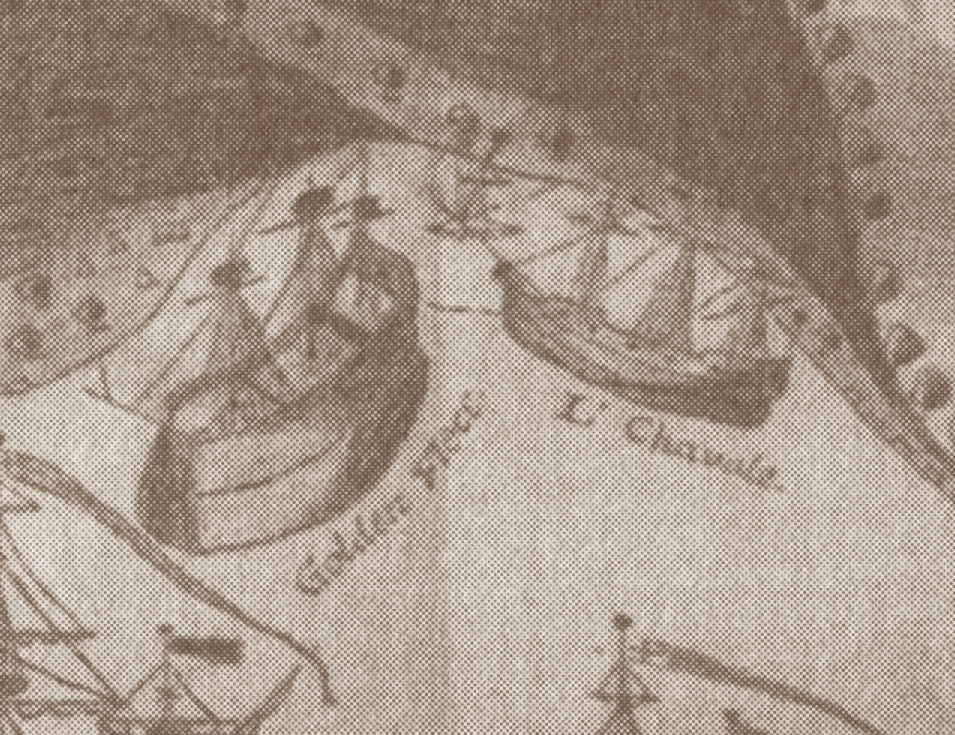
The image above shows two ships, the Golden Fleece, a pirate, commanded by Joseph Bannister, and La Chavale, a flibustier but soon to be pirate, commanded by Michel Andresson. Drawn by ship’s clerk John Taylor, it was one of many that illustrated his manuscript of his life at Port Royal, Jamaica in 1687. However, although Taylor did sail aboard the HMS Falcon for a few months, he was not present during the attack on Bannister’s ship, described below, in 1686, although he pretends he was; the details were described to him by officers and crew of the HMS Falcon.
If you’ve read Captain Blood: His Odyssey by Rafael Sabatini, you’re familiar with the escape of Peter Blood and the Arabella from Port Royal, Jamaica, a scene Sabatini may have been influenced to write by the escape from Port Royal in early 1685 under the guns of Charles Fort by Captain Joseph Bannister (or Banister), commanding the 30-, 36-, or 40-gun, 400 ton merchantman Golden Fleece. The ship had been trading from London to Port Royal under his command at least as early as 1680, when she sank in nine fathoms while at anchor in the harbor. The Golden Fleece discharged her entire lading but, due to a lack of local goods, had loaded little in its place. The ship was top-heavy and when her crew went to one side to scrape the hull, the Golden Fleece overset, drowning several of her crew. With the help of several divers the ship was refloated and refitted, but at a loss of £1,000 to her owners, one of whom was surely Bannister.

In early May 1684, Bannister, heavily in debt probably due to losses from the 1680 accident, put to sea from Port Royal, claiming to be bound to New England for trade but intending piracy instead. He recruited one hundred men from local sloops and probably the French buccaneer haven at Petit Goave, and petitioned the French for a privateering commission, which was denied, although he apparently received some backing from the famous buccaneer Michel, sieur de Grammont. In July Bannister, his ship, and crew were captured by the English pirate hunting guardships HMS Ruby, HMS Bonetta, and a half-galley while he was catching and salting turtle for provisions in the Cayman Islands. Wisely, the pirates did not put up a fight. Bannister had “115 men on board, most the veriest rogues in these Indies,” according to Sir Thomas Lynch.
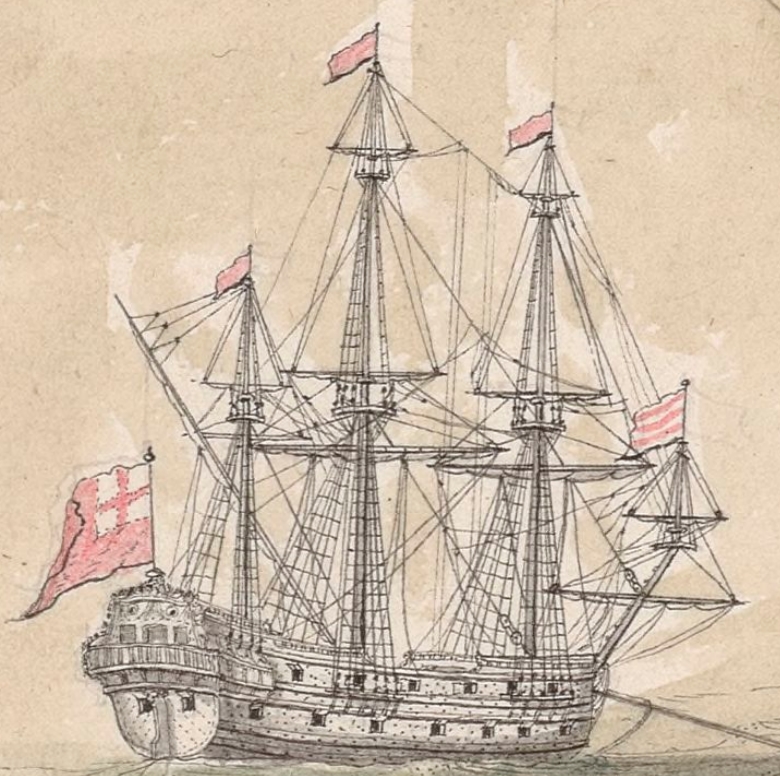
Bannister and his crew were held for piracy, having captured a Spanish canoe with two men aboard and kept the men as prisoners. But Bannister was able to communicate with allies in Jamaica, who provided him with money to pay the Spaniards for their canoe and cargo, and even to pay them wages while they had been in his custody. The Spaniards would not testify against Bannister, and so the grand jury, with a vote of nine opposed and four in favor, refused to find a true bill. Bannister, not believed likely to run due to security (a bond) provided by friends, was ordered held for a second attempt at trial for piracy. Meanwhile, he dispatched the Golden Fleece to London and back under another captain, but the voyage failed to bring him any profit. He therefore made his plans and preparations to once more attempt piracy.
As Lieutenant-Governor Hender Molesworth (1638 – 1689) of Jamaica described it, “About ten days since Captain Bannister one dark night sailed in a desperate manner passed the fort. He had, it is said, fifty men ready in the hold with plugs to stop shot-holes. But the sentries being careless, the night dark, and the wind fresh, he was abreast of the fort before Major Beckford, the commander, was warned, and had passed fourteen of the guns. Beckford did all that he could, but could only place three shot in him. He at once sent me word of the occurrence, which was a great surprise to me, for I thought that Bannister’s want of credit would prevent him from ever getting the ship to sea again.” Bannister had slipped his cables; John Taylor claimed he had 160 men aboard.
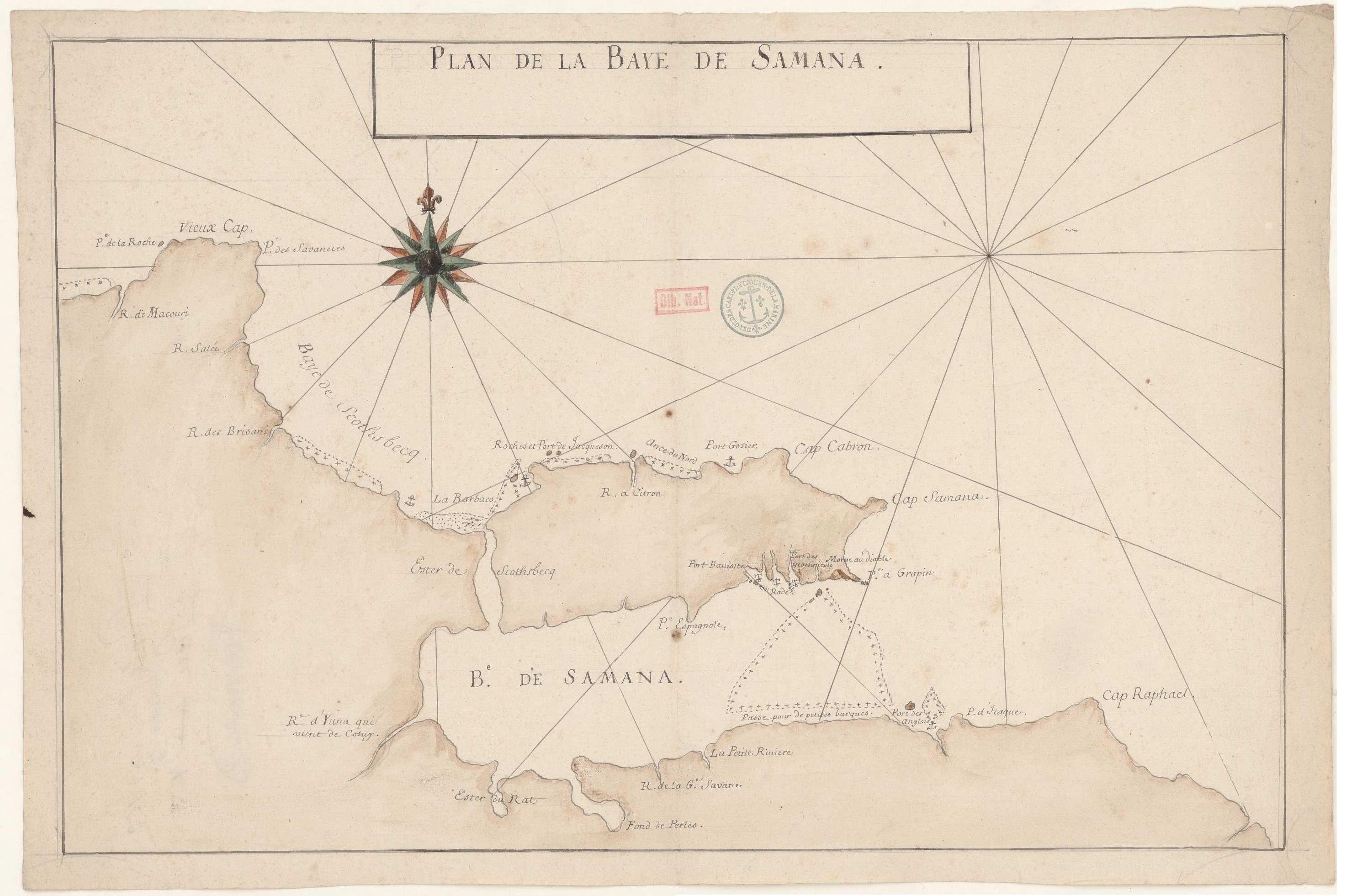

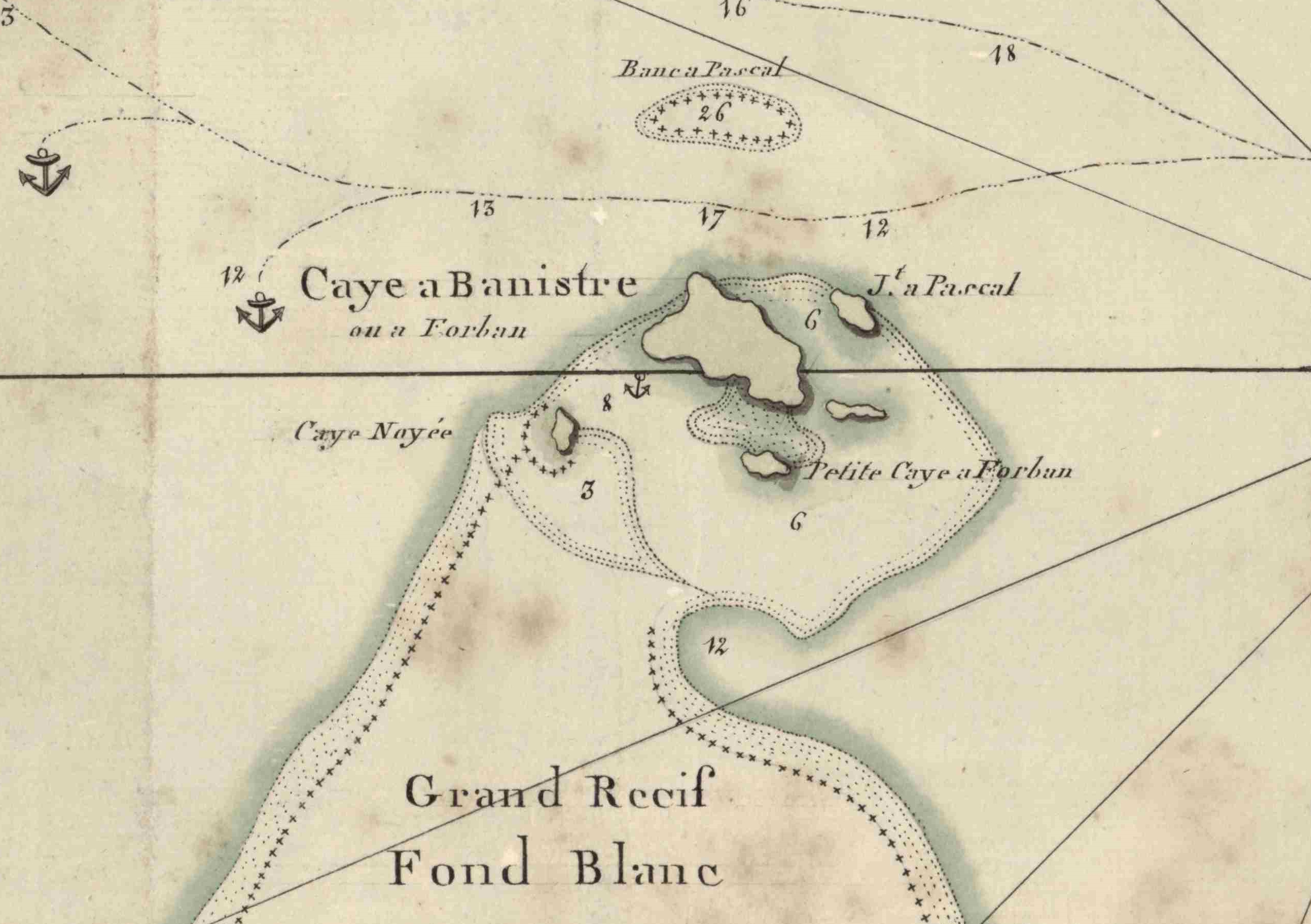
The sloop HMS Bonetta (or Boneta, 4 guns, 57 tons; Bonito in colonial records), commanded by Edward Stanley, sailed after Bannister and ordered him to return but the renegade declined, giving assurances he had no intention of turning pirate, which he soon did. For the next year Bannister mixed first with French buccaneers then set out on his own, capturing Spanish vessels. A demand by the HMS Ruby that de Grammont, in whose flotilla he consorted for a while, turn him over for sailing under a foreign commission was rebuffed, ostensibly because the French claimed Bannister had no commission from them. The English captain did not insist, given the size and number of the French ships, which included those of de Grammont, Laurens de Graff, and Jan Willems aka Yankey — the three most powerful and famous of the 1680s. Bannister is believed to have remained with the French buccaneers, and was probably with them at the sack of Campeche soon afterward. But if so, it was to little profit.
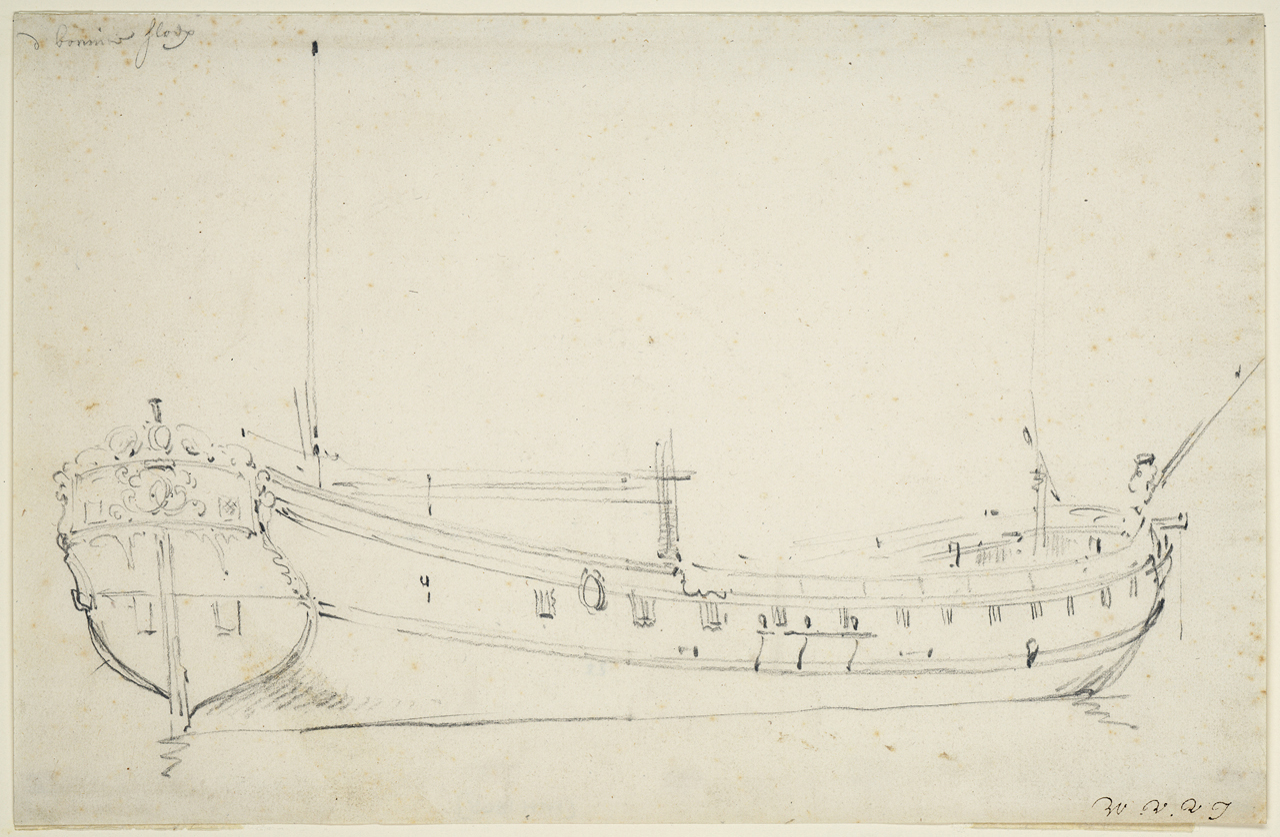
Meanwhile, in late 1685 two hired sloops manned with English naval seamen searched for two months but failed to find him. In January he was reported at the French buccaneer haven at Petit Goave, and in March Lieutenant-Governor Hender Molesworth ordered the impressment of the Spanish Assiento slave ship Sancta Rosa (see above!) to be used in the search for Bannister, given that the HMS Ruby was undergoing repairs. However, the arrival of two new men-of-war precluded this. In May 1686 Bannister was reported careening at Samana Bay on Hispaniola. Immediately the newly arrived HMS Falcon and HMS Drake were dispatched. The two men-of-war spent nearly all their powder pummeling the Golden Fleece as it lay on its side careened. Bannister’s men had built gun emplacements and returned fire (a detail that would inspire part of the plot of The Black Swan by Sabatini), killing and wounding some of the English naval seamen. The Golden Fleece was damaged so badly that the pirates burned it in the end. Taylor’s drawing, a rather crude one, shows a large ship with raised forecastle and quarterdeck, but no poop deck (or a very short one).

Occasionally a rabid pirate fan (typically on Wikipedia, often the encyclopedia of misinformation) will argue that this cannonading of a careened pirate ship was a pirate victory against the English navy, but it’s hard to claim victory when you lost your forty-gun pirate man-of-war while your enemies are still afloat and need only re-arm, and now you must cruise in a small sloop, and will end up as shortly to be described. For the English men-of-war, the fight was half-victory, half failure but — not defeat. The pirate ship was destroyed but the pirates remained at large.
Nearby, but not attacked, was a small captured urqueta (a flibot or small fluyt) manned by French buccaneers who took the marooned pirates aboard. The English buccaneers soon departed in a small Spanish bark or sloop captured by the French. Bannister, now sailing under a false name, and his men cruised the Mosquito Coast until captured by the HMS Drake after gaining intelligence of him from some of his former crewmen, all of whom had abandoned Bannister and six others, and ran away with the bark, abandoning him among the Mosquito Indians.

Bannister was captured “in disguise a-roasting a plantain, in a pore Indian wigwam.” One of his men fired a musket at the English seamen, for which he was killed in return. The other three of Bannister’s crew were captured as well. The pirate captain and the three of his crew were hanged in January 1687 aboard the pirate hunter as it sailed within view of Port Royal. It was “a spectacle of great satisfaction to all good people and of terror to the favourers of pirates, the manner of his punishment being that which will most discourage others,” according to the Governor of Jamaica. After the Drake anchored with the hanged pirates as an example, the bodies were cut down and tossed into the sea near Gun Key. Two boys who had sailed with him were pardoned and turned loose in Port Royal, but both were hoisted aloft by “their armholes, at the mizonpeek” while the four pirates were hanged. One of the boys, according to Charles Johnson, grew up to be the possibly fictional pirate captain William Lewis.
The French flibustiers at anchor near Bannister careening at Samana Bay were commanded at the time by Michel Andresson, often known as Captain Michel. Another of the famous French buccaneers of the 1680s, he succeeded to command of Laurens de Graff’s Le Tigre in 1682, and in 1683 commanded the company of buccaneers that stormed the southern bastion at Vera Cruz. In 1684 he was with de Graff and others off Cartagena when they were attacked by three Spanish slave ships converted to men-of-war; the buccaneers captured or destroyed the ships sent after them. De Graff took command of the thirty-four gun San Francisco Javier y San Lucas Evangelista and renamed it Le Neptune, and Andresson took command of La Paz (probably a nickname for the San Joseph) and renamed it La Mutine.
In company with Captain Brouage, Andresson captured two Dutch ships trading at Cuba, and carried the plunder to Boston for sale — New England Puritans were well-known for their hypocritical avarice (see link noted above). After some minor unprofitable adventures, most of Andresson’s crew deserted him in 1685 to cross the Isthmus of Darien into the South Sea (see buccaneer-author Raveneau de Lussan for details!). He soon joined an old comrade-in-arms, François LeSage and was given command of his Dutch prize, the Saint-Nicolas, renamed Le Favori, a 100-ton, fourteen-gun flute originally intended to trade illicitly along the Spanish Main. Its crew of flibustiers were described as some of the most seditious and mutinous in the Caribbean.
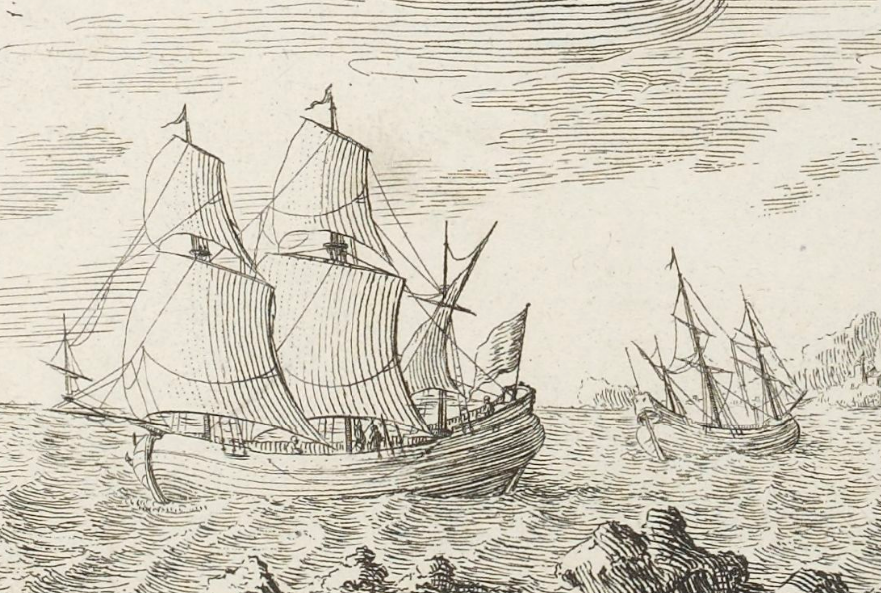
The small ship, called La Chavale by John Taylor, who would have had it described to him by English naval officers and crew who had destroyed Bannister’s ship, is clearly a small flute, known as an urqueta by the Spanish, a pink by the English, and a flibot by the French, as is described in other sources. If Taylor is correct about the name, it reflects a name-change under Andresson’s command.
After a failed attempt to sail into the South Sea via the Strait of Magellan, Andresson, now separated from Le Sage, headed to the Caribbean to repair, careen, and provision for a second attempt into the South Sea. At Samana he met Joseph Bannister; the English attack had been focused only the English pirate, and the French escaped harm. After the departure of the English pirates whom they rescued, the French sailed to the Guinea Coast, first being nearly destroyed by an English merchantman, the Baudan, where they deposed Andresson and elected their quartermaster, François Rolle, a Dutchman (real name Frantz Rools) as captain. The buccaneers sailed into the South Sea, where they remained until 1693.
The voyage is noteworthy because a complete manuscript written by one of the crew exists, and also because during their attack on Acaponeta, Mexico in 1688, the buccaneers carried a red flag of no quarter — the pavillon sans quartier — with a skull and crossed bones beneath. It is the only known instance of buccaneers flying the skull and bones, although likely it was flown at other times. As for Captain Rolle, he went ashore at Cayenne at the end of his voyage in 1693. He married a Dutchwoman there, purchased a large plantation, and remained there until his death in 1722 at the approximate age of eighty.

The Bannister text above was taken largely from a draft appendix for the forthcoming Annotated Edition of Captain Blood: His Odyssey, ed. Benerson Little. Details on both Bannister and the Andresson/Rolle voyage can be found in the author’s book, The Golden Age of Piracy. The Calendar of State Papers, America and West Indies, 1685 – 1688 has numerous details regarding Bannister (search both Banister and Bannister). For more information on the French buccaneers described above, see the Dictionnaire des Flibustiers des Caraïbes by Jacques Gasser (Les Sables d’Olonne, France: Editions Beaupre, 2017). The original journal of the French voyage can be found digitized in the French National Library, and also in the Bulletin of the Société des Sciences et Arts de Bayonne (Bayonne: Lamaignère, 1894), edited by Edward Ducéré, and in The Last Buccaneers in the South Sea 1686 – 1695, edited by Peter T. Bradley (both with one problematic transcription error — Panama for Samana — although the original manuscript clearly shows the latter).
The Capitana and Almirante of the Armada de Barlovento, 1685: The Santo Cristo de Burgos and the Nuestra Señora de la Concepción

In 1685 Laurens de Graff commanded Le Neptune, as noted previously, now mounted with forty-eight or fifty guns (many were probably swivels) and carrying a crew of three hundred, at the equally brutal sack of Campeche, Mexico. He was one of the few buccaneers, flibustiers, or outright pirates of the age of sail ever to command a great, heavily-armed ship.
After the sack—rape is surely a better word—of Campeche, the raiders scattered at the sight of the Armada de Barlovento, although the pirate hunting armada picked off a few of them. Three days later, off the north Yucatán coast of Mexico, near Alacrán (Scorpion) reef, de Graff’s lookout sighted two ships. The larger was the Nuestra Señora de Jonjón, an urca or frigate of roughly 335 tons and twenty to thirty guns.
The smaller vessel was the eight-gun Jesús, María y José, a patache or small escort ship of unknown rig, formerly known as the Sevillana. Both were part of the pirate hunting Armada de Barlovento. The Jesús, María y José immediately set all sail and a course away from the pirates, desperate to inform the famous, now elderly Admiral Andrés de Ochoa y Zárate that the greatest of pirates was nearby. The Jonhón wisely kept her distance. Soon enough, the captain of the patache informed the admiral of the opportunity to destroy the man who so successfully scourged the Spanish Main.
Within a day the main force of the Armada de Barlovento came in sight of de Graff, and a powerful squadron it was. The Spanish Capitana or flagship was the Dutch-built Santo Cristo de Burgos, of 650 tons and fifty-six guns, her stern with an image of Christ crucified, wearing a skirt that fell to beneath the knees. Aboard her was the Armada’s commander-in-chief, Andrés de Ochoa, ill to the point of physical incapacitation but who would refuse to leave his quarterdeck. The Almirante or vice-admiral was the Dutch-built Nuestra Señora de la Concepción, of fifty-two guns, probably 550 tons, and commanded by Antonio de Astina.

The two great ships were typically Dutch, although both appear, unusually, to have the semi-open stern gallery seen on some Spanish ships at this time. Both of the large pirate hunters were more lightly armed than we might expect—in fact, over-gunning is an historical error often made in novels and films, especially those depicting ships of the seventeenth and early eighteenth centuries. Based on the armament of similar ships of the Armada de Barlovento circa 1700, the Burgos was probably armed with twelve pounders on the gundeck, perhaps a few sixteen or eighteen pounders (culverins) as well, with demi-culverins shooting eight pound shot on the deck above, and four pounders on the “castillos,” that is, on the forecastle and quarterdeck, and possibly the poop.
The Concepción was likely armed with twelve pounders, or even ten pounders if twelves were unavailable, on the gundeck, sakers of five or six pound shot on the upper, with smaller guns on the quarterdeck and, possibly, the poop. Accompanying these two great ships was the recently captured pirate ship Reglita, itself originally a Spanish prize, of twenty-two guns, probably of six or four pound shot, commanded by présador or prize-master Pedro de Iriarte.
And it was by these three ships that De Graff found himself trapped to leeward in his Neptune of as many as fifty guns, though we must doubt that these were all great guns, given the tonnage of his ship. His ship probably had ports for no more than thirty-five to forty great guns of probably no more than eight and four pound shot; the rest were almost certainly various swivel cannon. Put plainly, he was heavily out-gunned.
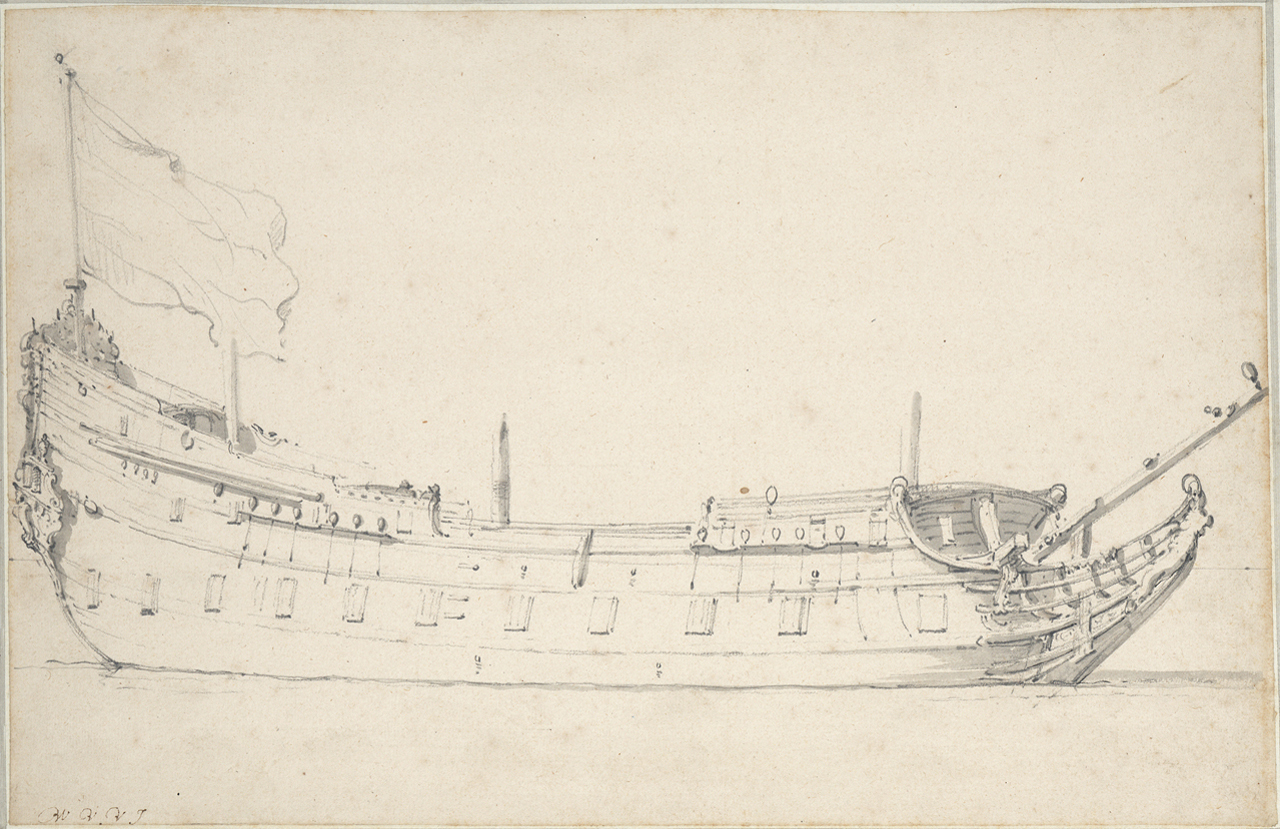
Unable to gain the weather gage so necessary to give him a fighting chance against two large men-of-war—or to escape them—de Graff ordered the Neptune to lie by and prepare for battle. In the language of the day, he had “catch’d a Tartar.” The Armada was not idle either. During the night, the two powerful Spanish men-of-war brought flibustier prisoners aboard to help man the guns against their flibustier brethren—or die.
The battle began early the next morning. De Graff could surely have fought off, perhaps even captured, one of these great men-of-war, but two at once? Still, de Graff knew his business and just how serious the situation was. Before battle began he spoke boldly to his crew, as recounted by buccaneer-surgeon Alexandre Exquemelin:
“You are too experienced to not understand the peril we are running, and too brave to fear it,” he said. “It is necessary here to be cautious of all yet to risk all, to defend and attack at the same time. Valor, deception, fear, and even despair must all be put to use on this occasion; where, if we fall into the hands of our enemies, nothing awaits us but all sorts of infamies, from the most cruel of torments to, finally, the end of life. We must therefore escape their barbarity; and to escape, we must fight.”
The great ships of the Armada sailed bravely down upon the waiting Neptune and her cornered pirate crew. Coming into range, the Burgos fired a warning shot from a bow chaser. The Neptune made no response. Onward sailed the Burgos, the Concepción not far behind. And here the Armada made its first tactical mistake, sailing on each side of the Neptune. In this position, the Spaniards could not fire on the enemy without also firing into each other. Only in Hollywood can two ships sail closely one on each side of another ship and destroy it, as in Pirates of the Caribbean: At World’s End. In reality, it could be suicide or nearly so. Of course, Rafael Sabatini, doubtless inspired by Exquemelin’s description of the battle, got the tactic right in Captain Blood, with his hero emulating de Graff by sailing between the Spanish men-of-war Milagrosa and Hidalga.

De Graff shouted orders to fire starboard and larboard. First one side, then the other of the Neptune blazed iron into the pair of pirate hunters. Immediately de Graff topped the broadsides off with an enormous discharge of musketry. Buccaneer surgeon Alexandre Exquemelin claimed that the musketry alone killed or wounded fifty Spaniards, and this might be true: filibusters and buccaneers were known for their ability with their long-barreled muskets. The Burgos, ready to fight, let loose its own powerful broadside in return.
Spanish records, however, give a slightly different account of this first phrase d’armes, perhaps truthfully, perhaps to cover up a grave error. Admiral Andrés de Ochoa y Zárate, the records suggest, believed de Graff would speak to him, surely to discuss terms, and so approached the pirate. After all, de Graff was out-numbered, out-gunned, and out-manned. But when the admiral’s ship came into close range, de Graff let his great guns do the talking.
For the next twelve hours de Graff maneuvered his ship defensively such that his enemy could seldom or never bring two broadsides to bear on him at once. Never did de Graff gain the weather gage, yet in spite of this the Armada ships never boarded him. In fact, they feared to do so. De Graff had a large crew that was clearly proving its prowess in open sea battle. If the Spaniards were to board, they first had to outmaneuver him, and both ships must board him, one first, then the other alongside the first. Once one had boarded, the other must cease firing, but the pirate had no such restriction. Perhaps most threatening, they knew too well de Graff’s prowess as a gunner. He might slaughter far too many of their men as they came near to board, for boarders, if there are many of them, must be massed on deck just before they board, and thus are vulnerable.
And de Graff made sure the Armada captains and crews understood how dangerous it would be to try to board. At one point, De Graff ordered his helmsmen to close with the Burgos and his gun crews to aim a broadside at close range at the mainmast. In this age broadsides were not fired as in Hollywood films, all guns firing at once or almost so, with each gun captain simultaneously touching his match to his gun. Rather, these great guns were often fired by a few gunners, gunner’s mates, or officers who went from one gun to the next and then the next, or they were aimed and fired by individually by each gun’s captain, all in order to ensure good aim.

In either case, a real broadside in this era was a ragged slow-motion series of ear-cracking explosions of fire and smoke that ripped from iron into wood and flesh. Buccaneer-surgeon Alexandre Exquemelin claims that de Graff himself aimed the gun that dismasted the Burgos. And it’s likely de Graff did aim several or more of his guns in this broadside, but the mainmast of the Burgos, although damaged, did not fall. Even so, the broadside was so effective that the Spaniards abandoned any thought of boarding the Neptune.
Surely emulating the famous previous fight of de Graff’s Le Tigre against the situado (payroll) ship La Francesa, the larger, less maneuverable Neptune twisted and turned as the fight continued, engaging first one ship, then the other, but taking no unnecessary risks. De Graff wanted to batter his enemies down, one then the other, however long it took. The Concepción, valiantly bearing the brunt of the fight, fired at least sixty full broadsides at the Neptune, and Burgos at least fourteen. The Spanish officers would later claim their powder was bad, and maybe it was. Yet it was powerful enough to kill five Spanish gunners when their great gun exploded.
But de Graff’s powder was not bad, and moreover, his crew knew how to load, aim, and fire accurately. Smoke covered the water between the ships as they blazed away. Men bled and died on each side, including de Graff himself, wounded in the leg. He was carried below and his crew lost heart. But as soon as de Graff heard his guns slacking, he rose, climbed back to his quarterdeck, and, sword in one hand, pistol in the other, and rallied his filibuster crew.
The battle continued until nightfall, when all three ships stood off from each other to tend to their wounded, knot their shattered rigging, repair the leaks in their hulls, and pump the water from their holds. The Neptune was in terrible condition. Although only nine of her crew had been killed and but ten or twelve wounded, the Neptune herself had taken a beating, for the Spanish broadsides had not been ineffective. Her foretopmast was shattered. Far worse, she had been hulled at the waterline by so many round shot that she was listing severely due to the water that continued to flood her hold in spite of the plugs pounded into the hull by his carpenter and mates. Through the night de Graff’s crew worked to lighten Neptune, to right her and prepare her for battle on the morn.
At dawn the next morning the Neptune had finally gained the weather gage—and the Burgos and Concepción were in no mood to engage her again. Their crews were battered and almost beaten, with dozens killed and wounded. They had expended most of their powder and shot, and the upper works of the Burgos were shattered. During the night the elderly admiral had been given his last rites in expectation of his death: he would live but two more days. With a single exception, the Armada officers believed that calling off the fight was the best course. Only Pedro de Iriarte wanted to chase the pirate and renew the fight, more for the sense of honor and reputation than for tactical wisdom. Surely every one of them felt shamed by their failure to capture, at odds of two to one of ships and guns in favor, this notorious pirate who had once been one of them.
This account is an edited, abbreviated version that appears in The Golden Age of Piracy: The Truth Behind Pirate Myths. Citations can be found in the endnotes of the book (I’m frankly too lazy to add them here. 🙂 ).
Copyright Benerson Little 2023. First posted 26 January 2023. Last updated 23 February 2023.

Jack Sparrow, Perhaps? The Origin of an Early “Hollywood” Pirate, Plus the Authentic Image of a Real Buccaneer

The small caption reads “Cover Drawn and Engraved on Wood by Howard McCormick.” Author’s collection.
The illustration above was created in late 1926 or early 1927, and published in April of the latter year. Among its several pirate clichés (skull and bones on the hat, tattoos, curved dagger, long threatening mustache) is one I had thought was entirely modern: a pirate hair braid with coins attached.
Quite possibly, this coin braid is the artist’s idea of a pirate “love lock.” The love lock was popular among some young English and French gentlemen in the first half of the seventeenth century. Usually worn on the left side, it was typically tied with a ribbon, a “silken twist” as one author called it. Occasionally two were worn, one on each side as in the image below.

Henri de Lorraine, Count of Harcourt (1601-1666), known as “le Cadet la Perle” due to his bravery in battle. He is also sporting a pair of love locks. Print by Nicolas de Larmessin, 1663. British Museum.
This “pirate love lock” is a noteworthy characteristic of the very Hollywood, very fantasy pirate Captain Jack Sparrow, and I wonder if this image did not inspire much of his look. Historically-speaking, though, there is no historical basis for it among pirates of the “Golden Age” (circa 1655 to 1725), although it’s possible there may have been a gentleman rover or two who wore one during the first half of the seventeenth century–but not a braid or lock with coins.
Of course, much of The Mentor pirate image above was clearly inspired by famous illustrator and author Howard Pyle, as shown below.

Romantic, largely imagined painting of a buccaneer. From “The Fate of a Treasure-Town” in Harper’s Monthly Magazine, December 1905. The image is reprinted in Howard Pyle’s Book of Pirates.

“How the Buccaneers Kept Christmas,” Howard Pyle, Harper’s Weekly, December 16, 1899, a special two-page image. I’ve discussed this image in Of Buccaneer Christmas, Dog as Dinner, & Cigar Smoking Women.

A classic Howard Pyle line drawing, from Howard Pyle’s Book of Pirates.
There’s a hint of N. C. Wyeth too, not surprising given that he was a student of Howard Pyle. However, Captain Peter Blood was a gentleman pirate, and the pirate on The Mentor cover is clearly not.

Battered dust jacket from the photoplay edition of Captain Blood: His Odyssey by Rafael Sabatini, 1922. The cover art and identical frontispiece artwork by N. C. Wyeth.
And Wyeth’s Captain Blood cover is clearly influenced by this 1921 cover he painted for Life magazine. In fact, less the goatee, the two buccaneers might be one and the same:

Details about the painting can be found at the Brandywine River Museum of Art. Oddly, the Life magazine issue has no story or article about buccaneers or pirates.

“The Pirate” by N. C. Wyeth. Pretty much the same pirate as immediately above, less the fictional “pirate boots,” this time painted for Hal Haskell Sr., a Dupont executive who commissioned it in 1929. For years the painting hung in Haskel’s yacht, and afterward to the present in the family home. The print is available from The Busacca Gallery, Art-Cade Gallery, and other vendors.
The Pyle influence continued through the twentieth century in film, illustration, and mass market paperbacks about pirates…

“Pirate Dreaming of Home” by Norman Rockwell, 1924. The painting is also clearly based on Howard Pyle’s famous painting, “The Buccaneer Was a Picturesque Fellow,” and may be intended to represent the same buccaneer later in life, or perhaps is simply an homage to Pyle. (Norman Rockwell Museum.)
The Mentor illustration is also clearly influenced by Douglas Fairbanks’s 1926 film The Black Pirate, which was, according to Fairbanks himself, heavily influenced by Howard Pyle’s Book of Pirates and to a fair degree by Peter Pan.
Seriously, check out Fairbanks’s costume in the film, it’s obviously that of Peter Pan grown up. I have a soft spot for Douglas Fairbanks: my first fencing master, Dr. Francis Zold, described him as a gentleman and a swordsman, and described how Fairbanks invited the Hungarian fencers to his mansion Picfair (named after Fairbanks and his wife, Mary Pickford) after György Jekelfalussy-Piller won the gold saber medal at the 1932 Los Angeles Olympic Games. (N.B. I think Dr. Zold was referring to Fairbanks Sr. as a gentleman and a swordsman, but a nagging itch in my mind suggests that it was Fairbanks Jr. instead.)
Anders Randolf as the pirate captain in The Black Pirate. Note the skull and bones on the hat, the dagger in the mouth, the hoop earring, and, just visible, the tattoo on the chest. Screen capture from the Kino Blu-ray. A useful review of the film is available here.

Publicity still, possibly a frame enlargement from B&W footage given the grain, of the admirable duel on the beach between Randalf and Fairbanks, choreographed by Fred Cavens. More on this in a later blog post. Author’s collection.
And here, finally, we have Johnny Depp as Jack Sparrow in the flesh, braids and such dangling from his hair, again for which there is no historical precedent among Golden Age pirates that we know of. It’s hard to see how Depp’s costume, in particular his hair, might not have been influenced by the illustration at the top of the page. If it weren’t, it’s quite a coincidence.

“Captain Jack Sparrow makes port” from the Jack Sparrow Gallery on the Disney Pirates of the Caribbean website.

Jack Sparrow again, with a closer look at his braids &c. from the Jack Sparrow Gallery on the Disney Pirates of the Caribbean website.
As noted, it’s entirely possible that the Pirates of the Caribbean: The Curse of the Black Pearl costume designers never saw the image at the top of the page. They may have imagined it themselves, or been influenced by something else. A very likely possibility is Donald O’Connor in the 1951 film Double Crossbones, a campy pirate comedy that makes fun of nearly all pirate clichés.
Donald O’Connor in Double Crossbones. Note the braid over his right ear. (Screen capture.)
Although this may seem to be little more than coincidence, there are other similarities between the two films, strongly suggesting the writers and costume designers were familiar with it. In particular, O’Connor plays a shy, somewhat bumbling shopkeeper’s apprentice in love with the governor’s beautiful ward, and she with him. Due to difference in social class he’s unwilling to express his love openly until by accident he becomes a pirate. Sound familiar? Even the costumes of the governor’s ward (Lady Sylvia Copeland, played by Helena Carter) are similar (homage-fashion?) to those of Elizabeth Swann, played by Keira Knightley. If not the Pirates of the Caribbean costume designer, then perhaps the Double Crossbones costume designer was familiar with the image at the top of the page.


Screen captures from Double Crossbones, 1951. Plenty of candlesticks, not to mention a painted miniature around the neck instead of a magical Aztec coin.
And there’s another film possibility: Torin Thatcher (a pirate’s name if ever there were!) as Humble Bellows in The Crimson Pirate (1952). Bellows wears a love knot, perhaps to compensate for his balding pate. It’s surely better than a comb-over! Disney may have been inspired by Bellows’s coiffure, for, like Double Crossbones above, there are numerous homages, shall we say, to the film in the Disney franchise, ranging from the way soldiers march to the “walking boat underwater” scene. It’s also possible that Donald O’Connor’s ‘do inspired Bellows’s.

Torin Thatcher as Humble Bellows in The Crimson Pirate (1952). Blu-ray screen capture.
Of course, all this so far is “Hollywood,” for lack of a better term. There are a number of serious groups of reenactors, scholars, and others trying to correct the false historical image, all with varying degrees of accuracy, agreement and disagreement, and success.
Hollywood has yet to get aboard, no matter whether in pirate films and television series, or often any film or television set prior to the nineteenth century for that matter, probably because it’s easier to play to audience expectations (and, unfortunately, much of the audience doesn’t really care), not to mention that there’s a tendency or even a fad among costume designers to do something that “evokes” the image or era rather than depict it accurately, not to mention the time and other expense of researching, designing, and creating costumes from scratch when there are costumes “close enough,” so to speak, already in film wardrobes.
Here’s a hint, Hollywood: you can start by getting rid of the “pirate boots.” They didn’t exist. They’re actually based on riding boots, and a pirate would only be in riding boots if he were on a horse–and horses aren’t often ridden aboard ship. Further, you can get rid of the baldrics in most cases, exceptions being primarily for gentlemen pirates wearing smallswords into the 1680s, no later. (You can have some Spanish pirates with rapiers wear baldrics after this, though.) And for that matter, you can get rid of wide belts and large belt buckles too. But if nothing else, please, please get rid of the boots, which, if I recall correctly, a UK journalist once correctly described as nothing more than fetish-wear.
Full disclosure: I was the historical consultant to Black Sails, a great show with a great cast and crew, but I had nothing to do with the costuming, much of which is considered as near-blasphemy by advocates of historical accuracy in material culture in television and film. That said, the show is a fictional prequel to a work of fiction that variously created or expanded some of our biggest myths about pirates–buried treasure, the black spot, and so on. Looked at this way, if you can accept the story you can probably tolerate the costuming.
I’ve discussed what real pirates and buccaneers looked like several times, not without some occasional minor quibbling by other authorities. The Golden Age of Piracy has some details, as do two or three of my other books, but several of my blog posts also discuss some of the more egregious clichés, with more posts on the subject to come.
At any rate, here’s an image of a real buccaneer, a French flibustier in fact, from the 1680s. It’s an eyewitness image, one of only a handful of authentic eyewitness images of “Golden Age” sea rovers. It and the others prove that an image may evoke swashbuckling pirates while still being entirely accurate.

One of several eyewitness images of French flibustiers (buccaneers) in the 1680s. These are the only known eyewitness images of Golden Age sea rovers. They went largely unnoticed and without commentary until I ran across them by accident while researching late 17th century charts of French Caribbean ports. I’ve discussed them in an article for the Mariner’s Mirror, and also in these two posts: The Authentic Image of the Real Buccaneers of Captain Blood: His Odyssey by Rafael Sabatini and The Authentic Image of the Boucanier. The posts include citations to the original images.
Copyright Benerson Little 2018. First published January 23, 2018. Last updated April 4, 2018.
Did Pirates Wear Eye Patches?
Costume illustration of an eye-patched, peg-legged seaman by Paul Gavarni for the Carnival in Paris. The popular image–trope, if you prefer–of the disabled seaman had been in place for more than a half a century by now, if not longer, in both Britain and France. This image was created between 1838 and 1843. British Museum.
So, “Did pirates wear eye patches?”
The short answer: Only if they had lost eyes to disease or injury, and this was no more prevalent among pirates than among fighting seamen and soldiers. In other words, the eye patch is in no way a sign or symbol of the pirate per se, nor even of the seaman in general.
Still, the question is a good one, if only to give us a reason to dig into related history.
The Mythbusters television show and other speculators have recently added to the myth by working backward from the proposition, that is, “If pirates wore eye patches, why would they have worn them?” rather than looking first at primary sources to see if there is any evidence that pirates wore them at all. There isn’t, other than as noted below.
The associated suggestions that pirates may have worn eye patches to improve night vision or daylight lookout observations or to enable them to fight below decks isn’t supported by any primary source material. In fact, the loss of sight in an eye, even by wearing an eye patch, causes significant loss in both depth perception and visual breadth, making movement aboard a vessel, aloft especially, very dangerous. It would also make visual observation by a lookout much more difficult.
As for fighting below decks, pirates and other seamen didn’t really do much of it: it was much easier to flush crew below decks by tossing grenades and firepots into breaches chopped into decks and bulkheads with boarding axes. In other words, the mere idea that eye patches might have been used to aid in fighting below decks shows a clear lack of understanding of the subject.
In other words: There is no historical evidence at all for any of these purported reasons why a pirate might have worn eye patches! Mythbusters and other popular “documentaries” are entertainment, not serious history. This includes “The History Channel,” now known I think as History.com: it’s “docu-tainment,” not real history. Trust me on this: if you’re being interviewed as an expert for a TV “documentary” and produce too many facts against the episode’s premise, the producers won’t put you on screen!
Again, let me emphasize: if a pirate wore an eye patch it was because he had lost an eye or was disfigured in his eye, and for no other reason!
The origin of the modern myth that pirates wore eye patches is largely literary. However, its roots lay deep in reality, both in the fact that eyes were often lost to disease and battle trauma, and that a one-eyed person often looks fearsome or sinister. The latter sense goes back millennia, and probably farther. Homer’s Cyclops, Polyphemus, is an early instance.
Polyphemus by Jan de Bisschop, after Daniele da Volterra, after Michelangelo, after Pellegrino Tibaldi, 1671. Odysseus, aka Ulysses by the Romans, blinded him. British Museum.
Some versions of Bernal Diaz’s The Discovery and Conquest of Mexico describe the fierce old musketeer Heredia, sent to frighten Native Americans, as a one-eyed, one-legged (or game-legged) soldier. The same work describes how Cortez’s enemy, Narvaez, lost an eye in battle.

A British army pensioner with eye patch and wooden leg. Again, the image was not restricted to naval seamen, much less, and popularly, pirates. By Isaac Robert Cruikshank, late eighteenth or early to mid-nineteenth century. British Museum.
Among seafaring journals and other records of the Golden Age of Piracy, there is only occasional mention of one-eyed seamen, usually in lists of those wounded in battle. Exquemelin’s various editions of The Buccaneers of America famously list compensation for the wounded, including the loss of an eye, and it is here that the primary source of the myth of pirates and eye patches is probably to be found, in combination with other works such as Bernal Diaz’s. The loss of an eye in battle was fairly common, in fact: seafarer Edward Coxere describes the use of oakum and tallow to stuff an eye socket in order to heal the wound, for example. Notably, none of the several eyewitness images of buccaneers or flibustiers from the 1680s show any with any of the usual Hollywood characteristics: wooden legs, eye patches, parrots, hooks, &c. This is to be expected. The large number of images of seamen, usually naval, with eye patches dates to a century later.
Images of splinters produced by round shot during an accurate test of the damage done in action. Author’s photos taken at the Erie Maritime Museum.
As a friend, “Tweeds Blues,” pointed out recently, it seemingly would not be surprising to find a fair number of one-eyed naval, privateer, and pirate seamen, given the damage done by splinters in action. Here I feel the need to point out yet again that Mythbusters is entertainment: one episode even suggested that splinters didn’t cause much damage in a naval action. In fact they did: there are hundreds, if not thousands, of accounts of the damage done, not to mention at least one accurate test that proves the horrible extent of damage splinters can do. The Mythbusters test parameters were simply incorrect, not to mention that overwhelming historical evidence was largely ignored, as were previous–and more accurate, historically correct–tests. The images above show splinters resulting from round shot striking a correctly-built hull section. The test was conducted by the Maritime Museum in Erie, Pennsylvania, home of the Flagship Niagara.

Admiral Don Blas de Lezo y Olavarrieta. Blas de Lezo is best-known for successfully defending Cartagena de Indias against British attack in 1741. Injuries received during his naval career included the loss of an eye, his left hand, his left leg below the knee, and the laming of his right arm. Museo Naval, Madrid.
Joseph Burgin, a Greenwich pensioner, who lost and eye and a leg in action in the Royal Navy in the early eighteenth century. National Maritime Museum, Greenwich.
Of course, the most famous example of a naval mariner with an eye patch is arguably, at least in the UK and probably the US, that of Lord Admiral Horatio Nelson, who lost the sight in one eye during the capture of Calvi on Corsica in 1793–except that did not actually wear an eye patch. This has not stopped the popular assumption that he did from becoming prevalent, and, although out of our period, this has still influenced the idea of the one-eyed mariner, and therefore one-eyed pirate. Admiral Nelson also lost an arm. Some would argue, at least in the Hispanic world, that Bras de Lezo (second image above) is the most famous eye-patched admiral.
“Portret van Johann Karl von Thüngen,” the German field marshal. Period images of him show this eye patch worn without a thong, string, or other tie. Anonymous, 1675 – 1711. Rijksmuseum.
The fact is, patches were commonly used to cover any facial disfigurement. In the seventeenth century diarist and navy secretary Samuel Pepys wore a black patch, or possibly a large beauty patch, to cover a large cold sore. Similarly, King William III advised a soldier to remove the black patch covering the scar on his face because “It’s more honourable in a Soldier to wear a Scar than a Patch.” (For the latter reference, see Coke in the sources listed below.)

Scottish soldier Sir William Brog, 1635, with a patch covering a scar on his nose. (And an earring too.) Pring by Crispijn van Queborn. British Museum.
Eye patches, stumps aloft and ‘alow, not to mention peg legs. “Plumpers for Sr Judas, or the Chealsea Pensioners Revenge,” a satirical print, 1784. British Museum.
By the late eighteenth century the image of the eye-patched, peg-legged seaman was iconic, probably the result of the increased number of British naval actions brought on by the American Revolution and, especially, the Napoleonic Wars. Notably, in reality most such disabled seamen were pensioned from service, as shown above. These satirical images are probably the material origin of the popular identification of the naval seaman, and therefore the pirate, with eye patches.
Even with its legitimate historical roots in fact, this pirate myth, like many, didn’t come fully into being until the mid-nineteenth century, a hundred or more years after the Golden Age of Piracy. Sir Walter Scott in The Fortunes of Nigel describes “The noble Captain Colepepper, or Peppercull, for he was known by both these names, and some others besides, had a martial and a swashing exterior, which, on the present occasion, was rendered yet more peculiar, by a patch covering his left eye and a part of the cheek. The sleeves of his thickset velvet jerkin were polished and shone with grease, — his buff gloves had huge tops, which reached almost to the elbow; his sword-belt of the same materials extended its breadth from his haunchbone to his small ribs, and supported on the one side his large black-hilted back-sword, on the other a dagger of like proportions.” Here is the epitome of the swashbuckler, easily translated to the pirate.
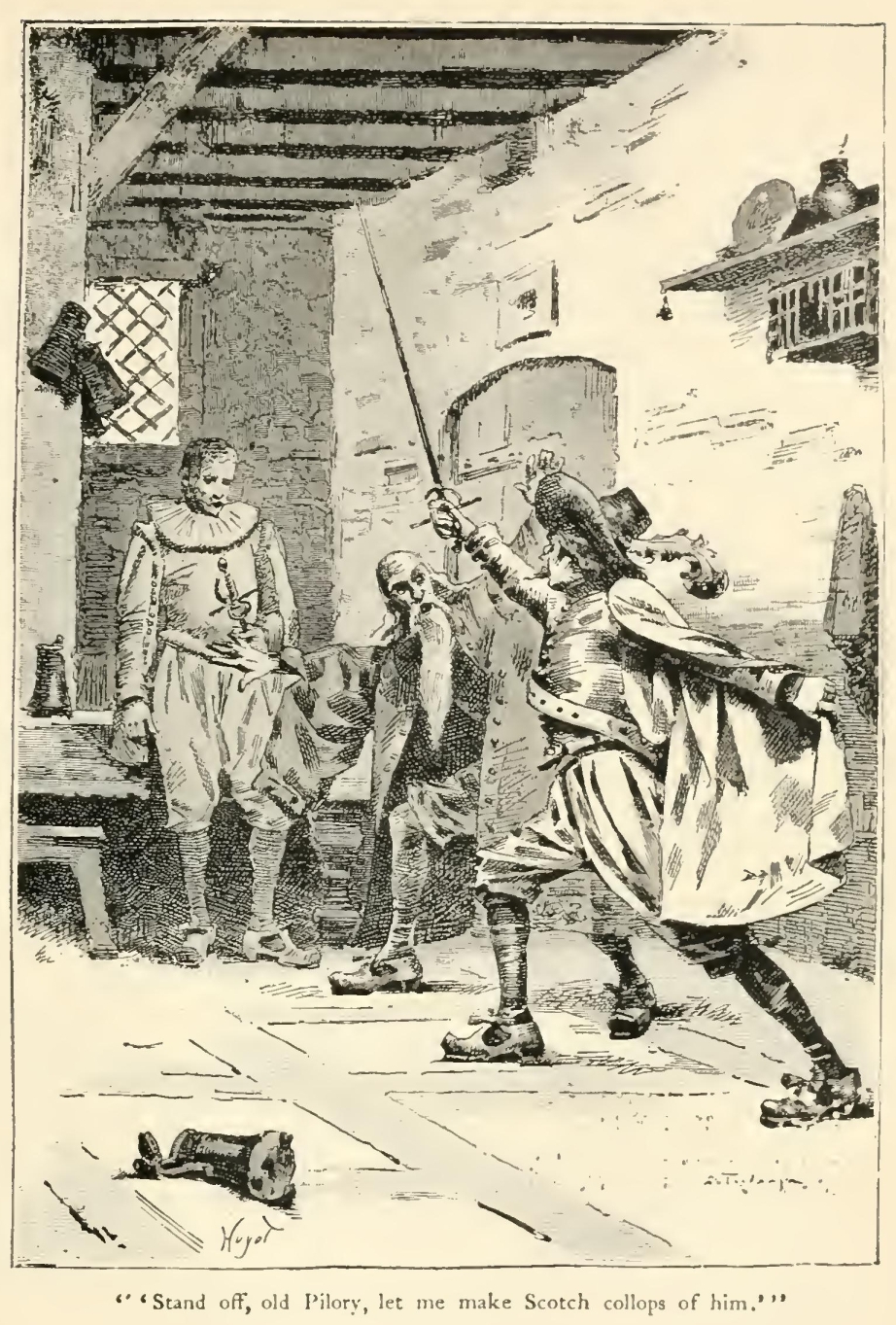
The bold and swaggering Captain Colepepper, from The Fortunes of Nigel by Sir Walter Scott. Nineteenth century, unknown edition.
Not long after, Charles Dickens described a pirate with “the one eye and the patch across the nose” and soon afterward similarly did many writers of popular fiction. However, many of our principle originators or propagators of pirate myths—Robert Louis Stevenson, J. M. Barrie, N. C. Wyeth, for example—do not appear to have bothered with this myth, although Barrie’s Captain Hook probably did encourage other images of pirates missing a vital part such as a limb or eye, and Howard Pyle in The Ruby of Kishmoor equips a pirate, one of the four in the short tale, with an eye patch.
In 1926 Douglas Fairbanks propagated nineteenth century pirate myths, as well as a few he helped create, across the world with his film The Black Pirate. In it he established the modern pirate swashbuckler stereotype, based much on Howard Pyle’s Book of Pirates, Peter Pan, and probably Captain Blood (one of whose characters, by the way, was one-eyed, although he lost the eye at Sedgemoor, not at sea). Around the same time, we begin to see pirate book cover art and other illustrations showing pirates with eye patches. But it would take later films, such as The Black Swan and The Crimson Pirate to make the eye patch an obvious, routine part of the stereotypical pirate costume.

Publicity still from The Black Swan, 1942. An eye-patched Anthony Quinn is on the right.
Sources
Roger Coke. A Detection of the Court and State of England. 4th ed. London: J. Brotherton and W. Meadows, 1719. Vol. 2:472.
Bernal Díaz del Castillo. Historia Verdadera de la Conquista de la Nueva España. Reprint, Madrid: Don Benito Cano, 1795. See vol. 1:213.
Edward Coxere. Adventures by Sea of Edward Coxere. Edited by E. H. W. Meyerstein. London: Oxford University, 1946.
Charles Dickens. “The Perils of Certain English Prisoners.” 1857. Reprinted in Charles Dickens’s Stories from the Christmas Numbers. New York: MacMillan, 1896. Page 144.
Alexandre Exquemelin [John Esquemeling]. The Buccaneers of America. London: Crooke, 1684. Reprint, New York: Dorset Press, 1987. Page 60.
Benerson Little. The Golden Age of Piracy: The Truth Behind Pirate Myths. New York: Skyhorse Publishing, 2016. Prologue.
——. “El Mito Pirata” in Desperta Ferro 17 (August 2015), 52-55.
Heidi Mitchell. “Does Reading in Dim Light Hurt Your Eyes?” Wall Street Journal online, April 8, 2013, http://www.wsj.com.
Mythbusters, Episode 71.
Samuel Pepys. Diary. September 26, 1664.
Walter Scott. The Fortunes of Nigel. Boston: Samuel H. Parker, 1822. Page 255.
The Telegraph. “Nelson didn’t wear eye-patch, says historian.” January 19, 2005.
Copyright Benerson Little, 2017. Last updated August 14, 2025.
The Authentic Eyewitness Image of the Real Buccaneer
The dashing image in the banner above–in which Peter Blood’s posed-for-the-camera attack has been parried by the equally posed Captain Levasseur, and Blood needs to recover quickly before he finds a blade in his eye or his belly–is taken from an original publicity still for Captain Blood, 1935, starring Errol Flynn, Olivia de Havilland, and Basil Rathbone. The film duel between Flynn and Rathbone, of clashing swords on California sand, is without doubt the most iconic of Hollywood sword fights, and although it has often been imitated, the results have almost never been quite as satisfactory. Certainly no other film “duel on the beach” is so evocative.
Therefore, in view of the foregoing, not to mention my long admiration for both the novel by Rafael Sabatini and its film version directed by Michael Curtiz, and as much for fun and nostalgia as for education, I’ll spend my first dozen or more blog posts working my way through authentic, literary, and film swordplay among pirates, with occasional associated digressions.
However, before we draw swords and explore the myth and reality of fencing with “sharps” among pirates and others, we’ll consider what the seafaring thieves of the 1680s Caribbean actually looked like, and how they were armed. Was this anything like Sabatini or Curtiz represented them? Was it anything like illustrators and Hollywood artists—Howard Pyle and Douglas Fairbanks, for example, whose works have come to define the image of the buccaneer—dressed them up and showed them off?
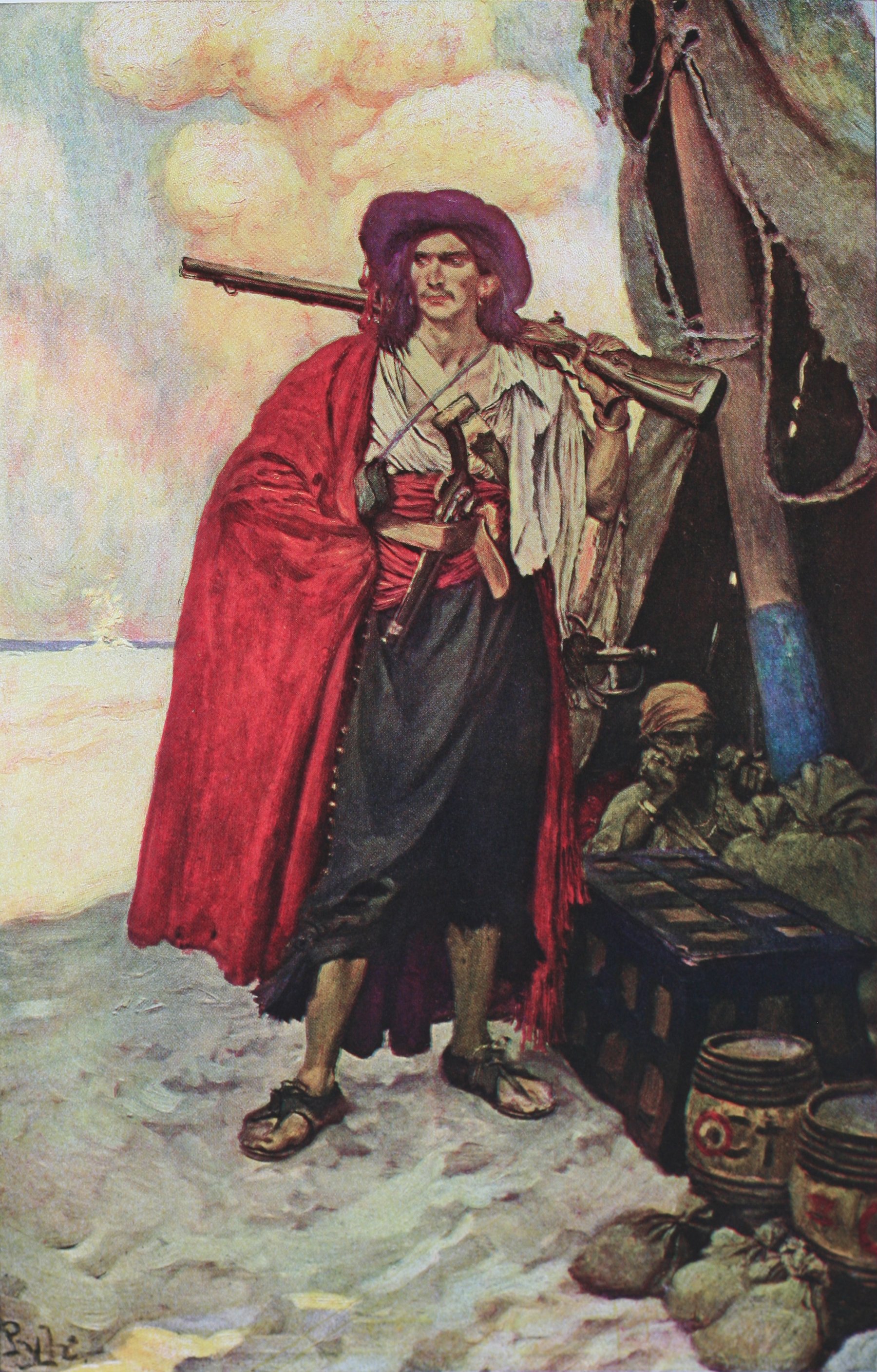
Fanciful illustration, “The Buccaneer Was a Picturesque Fellow,” by Howard Pyle, from “The Fate of a Treasure-Town” in Harper’s Monthly Magazine, December 1906. Reprinted in Howard Pyle’s Book of Pirates.
To begin, we require a few definitions. With a few exceptions, most of the Caribbean sea rovers from 1655, when England piratically seized Jamaica from Spain, to 1688, when Europe went to all out open war, existed in a gray area between legitimate privateering and outright piracy. At times these sea rovers had legitimate commissions, at times a mere “wink and a nod” from local authority, and at times no commissions at all, or forged ones, or falsely extended ones. In all cases these rovers eschewed the term pirate for two reasons: first, piracy was a hanging offense, and second, they considered themselves as something better than common pirates. After all, they not only attacked well-armed Spanish ships at sea, but they also, in military order, sacked Spanish towns.

A somewhat more accurate illustration of a buccaneer threatening a Spanish prisoner, from the frontispiece to Exquemelin’s Historie der Boecaniers, of Vrybuyters van America, 1700. (John Carter Brown Library.)
Their preferred terms were, among the English-associated rovers, privateer and buccaneer. The former proclaimed their legitimacy, the latter their unique place. The term buccaneer derives from boucanier, the term for the French cattle and swine hunter of Hispaniola, which derives from boucan, a Tupi word meaning grill or grate for cooking and smoking meat and fish. (Similarly, barbecue derives from the Spanish barbacoa, which derives from the Taino word for the grill or grate.) The French-associated rovers, on the other hand, used the term flibustier, which, as far as we can tell, originated with the Dutch vryjbuiter, which was anglicized via a pretty much direct translation as freebooter, which the French adopted as fribustier and flibustier, which was later anglicized as filibuster. Occasionally the French used the term aventurier, or adventurer, which accurately reflected the men drawn from all walks of life to the trade. (For eyewitness images of boucaniers, go here.)
From a number of eyewitness written descriptions we have a pretty good idea what these buccaneers and filibusters looked like, or at least enough of an idea to make some reasonable conjectures. Unfortunately, lacking archaeological evidence, we are likely to make some mistakes.We cannot even rely on period illustrations in first-hand accounts about buccaneers, for it is almost certain that the illustrators never saw their subjects. The only exception may be the illustrations of Henry Morgan, who is likely, given his fame, to have sat for a portrait in London while there after sacking Panama.
Worse, fiction, popular illustration, and film have corrupted our idea of what these gentlemen of semi-legitimate fortune may have looked like, as in the case of Howard Pyle’s romantic image above. Therefore, rather than provide several written descriptions first and speculate from them, we’ll cut to the chase and see with our own eyes exactly what Captain Peter Blood’s buccaneers and filibusters really would have looked like.
It turns out that in the archives of the Bibliothèque Nationale de France (BnF) and the French Archives Nationales d’Outre-Mer (ANOM), are a couple dozen charts of French Caribbean ports, primarily those of Saint-Domingue on Hispaniola, made during the 1680s by French engineers. In other words, these are charts rendered by eyewitnesses. And in the cartouches of a fair number are detailed eyewitness drawings of filibusters and boucaniers, as well as of the occasional common worker, probably an engagé (indentured servant), and the occasional slave.
I discovered these by accident a few years ago. I wasn’t the first to do so, but I was, as far as I know, the first to analyze some of them in detail and publish the results (Mariner’s Mirror, August 2012). Their significance had been almost entirely overlooked. For me, the discovery made me feel as if I had briefly traveled back in time—and left me disappointed I could not remain at least for a while.
And here’s why! In this first image, we see a pair of buccaneers or flibustiers at Petit Goave on Saint-Domingue, the western half of Hispaniola claimed by the French. By the 1680s Petit Goave had replaced Tortuga as the sea roving port on Saint-Domingue, and was populated by a large number of flibustiers of several nationalities, colors, and ethnicities.
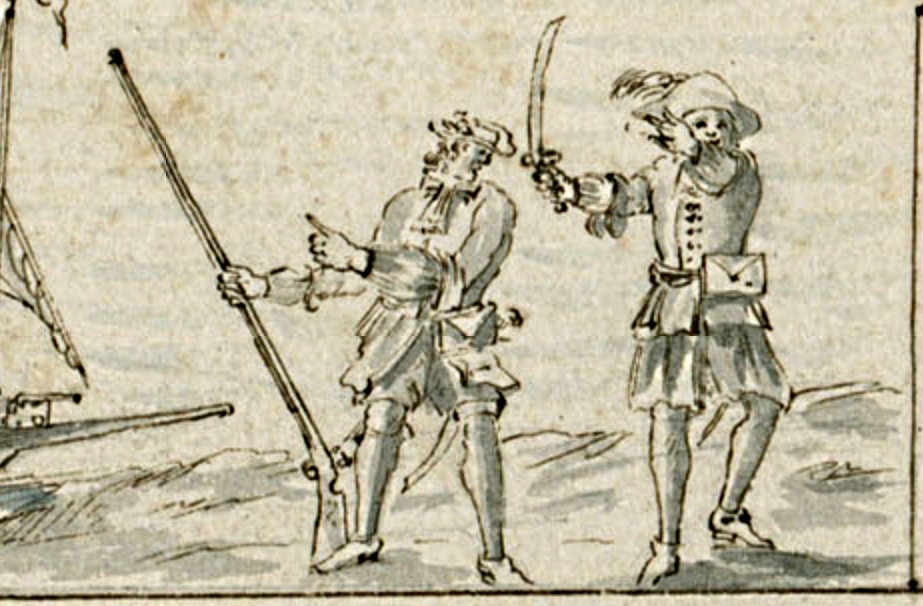
A pair of flibustiers or buccaneers at Petit Goave, 1688, from a chart by P. Cornuau. (Courtesy of the Archives Nationale d’Outre-Mer.)
The buccaneer on the left is armed with long-barreled fusil boucanier, or “buccaneer gun” in English, the common weapon of the Caribbean sea rover. He wears a large cartouche box at his left front, and a cutlass at the side behind it. We can assume from his scabbard that his cutlass is, like his companion’s, made with a clip point, a common style during the era. His hat is small-brimmed, turned up on the left side, and appears to have a small plume. He wears a stylish cravat. His coat is fairly long, and short-sleeved with large cuffs. He may be wearing a sash over it. His stockings are conventional and worn over the knee as was the practice at the time, and his shoes are conventional with short tongues.
His swashbuckling companion is armed with a cutlass whose hilt, given its style, is probably of brass. He likewise wears a large cartouche box at the left front. His hat is broad-brimmed with a large plume, and is turned up at the front. He appears to wear a cravat. His jacket is shorter, with two rows of buttons, short sleeves with cuffs (or rolled up sleeves), and he has a sash tied around his waist, almost certainly with a belt over it to hold cartouche box and cutlass. He wears seaman’s breeches, possibly un-gathered, with stockings that appear to be worn over the knee. His shoes are conventional. It’s impossible to know if they are buckled or tied.
A buccaneer or flibustier at Île-à-Vache, 1686, from a chart by P. Cornuau. (Courtesy of the Bibliothèque Nationale de France.)
Next we have a couple of flibustiers or buccaneers drawn at Île-à-Vache, a common rendezvous off the southwest coast of Hispaniola. Our buccaneer on the right is armed with a fusil boucanier, as most were. The musket is correctly depicted at half-cock, and the deep notch at the neck is the sort later known as “female.” His large cartouche box is worn at the left front over a sash and certainly on a belt. His jacket is short, with large cuffs. His wide, probably open breeches are those of a seaman. His shoes common, his hat broad-brimmed and with a plume. He may have a mustache, and, notably, his hair is shoulder-length and loose. Many seamen–and buccaneers were a combination seaman and soldier–wore their hair tied back or in a queue so that it would not get in their faces or get drawn into a block. But at least among the buccaneers and flibustiers, this rule did not always apply.

Flibustier or buccaneer at Île-à-Vache, 1686, from a chart by P. Cornuau. (Courtesy of the Bibliothèque Nationale de France.)
At the left is another buccaneer and his fusil boucanier, again correctly at half-cock, along with his typical large cartouche box–commonly holding thirty-six cartridges–at the left front. He has a cutlass, although all that’s visible is the scabbard on his right side, making him left-handed. Again, the cutlass is clip-pointed. His hat is turned up at the right side, with a plume on the left, although it’s possible the hat is actually a boucanier’s cropped hat (see next blog post). Like the previous buccaneer, his jacket is short, but with smaller cuffs. His shirt has a bit of lace at the cuffs, and he wears a cravat. His stockings are secured at the knee, and his shoes common, apparently with short tongues.
In the image below, made by “Partenay” aboard the small French man-of-war Le Marin in 1688, we can compare illustrators for accuracy. It depicts two aventuriers, the one on the left possibly a boucanier, given the wild pig at his feet, although he may in fact be a flibustier (boucaniers often accompanied flibustiers, and some men went back and forth between the trades), and the one on the right probably a flibustier. Both men wear fairly broad-brimmed hats turned up at the front, and both wear what are probably wide seaman’s breeches, but similar garments–caleçons of linen or canvas, often open at the knee–were common to boucaniers, indentured servants, and others. Both men have loose shoulder length hair. The hunter or flibustier on the left wears a common shirt, large and loose, and appears to have a cravat or kerchief at the neck and tucked into the shirt. The fusil boucanier is of the “club butt” style which, at least in the eighteenth century, came to be the most common. Note the short clay pipe smoked by the flibustier on the right.

Boucanier and buccaneer, or two buccaneers, at the French sea rover haven of Petit Goave in 1687 or 1688, drawn by Partenay in 1688. (Courtesy of the Bibliothèque Nationale de France.)
In the image below, again by Cornuau, we see a flibustier with two captured Spaniards in chains. He is armed with cutlass with a small shell or shells, and a strongly curved blade with a clip-point. His scabbard hangs from a sword belt common to the period, that is, with two straps, with loops at the end, hanging from the belt. His large, obviously thirty round, cartouche box is on his right side, perhaps an illustrator error, perhaps personal preference. He wears a short, perhaps crude jacket, probably of osnabrig canvas or sackcloth. He also wears wide seaman’s breeches, as many of his associated do. His head covering is a boucanier cropped hat, and his footwear is a pair of crude boucanier shoes made of raw pigskin cut from pig hocks. This footwear seems common among flibustiers, and may be what Father Avila meant when referring to pigskin shoes among the flibustiers. (See also The Authentic Image of the Boucanier for more details on these shoes.)

Flibustier with captured Spaniards in chains. From the French chart “Carte particulière de la rivière de la Plata” by Paul Cornuau, probably 1684 based on a nearly identical chart he drew of the River Plate dated 1684.
These buccaneers or filibusters are probably dressed as they commonly were, particularly ashore in their own ports. The arms they bear in the images above are also largely what they would use during attacks at sea, even during boarding actions against ships whose crews had retreated to closed quarters: even here the musket had its uses. It was less useful, of course, in hand-to-hand action on open decks. Common arms used during attacks on ships were the musket to suppress enemy fire and pick him off, as well as to engage enemy loopholes in closed quarters; the cutlass and pistol for close combat; the boarding ax, often along with a hand-crow, for chopping into decks and bulkheads in order to breach closed quarters (and it from this purpose that the boarding ax gets its name); the cartridge box for reloading musket and pistol; and the grenade, fire-pot, or stink-pot for destroying men in the open on deck, and particularly for tossing into breaches made in closed quarters, in order to flush the enemy out or otherwise force him to surrender.
What we do not yet see are these sea rovers fully dressed and armed for an attack on a Spanish town–but Caruana, the creator of most of the charts that interest us, does not disappoint. He provides us with an iconic image of a buccaneer or flibustier fully equipped for an attack ashore! Beginning with his clothing, he wears a broad-brimmed hat. His hair is either short, or more likely, tied at the back. His jacket is moderately long, his belt narrow (as are all those in these images, not the wide Hollywood belts for these flibustiers), his breeches conventional, not of the sort commonly worn by seamen. He may or may not be wearing stockings: if his shoes are those worn by boucaniers (see next blog post), then he wears no stockings.
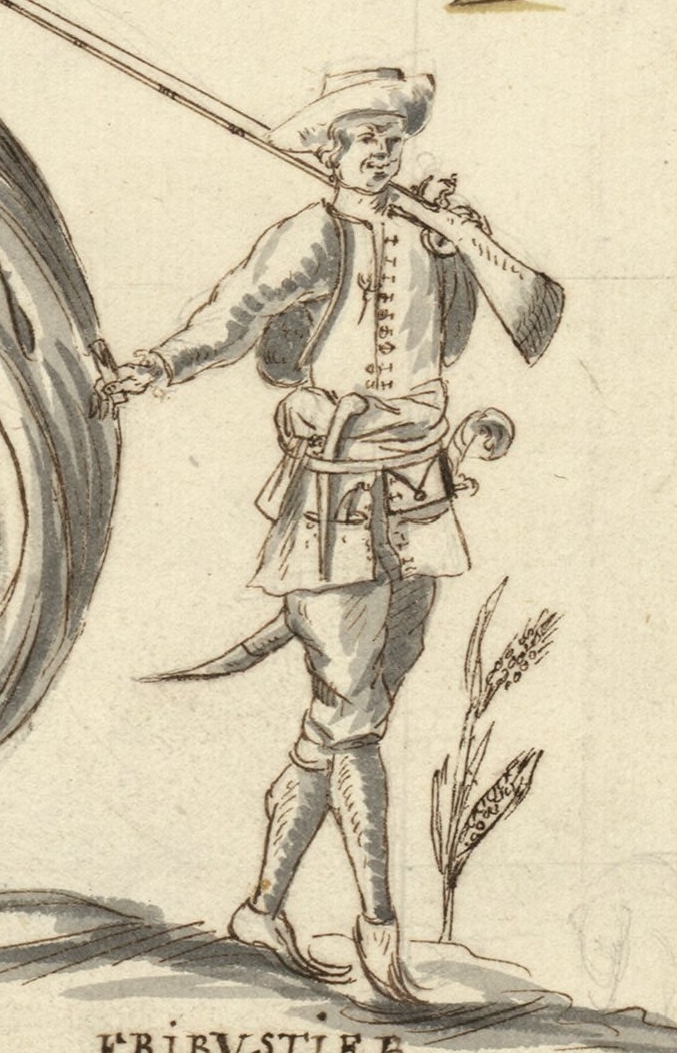
Flibustier from a chart of Le Cap Francois on Saint-Domingue, 1686, by P. Cornuau.
But it is his armament we are most interested in. He has a fusil boucanier over his shoulder, again at half cock. In his left hand is a paper cartridge which would hold both ball and powder, and sometimes seven or eight swan shot on top of a single ball, and power. The cartridge had been early adopted by boucaniers and flibustiers, and they learned early the lesson that conventional armies would learn after them: that the flintlock with cartridge was the most efficient weapon for campaigning, and, eventually, for conventional warfare.
At his waist is a cutlass, this one with an obvious brass hilt given its shape, and without a clip point as can be discerned by the shape of the scabbard and its chape. He has a cartouche box on his belt, again on the left front, and on his right front is a single pistol. Notably, its lock is against his body (this would help protect the lock), with the butt to his left for an easy draw. I’ve tested this way of carrying a pistol: it works well with small to medium pistols, although large pistols (12″ and longer barrels) are easier to carry putting the belt-hook on the inside, with the pistol hanging on the outside, although the pistol is less secure this way. With two pistols, one would be carried on the left side, the other left-front, assuming a right-handed shooter.
This setup is well-balanced: cutlass and cartouche box on one side, pistol (often a pair) on the other. At Veracruz flibustiers were noted as carrying two cartouche boxes: the second was probably worn at the back, and carried additional cartridges, most of which were almost certainly for use with the musket, the buccaneer’s primary weapon according to buccaneer and surgeon Alexandre Exquemelin. In our flibustier’s right front pocket is a small powder horn, almost certainly for re-priming the pan as necessary. Buccaneers primed from the cartridge as they loaded, but would require a horn to re-prime if, for example, the powder in the pan got damp.
Two more details deserve attention. First, above his belt is a thin cloth that serves as a mosquito netting. Such netting is described in at least three eyewitness sources. It was usually worn around the waist or over the shoulder like a bandoleer. Second, around his neck is a detail almost never seen: a musket tool used variously, depending on the tool, for clearing the vent, chipping a dull flint to get another shot or two before it must be changed out, tightening the cock, as well as other tasks associated with cleaning and maintaining a musket.
There exist substantial written evidence to support these images. Father Jean-Baptiste Labat has described the flamboyant dress of flibustiers, especially after pillaging a ship’s cargo (a scene that may well have inspired a similar scene in Frenchman’s Creek, 1944). The arms of the flibustiers–fusil boucanier, cartouche box, one or two pistols, a cutlass–are described several times by eyewitnesses. What we have not had is this eyewitness corroboration in the form of images.
We also have an eyewitness account by one of the victims of a buccaneer attack, in this case the brutal rape and pillaging of Veracruz in 1683, of which I will speak more of in a later blog. The account adds details we have hitherto lacked. According to Fray Juan de Avila, the flibustiers wore “sailcloth jackets, shoes of cowhide but more wore those of pigskin [possibly cheaper shoes, or even those the boucaniers commonly wore, or both], and others wore jackets of blue sackcloth [possibly dyed with indigo from Saint-Domingue]” and were armed with “a cutlass, a large (or long) flintlock musket [clearly a buccaneer gun], two pistols, and hanging from a waist belt two cartridge boxes with paper cartridges inside…”
In sum, these buccaneers or flibustiers are much as we imagined them: picturesque and picaresque, a combination of Hollywood and reality long before Hollywood ever existed. But note what we do not see: no peg legs (extremely rare in reality, for they make buccaneering difficult), no eye patches except due to injury (absolute myth created by literature and illustration and unfortunately further spread by Mythbusters, &c.), few obvious tattoos (some men and women, not just seamen, had a few but not to the degree we like to believe), no insignia of skull and bones (although some may have worn mortuary rings with such symbolism, as did people from all walks of life), no earrings (although foppish pirates may have worn them on occasion, and Dutch seamen, along with many Dutch in general, did wear them), and no parrots–although some pirates did in fact keep parrots, although more often than not probably as plunder. Also, please note that none wear boots. Fishermen wore boots at times, seamen in arctic waters did too, but otherwise, seamen, including sea rovers, did not. Worse, the boots we see pirates in film, television, and illustration wear are riding boots–and one doesn’t ride horses aboard ship.
I will get to discussing swordplay soon enough, but the next blog post will describe in similar detail the dress and arms of the boucanier, of the cow and pig hunters who often accompanied flibustiers on their attacks at sea and ashore.
Bibliography
Avila, Juan de. “Pillage de la ville de Veracruz par les pirates le 18 mai 1683 (Expedition de Lorencillo).” Amoxcalli manuscript no. 266, http://amoxcalli.org.mx/paleografia.php?id=266.
Captain Blood. Warner Brothers Pictures, 1935.
Cornuau, Paul. “Carte particulière de la rivière de la Plata.” Probably 1684. Bibliothèque Nationale de France.
——. “Plan des passes et du bourg du levé et dessigné par ordre de Mr. De Cussy, Gouverneur pour le Roy de l’isle de la Tortue et coste St. Domingue.” 1685. Bibliothèque Nationale de France.
——. “Plan du Cap et de son entrée,” 1684. Bibliothèque Nationale de France.
——. “Plan Ignographique du Fon et de l’Isle à Vache,” 1686. Bibliothèque Nationale de France.
——. “Plan ignographique du Fon et de l’Isle à Vache,” 1686 (second chart bearing this title). Bibliothèque Nationale de France.
——. “Plan du Petit Goave et de l’Acul, avec le Figuré du Fort du Petit Goave tel qu’il a été Reformé, avec Deux Autres Plans de ce Même Fort.” Circa 1688. Archives Nationales d’Outre-Mer.
Exquemelin, A. O. [Alexandre Olivier Exquemelin]. De Americaensche zee-roovers. Amsterdam: Jan ten Hoorn, 1678.
——. Bucaniers of America. London: William Crooke, 1684.
—— [Alexander Olivier O’Exquemelin]. Histoire des avanturiers qui se sont signalez dans les Indes. 2 vols. Paris: Jacques Le Febure,1688.
——. Historie der Boecaniers, of Vrybuyters van America. Amsterdam: Nicolaas ten Hoorn, 1700.
——. The History of the Bucaniers. London: T. Malthus, 1684.
——. Piratas de la America, y luz à la defensa de las costas de Indias Occidentales. Translated from the Dutch by Alonso de Buena-Maison. Cologne: Lorenza Struickman, 1681.
Labat, Jean Baptiste. Nouveau Voyage aux Isles d’Amerique. 6 vols. Paris: Guillaume Cavelier, 1722.
Little, Benerson. The Buccaneer’s Realm: Pirate Life on the Spanish Main, 1674–1688. Washington, DC: Potomac Books, 2007.
——. “Did Pirates Wear Eye Patches?” On the Under the Black Flag website at <http://undertheblackflag.com/?p=2904> or at <http://www.benersonlittle.com/bio.htm>.
——. “Eyewitness Images of Buccaneers and Their Vessels.” The Mariner’s Mirror, vol. 98, no. 3 (2012), 312–326.
——. The Golden Age of Piracy: The Truth Behind Pirate Myths. New York: Skyhorse Publishing ,2016.
——. “El Mito Pirata.” Desperta Ferro, no. 17 (August 2015), 52-55.
——. The Sea Rover’s Practice: Pirate Tactics and Techniques 1630–1730. Washington, DC: Potomac Books, 2005.
——. “Las Tácticas de los Piratas del Caribe.” Desperta Ferro, no. 17 (August 2015), 27-32.
Partenay. “Ainsy se fait voir le Petit Gouave au Sud-est et nord oist éloignée . . . ,” 1688. Bibliothèque Nationale de France.
Pyle, Howard. The Buccaneer Was a Picturesque Fellow. In “The Fate of a Treasure-Town” by Howard Pyle. Harper’s Monthly Magazine (December 1905).
Sabatini, Rafael. Captain Blood, His Odyssey. Boston: Houghton Mifflin, 1922.
 Swordplay & Swashbucklers